Restoring Wooden Sash Windows: A Heritage Guide
By Daniel Fitzpatrick, Master Craftsman · Guild of Master Craftsmen · Updated
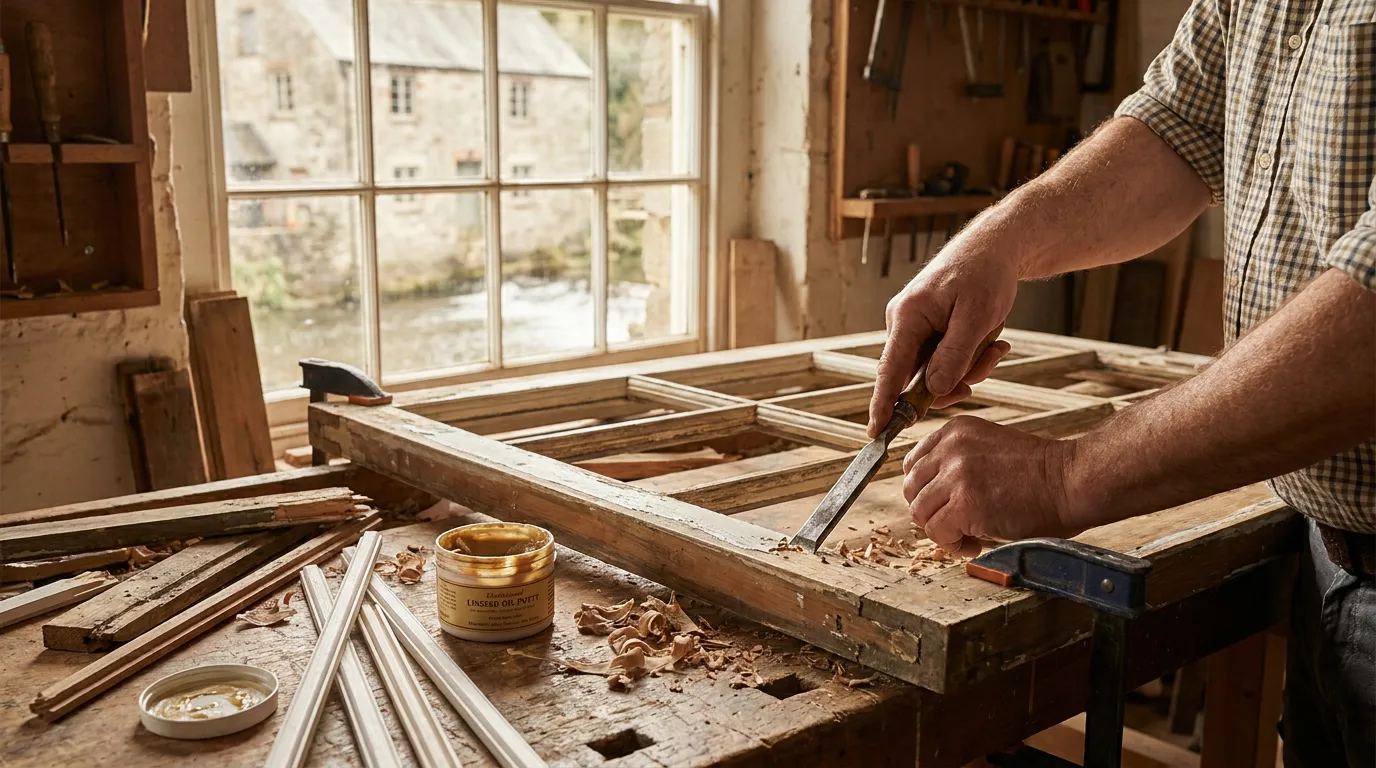
Restoring wooden sash windows: a practical UK guide
Restoring wooden sash windows means stripping failed paint, splicing in new timber where rot has set in, renewing broken cords and pulleys, and re-hanging the sashes so they slide smoothly and seal properly.
For most period UK properties, a full restoration takes 18–30 hours per window and costs £450–£900 per sash.
Whether you are weighing restoration against replacement in London, sourcing a specialist in East Sheen, or planning long-term care for a country house, this guide covers cost, technique and maintenance for restoring wooden sash windows. It draws on workshop experience, Checkatrade and Houzz project write-ups, plus technical guidance from London Sash Window Repairs Ltd and heritage joiners such as Historic Joinery Yorkshire.
Quick answer: what does restoring wooden sash windows involve?
Restoring wooden sash windows means stripping back failed paint, splicing in new timber where rot has set in, replacing broken cords and pulleys, and re-hanging the sashes so they slide freely and seal properly.
For most period properties across the UK, a full restoration takes 18–30 hours per window and costs £450–£900 per sash, depending on condition, access, and whether the box frame survives intact.
What does the work actually involve?
A proper sash window restoration follows a set sequence that has changed little since the Georgian era. First, the staff and parting beads are removed and the sashes eased out. Cords are cut, the frame inspected, and rotten timber cut back to sound wood. New sections of matching species — typically Accoya or English oak for listed work — are spliced in using scarf joints rather than butt joints, so the repair moves with the building.
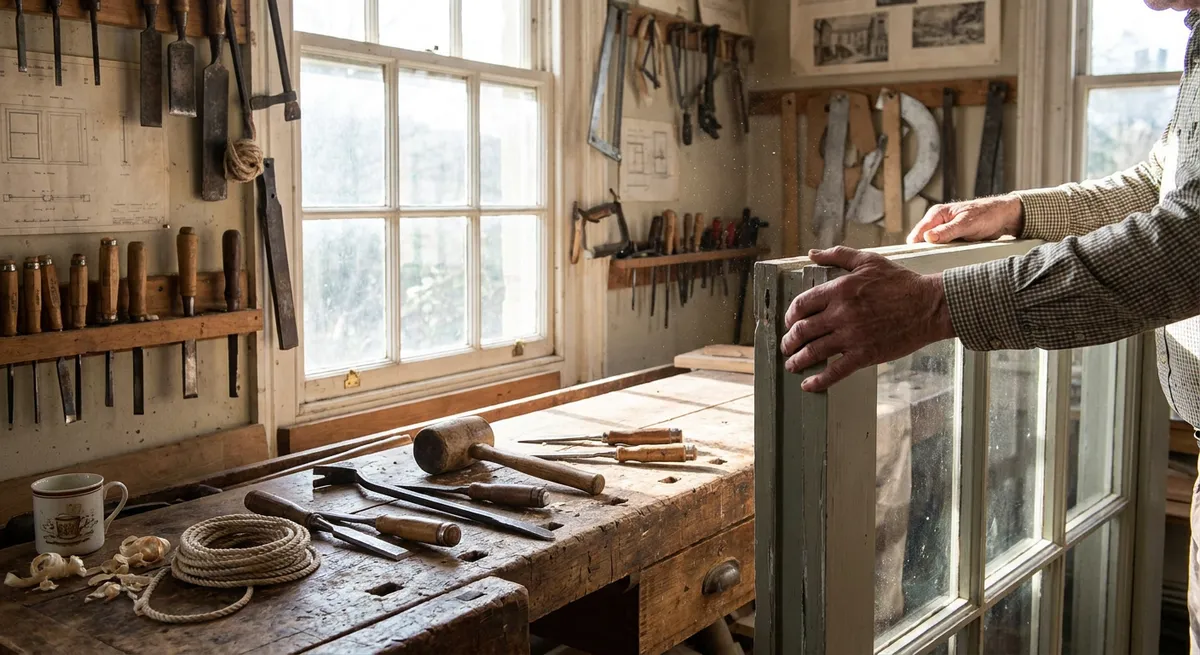
Pulleys, cords and ironmongery are replaced with traditionally styled fittings. The sashes are re-weighed, re-corded and refit with mitred draught-proofing beads. Bare timber receives a primer coat before reassembly, and the whole window is tested for smooth travel, locking and draught exclusion before final decoration. Refurbishment specialists such as Refurb a Sash and Refurb a Sash Ltd follow the same workshop sequence when overhauling heritage sashes in West London and the Home Counties.
How much does it cost to restore a wooden sash window, and what drives the price
Typical UK price bands for sash window refurbishment
Sash window refurbishment cost in the UK generally falls between £350 and £1,200 per window, with a full workshop-grade overhaul typically landing between £550 and £950. Bespoke replication or complete sash replacement from a heritage joiner can push individual windows to £1,400–£2,200. A standard three-bed Victorian terrace with ten sashes commonly comes in at £5,500–£9,500 for a workshop refurbishment programme.
Sash window refurbishment cost in London tends to sit 15–25% above the national average because of workshop overheads, listed-building insurance requirements, and access constraints in period townhouses across North London, Kensington, Hampstead and South West London. For a single sash window repair, expect £180–£280 for rope-and-pulley replacement with minor timber work; a full mechanical overhaul with draught proofing and new ironmongery climbs to £400–£650.
What changes the quote: timber condition, hardware, glazing and access
Four factors move the price more than anything else: timber condition, hardware specification, glazing choices, and site access.
Timber condition. Sound frames that only need epoxy consolidation and re-rendering sit at the lower end. Once rot appears in the sill, lower rail or glazing bars, splice repair techniques add labour and matching oak or Accoya stock. We have quoted Victorian box frames where sill replacement alone added £220–£380 per window because the rot had migrated into the pulley stiles.
Hardware and balance system. Standard brass pulleys, sash cord and a single centre latch keep costs predictable. Upgrading to traditional weighted cords with ceramic-routed grooves, brass cam locks and bench-made lifts can add £80–£160 per sash. Spring-balance conversions raise the figure further.
Glazing. Single-pane restoration with lime putty remains the most affordable route. Slim-profile vacuum or acoustic double glazing adds £120–£250 per pane, and each pane often needs re-beading from stock matching the original profile.
Access. Sashes that lower straight into the workshop cost less than upper-floor sashes on Georgian terraces in North London that need a tower scaffold, a hoist, or a roof-line rope rig.
Ask for a written breakdown of these four line items before accepting a quote. A contractor who groups everything under a single labour figure cannot defend the price when you compare it with a competitor.
Repair, splice or replace: choosing the right approach for old timber windows
Splice repairs, Dutchman patches and epoxy consolidation in practice
When rot stays local, splice repair is almost always the right first move. The typical sequence reads: cut back to sound heartwood, shape a scarfed or tongue-and-groove splice from matching species (Accoya, oak or reclaimed sapele in our work), dry-fit, glue with exterior-grade Titebond II, and clamp for 24 hours. Daniel Fitzpatrick prefers Titebond over thickened epoxy because the joint stays reversible, which matters when future conservators may need to take the window apart again.
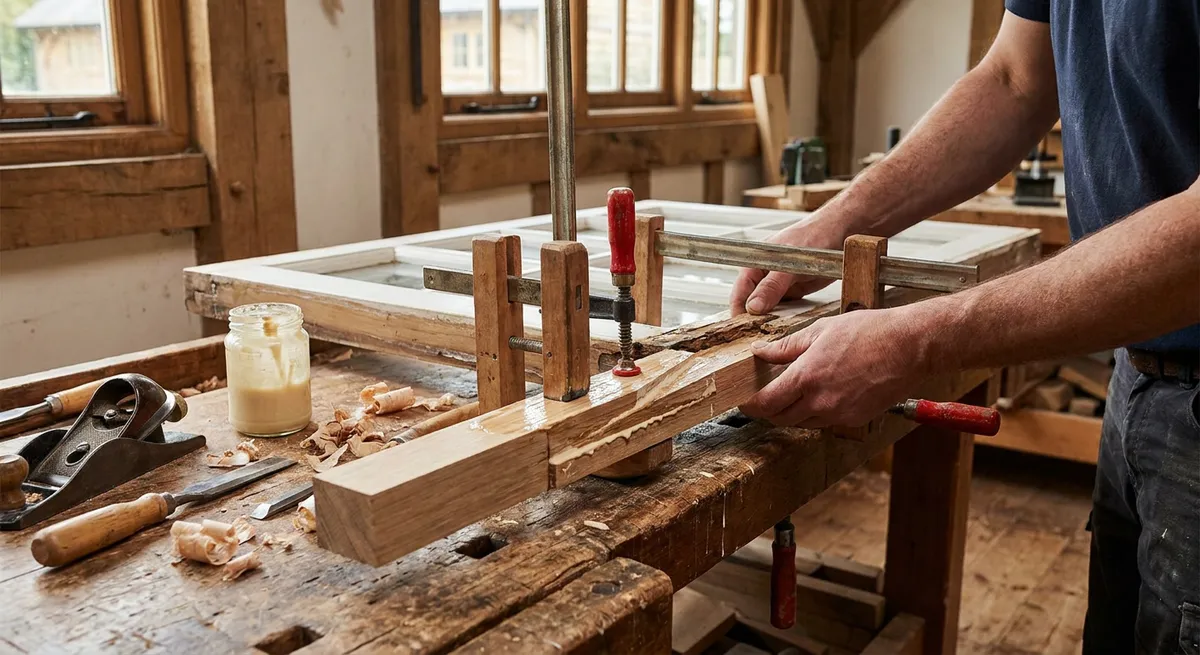
For shallow damage, a Dutchman patch works well. Chop out the decayed zone to clean, squared edges, bed a matching timber plug in epoxy, leave it a millimetre proud, then plane and scrape flush after cure. Shallow grey fibres respond to consolidation rather than cutting: warm the surface with a heat gun on low, flood with liquid epoxy so it wicks into the lignin, then build up a filler coat. We treat any rot we cannot see past 10% of the section as a signal to discuss full sill or sash replacement instead.
Repair versus full replacement: the trade-off most owners overlook
Restoring wooden sash windows is cheaper than new joinery when the box frame and at least 60% of each sash survives intact, but replacement wins on lifecycle cost once rot has spread to the sill, the lower rails and both sashes. A useful rule from the bench: if you can stabilise the frame and reuse the original mouldings, repair; if the frame itself is twisted, the sill is soft end-to-end, or the glazing bars have lost their horn detail, the case for new sashes — machined to the original profile — grows stronger.
The trade-off most owners miss is embodied energy. A workshop-repaired sash retains a century of seasoned timber; a replacement starts another carbon cycle. For listed properties in London and across Surrey and the Home Counties, that argument often tips the balance toward repair, provided the draught proofing, sash cords and ironmongery are renewed at the same time. When in doubt, send photos and rough measurements to a specialist — many are listed on Checkatrade and Houzz with verified reviews from comparable jobs — for an honest read before committing.
Looking after restored sash windows: draught proofing, decoration and long-term care
Draught proofing and repainting: how to finish the job well
Draught proofing and a proper paint system are what turn a competent restoration into a window that performs for decades. After the sashes are rehung and balanced, we fit a slim pile or silicone weatherstrip into the staff and parting beads, plus a brush pile along the meeting rails. The aim is a measured, even compression, not a jammed slider.
For decoration, we follow a sequence our workshop has refined over thirty years: strip failed coatings back to bare timber, sand to 100-grit, apply a linseed-oil primer to any exposed end grain, then two full coats of a high-build exterior paint. We work the paint into the glazing rebate and lap it slightly onto the glass to seal the putty line. Brush marks are honest; spray finishes rarely suit a listed building.
Annual and decade-long maintenance for heritage timber
Once a year, wash the paintwork with a soft brush and mild detergent, then inspect the putty, sills and cills for early signs of moisture ingress. Lubricate the pulleys and check the sash cords for fraying. Every two to three years, touch in any nicks before water finds bare wood.
Plan a full repaint every seven to ten years, depending on exposure to weather. South- and west-facing elevations usually need attention first. Northern elevations in sheltered streets can stretch closer to a decade. If you spot soft timber, address it straight away; small splice repairs now save a sill replacement later.
- Annually: wash, inspect putty, oil moving parts.
- Every 2–3 years: touch up paint, check cord tension.
- Every 7–10 years: full repaint, recheck draught seals.
Frequently asked questions about restoring wooden sash windows
How much does it cost to restore a wooden sash window?
Restoring wooden sash windows typically costs £450–£900 per window in the UK for a sympathetic restoration, depending on size, condition and access. A straightforward sash windows repair with new cords, draught proofing and a re-paint sits at the lower end. Extensive timber splicing, sill replacement or epoxy consolidation pushes work towards £1,200 or more. Restoring wooden sash windows cost is usually 40–60% less than like-for-like new timber sashes in a listed property where the original box frame must stay.
Is it worth restoring old wood windows?
Yes, in most period properties original sash windows are worth restoring rather than replacing. Mature timber — old-growth redwood or Accoya — is denser and more stable than most modern replacements, and the handmade mouldings, glazing bars and box-frame housings cannot be cheaply matched. Our rule at the workshop: if the frame is sound and more than 60% of each sash is original timber, restore. If rot has spread into the sill and pulley stiles, replicate the sashes while keeping the frame.
How to repaint wooden sash windows?
Repaint sashes every 7–10 years using a breathable exterior primer followed by two topcoats of microporous paint, applied to clean, dry timber between late spring and early autumn. Lift each sash, sand flaking paint back to sound edges with 100-grit, prime bare patches within the day, then brush — never spray — the finish so it bonds into the joints. Avoid non-breathable films like standard gloss over old paint, which trap moisture and accelerate rot. For listed properties, check with your conservation officer before changing colour from the historic scheme.
Can you refurbish wooden windows?
You can refurbish most wooden sash windows, even those painted shut or suffering minor rot, provided the outer frame and sill remain structurally sound. Refurbishment covers new sash cords, re-weighted balances, draught proofing, spliced-in timber repairs and redecoration — usually completed in our workshop or on site in 2–3 days per window. Replacement only becomes the better choice when the box frame itself is decayed beyond practical splice repair.
How long does a full restoration take?
A single craftsman needs 18–30 hours per window, so a typical six-window townhouse takes three to four weeks on site. Workshop-based work — new sashes, spliced sill sections, paint stripping — runs alongside to keep the project moving.
Do you cover London and East Sheen?
We travel from the workshop for heritage projects across the UK, including sash window repair in North London, central London terraces, South West London and period homes in East Sheen. Travel is usually batched with other commissions in your area, from West London to Surrey, to keep costs sensible. For the full service overview, see our sash window restoration service page. All work is signed off under Certass certification where building regulations apply, and our site is secured behind a Cloudflare edge so quote requests stay protected.
Sources
- How To Restore Sash Windows | Step-by-Step Guide – William Richards Sash Windows
- Restore a Wood Window Sash - Fine Homebuilding
- Repairing Rotten Sash Windows: DIY Tips & Expert Help
- Wood Window Restoration & Sash Repair | East Portland Sash
- Restoring Window Sashes - Fine Homebuilding
- Easy DIY Window Restoration - The Craftsman Blog
- Restore period wooden windows and how to maintain them
- Restoring a Wooden Sash Window - Instructables