Hand Turned Balusters Victorian Staircase Guide
By Daniel Fitzpatrick, Master Craftsman · Guild of Master Craftsmen
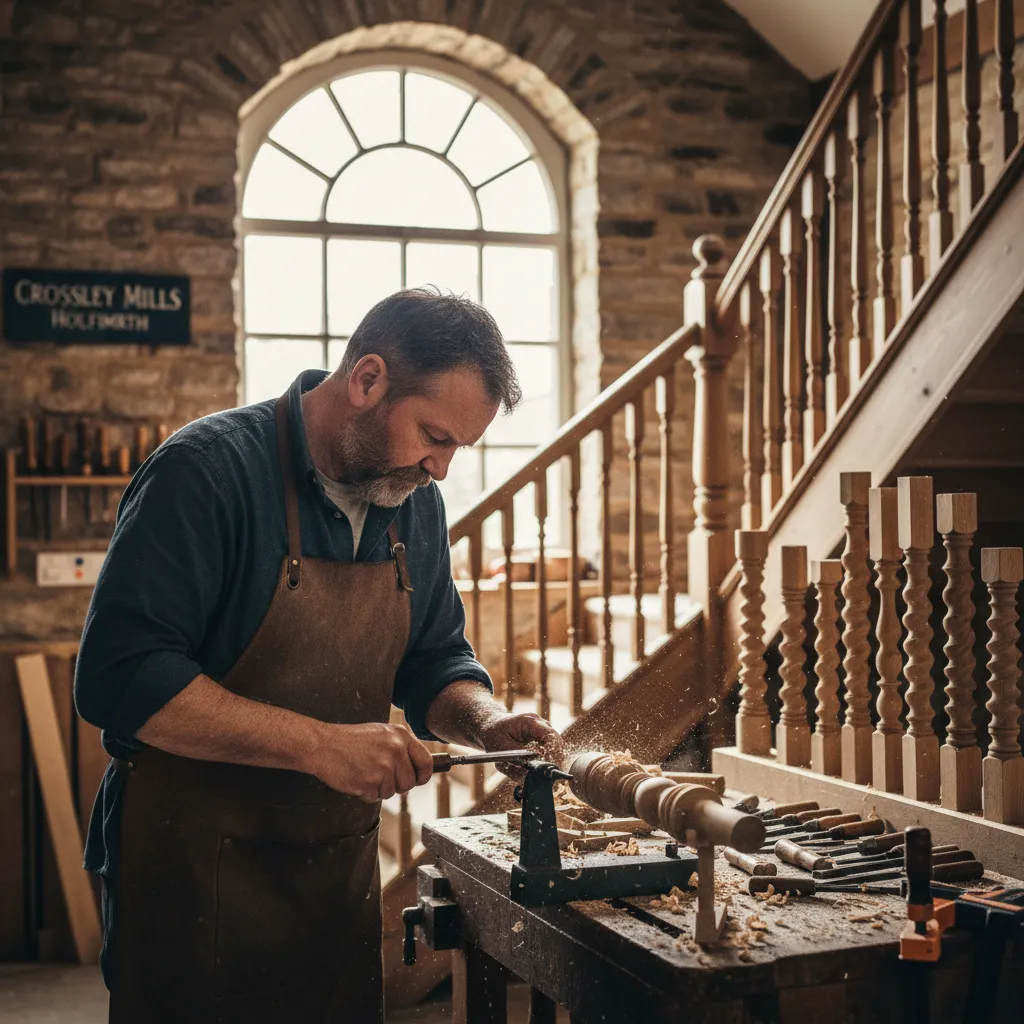
Quick answer: hand turned balusters on a Victorian staircase
Hand turned balusters on a Victorian staircase are individual vertical spindles shaped one at a time on a lathe, fitted between the handrail and base rail to give the flight its rhythm and ornament.
Each one carries a profile, from barley twist to acanthus, that machine copies tend to flatten out.
Why the hand-made version still wins
A Victorian flight typically holds four or five different baluster lengths, and each is set up separately so the turning reads true against its neighbour rather than a catalogue template. The turner adjusts pressure on the skew and gouge mid-cut to keep arrises crisp, then cleans the fillet by hand because a copy lathe still cannot cut a sharp 90-degree shoulder. At Historic Joinery Yorkshire, that judgement call comes from over thirty years of single-craftsman practice at the tool rest, backed by Guild of Master Craftsmen membership and a bench joinery discipline that prizes fully hand-executed work over factory shortcuts.
Common Victorian profiles worth recognising
- Barley twist: a continuous spiral, usually paired with a matching barley-twist newel post.
- Rope twist: a finer, tighter spiral with deeper hollows between the strands.
- Fluted and reeded: vertical channels or rounded ribs running down a tapered shaft.
- Acanthus leaf: a carved leaf collar at the top or bottom of a turned shaft, the most ornate and costly option.
- Tapered square: plain chamfered shafts used where budget or taste asked for restraint.
Materials, and what they cost you later
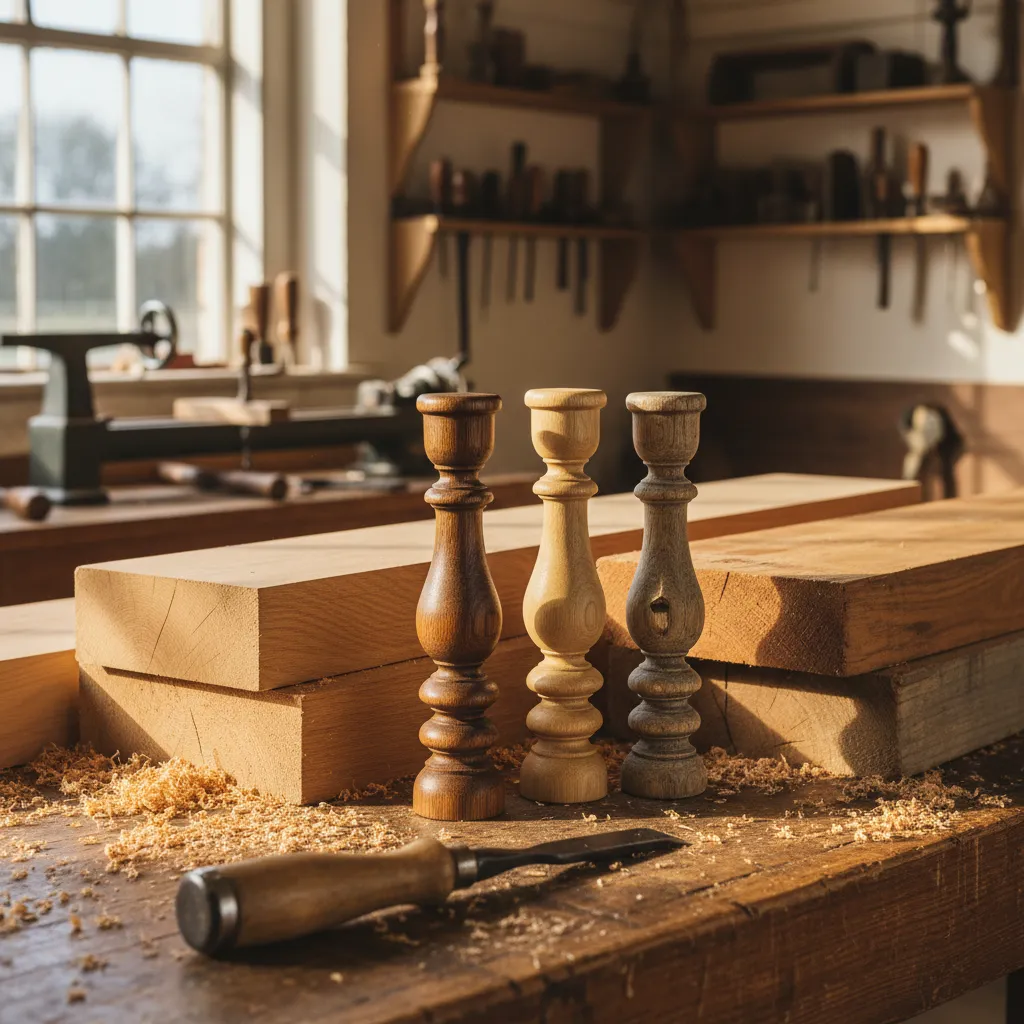
Oak was the Victorian default for good reason: it turns cleanly and resists wear at the rail joint. Yellow pine turns softer and dents more easily under a hand. FSC-certified European oak is the safe modern choice, while locally reclaimed pitch pine from a Yorkshire reclamation yard brings patina but needs checking for old fixings and iron staining before any cutter touches it. The same stock selection feeds furniture restoration, casement window frame repair, and door refurbishment work, so the timber yard sits at the centre of the workshop rather than at its edge.
Trade-offs to weigh before ordering
Buyers comparing hand turned balusters against machine copies should weigh three honest points. First, profiles vary slightly spindle to spindle on a hand run, and that subtle variation is the point, not a defect to be corrected out. Second, lead times run in weeks, not days, because each length is turned to order on a one-off lathe setup. Third, replacement balusters for an existing flight must be measured against a sound original, not a catalogue drawing, because Victorian flights were built proud of standard sizes.

Send a photo of the existing flight plus a sample spindle to the workshop at Crossley Mills, and Daniel Fitzpatrick can turn matching replacements in oak or pitch pine to the original section. Call 01484 666 333 or email enquiries@historic-joinery-yorkshire.co.uk to start a measured assessment.
Baluster, Banister and Hand Rail: The Questions People Ask First
What is the difference between a banister and a baluster?
A banister is the whole railing system on a staircase, while a baluster is one of the vertical posts that holds the rail up. On a hand turned balusters victorian staircase, each spindle is shaped individually on a lathe and fitted between the step and the rail above, so the banister reads as one continuous, repeating form.
What is the hand rail on a staircase called?
The sloping rail you grip on the way upstairs is the handrail, sometimes written as two words. It sits on top of the balusters and is usually finished with a cove and bead beneath the grip, a detail the workshop reproduces as part of its wider heritage joinery practice.
How to install handrail balusters on stairs?
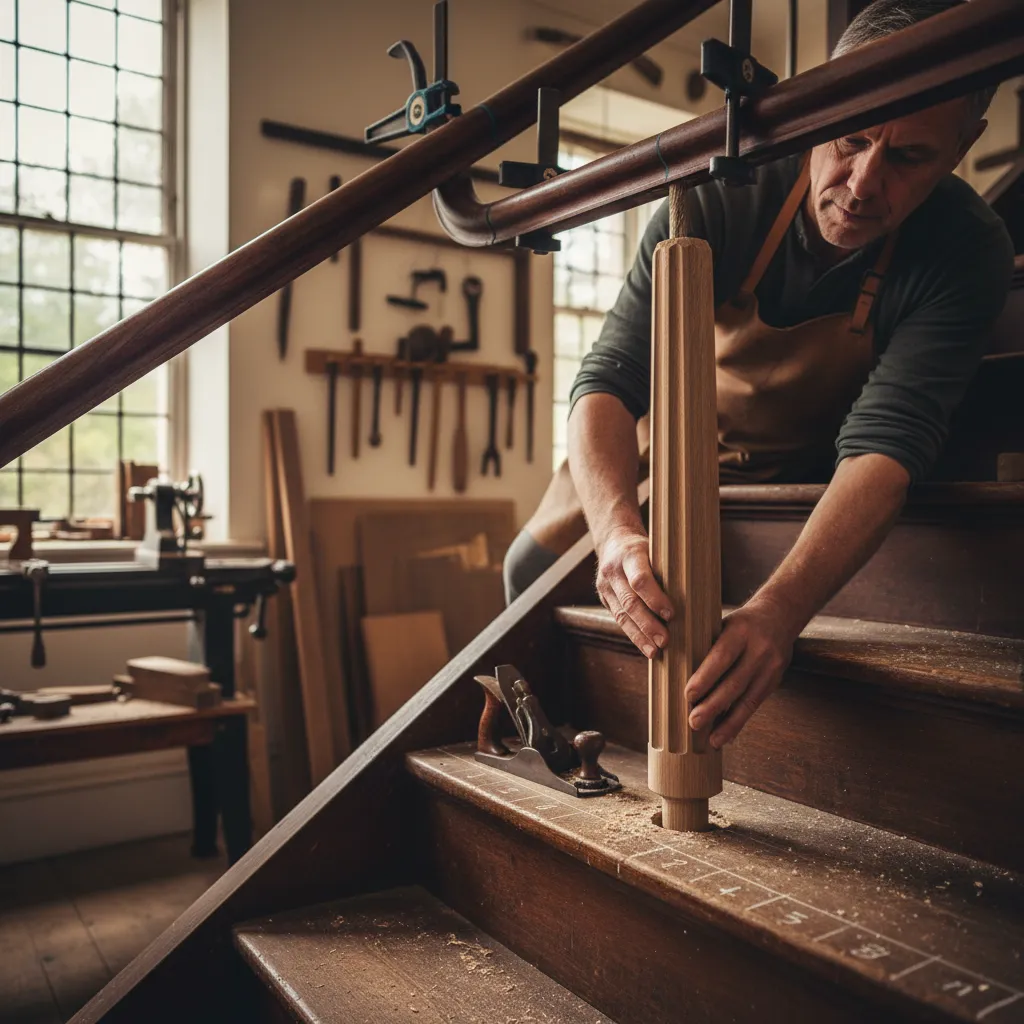
Cut each baluster to its exact length, then fix it into a socket drilled into the tread (or a return nosing) and trim its head square to the rake of the rail above. The full sequence, including how to mark out equal spacing on an uneven flight, is set out on the staircase joinery service page.
What are the different types of balusters?
Five profiles cover most Victorian work: barley twist, plain spiral, rope, fluted, and acanthus leaf. Oak suits all five; yellow pine suits the simpler turnings. Barley twist newel posts usually pair with turned balusters, and a single flight often carries four or five different lengths, each turned to its own setup.
When to Call a Heritage Joinery Workshop, and What Happens Next
How a conservation joiner quotes this kind of work
A heritage joiner quotes a Victorian balustrade restoration in three stages. First, a site visit or measured survey captures each spindle length, the existing profile, and any breaks. Second, a templating session where the joiner traces a surviving baluster onto card, marking the ring counts and beads so the lathe work matches the original rhythm. Third, a written quote that splits materials, turning hours, and finishing. Expect the labour line to dominate: hand-turning one spindle can take forty minutes, and a staircase of thirty spindles in five different lengths is a two-week bench job before any fitting begins.
Your next step and how to reach the workshop
Send photographs of the damaged section, a rough measurement of the run, and the property's listing grade to the workshop by email at enquiries@historic-joinery-yorkshire.co.uk, or call 01484 666 333 between 9 am and 5 pm, Monday to Friday. Daniel reads every enquiry personally and replies within two working days with a visit slot or a request for further measurements. Historic Joinery Yorkshire sits at Crossley Mills, near Holmfirth, takes commissions across the UK, draws on FSC-certified suppliers and Yorkshire reclamation yards for its locally reclaimed timbers, and trades as a Guild of Master Craftsmen member. For a written brief, the contact page lists the postal address and a short enquiry form.
Sources
- Victorian Stair Spindles
- Victorian Porch Balusters
- Staircase
- 1899 Queen Anne, Beaver, PA - Victorian Staircase with Spindles
- Victorian Oak Stair Baluster - Acanthus Leaf Spindle
- How to Replicate Antique Staircase Balusters | Ask This Old House
- Turning Stair Balusters | THISisCarpentry
- Why do balusters change from turned to square halfway up the staircase?