Hand Turned vs Machine Turned Sash Window Parts
Hand Turned vs Machine Turned Sash Window Parts
Hand turned vs machine turned sash window parts mainly differ in accuracy, cost and character. Hand-turned parts are shaped individually for period properties, while machine-turned parts offer repeatable dimensions and are usually cheaper for larger projects.
Serving London, Yorkshire and the wider UK, Historic Joinery Yorkshire draws on more than 30 years of single-craftsman expertise and traditional bench joinery to reproduce sash window components.
Craftsmanship, cost and authenticity compared
How the parts are made
A sash pulley shaped on a treadle lathe may retain fine facets and a slightly irregular bore. These variations help it blend with old timber. A machine-turned pulley follows a fixed profile and usually fits a standard housing.
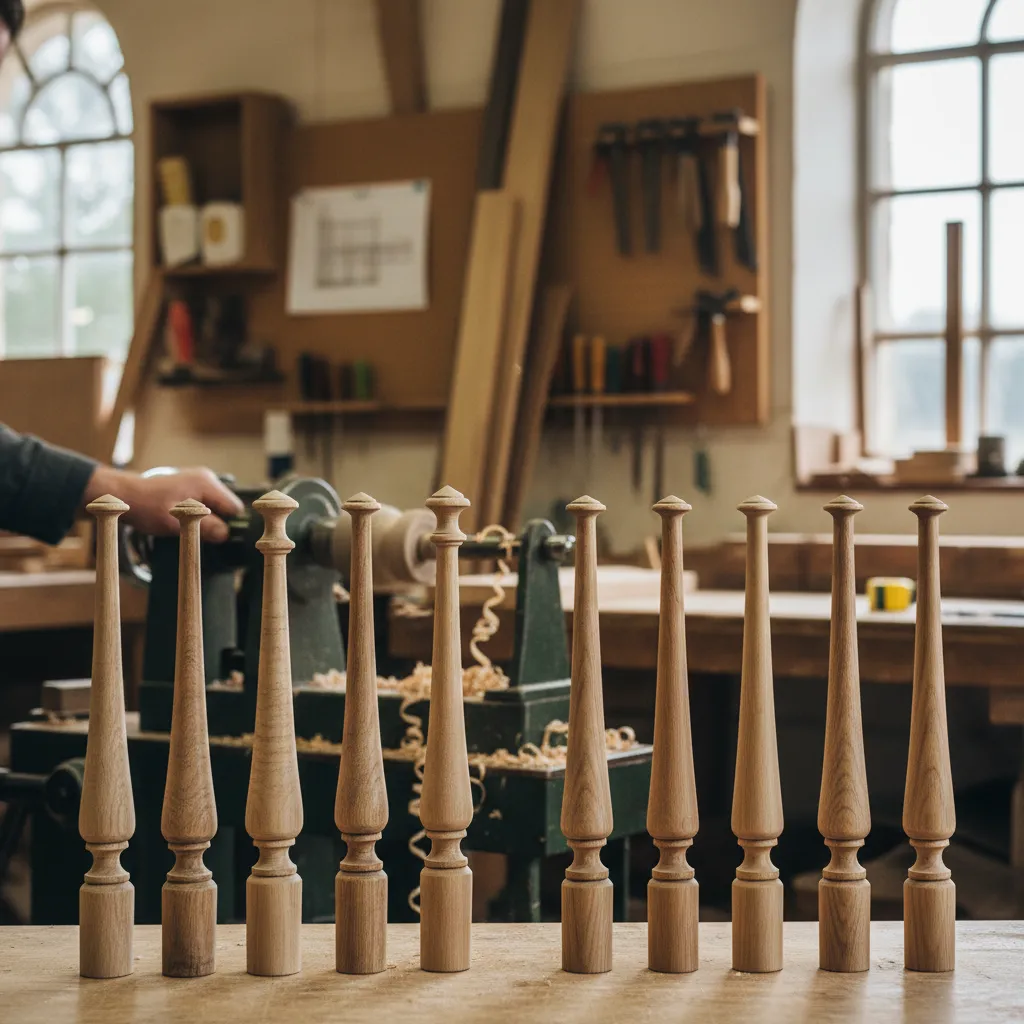
Spindles are produced in a similar way. Hand turning allows the joiner to match an existing diameter, length or shoulder even when no current catalogue size matches. Machine turning is useful when several identical parts are needed and the surrounding frame has not shifted or worn.
Cost, durability and appearance
Hand-turned components take longer to make, so they cost more. A custom pulley or spindle can also reduce fitting time because it needs fewer packing pieces or changes to the rebates. That can make a small restoration more economical overall.
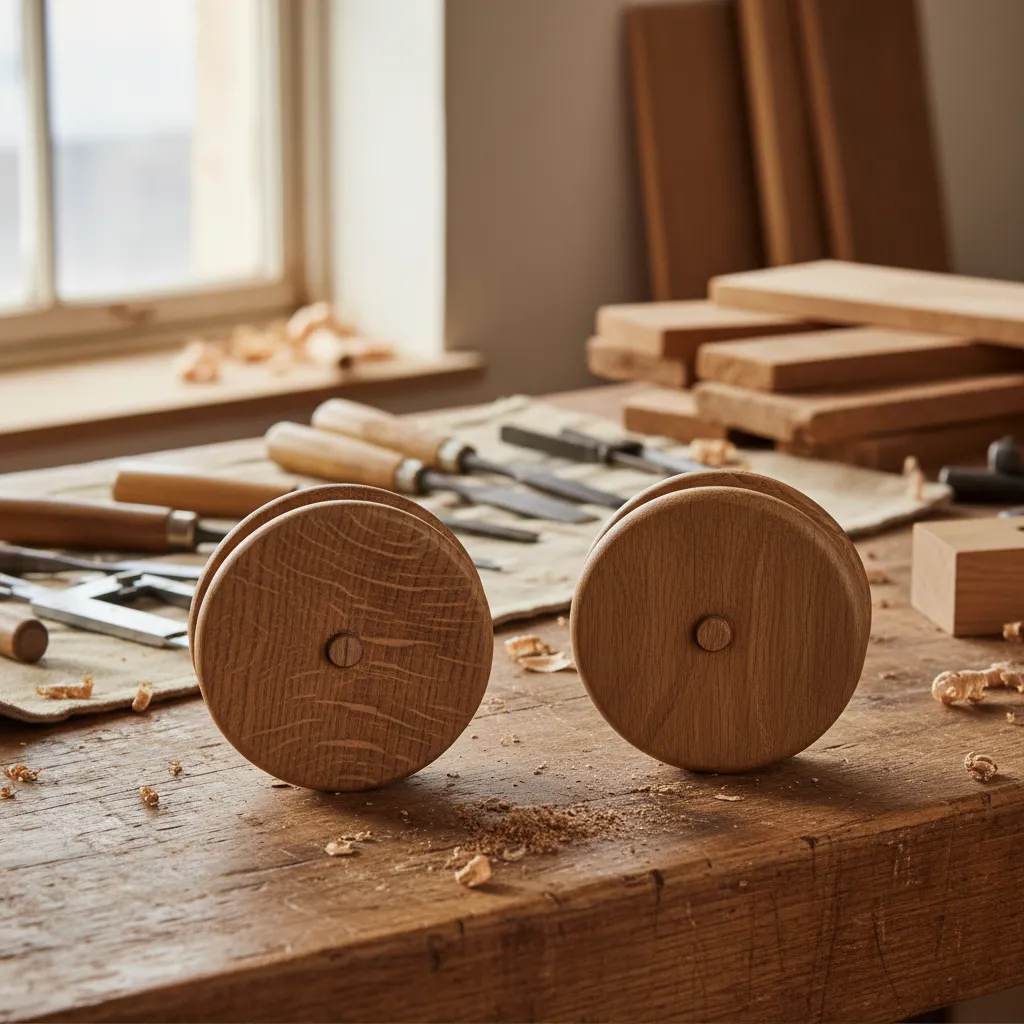
The timber matters as much as the method. Well-selected oak or reclaimed hardwood gives a hand-turned part a grain and surface that suits a historic window. Machine-turned parts can be equally durable, but regular production often uses standard timber blanks and profiles.
For listed buildings, visual match may be decisive. A hand-turned item can carry the proportions, surface character and patina of the original. A machine copy may be the better option where consistency, budget or a large order takes priority.
Sash window parts and common sash types
What are the different parts of a sash window called?
The main parts are the stiles, top and bottom rails, glazing bars or muntins, parting bead, staff bead, sash cords, pulleys, counterweights, finger lifts and sash fasteners. Lower sashes on many period windows also have decorative horns.
What are the different types of window sashes?
The common types are single-hung, double-hung and horizontal-sliding sashes. Single-hung windows have one moving sash, double-hung windows have two moving sashes, and horizontal-sliding sashes move sideways on tracks.
Tilt and turn windows compared
Which tilt and turn windows are the best?
The best tilt and turn window depends on the property, but established timber and uPVC systems with strong security, good airtightness and reliable hardware are usually preferable to budget models. For listed buildings, matching proportions, glazing bars and the building’s character may matter more than product performance alone.
Which is better, tilt and turn or casement windows?
Tilt and turn windows are often better for easy cleaning, secure ventilation and a clear inward opening. Casement windows usually cost less and can suit period buildings where traditional ironmongery, slim glazing bars and an authentic appearance are priorities.
How to choose the right sash window parts
Choose hand-turned parts when the original profile is irregular, the property is listed or an exact visual match matters. Consider machine-turned parts when dimensions are standard, several matching units are required and keeping costs down is the main concern.
Ask a joiner to inspect the existing pulley, spindle, sash, stile, rail and glazing bars before ordering. A measured replacement is safer than copying a modern catalogue item, particularly in Georgian, Victorian and Edwardian windows where the original joinery may have moved, shrunk or worn over time.
Speak to a heritage joiner about your project
What should you send when requesting a quote?
Send clear photographs of the window from inside and outside, along with the property location, property age, approximate number of sashes and any listed status. State whether the frame, sash, glazing bars, cords, pulley or spindle needs attention.
A useful quote should identify the timber, finish, required components and whether each part will be hand or machine turned. It should also separate workshop, fitting and site costs, then provide an estimated programme of works.
If you are repairing wooden sash windows, ask which sections can be spliced and which need complete replacement.
How period properties are assessed
Each project starts with an inspection of the timber, mouldings and existing fittings. A heritage workshop can use reclaimed or certified timber and form new parts individually where the original character requires it.
Conservation work aims to retain sound original timber and replace only what is necessary. This approach is particularly useful for period properties in Yorkshire, London and other areas with Georgian, Victorian or Edwardian buildings.
Looking for joiner services Holmfirth, joinery Halifax, period property windows Leeds or period property windows York? Contact Historic Joinery Yorkshire on 01484 666 333, email enquiries@historic-joinery-yorkshire.co.uk, or use the contact page to arrange a site survey. An initial written quote normally takes 7–10 working days after the photographs are received.
Sources
- Turn/tilt sash windows - Baier GmbH
- Sash vs Tilt & Turn Windows: Complete UK Comparison Guide | Harrington Windows
- The Distinctions Between Sash And Tilt-turn Windows | TRC
- Sash and Case Windows - A short guide for homeowners
- What are the pros and cons of sash vs. tilt and turn windows?
- An Overview of Window Sashes and Their Components
- Hand-Crafted vs. Lathe-Produced Components | Hogge Precision Parts Co., Inc.
- GSW Guide to Tilt & Turn Designs: How They Compare with Side-Hung Casements