Listed Building Consent for Timber Repairs: A Guide
By Daniel Fitzpatrick, Master Craftsman · Guild of Master Craftsmen
Quick answer: listed building consent for timber repairs
Do repairs require listed building consent?
Not always. Consent is needed only when the work affects the building's special architectural or historic interest. Minor like-for-like repairs in matching species, mouldings, and dimensions are usually classed as maintenance and exempt.
Does the four-year rule apply to listed buildings?
No. The four-year rule that covers some planning enforcement has no equivalent for listed building consent in England and Wales. Unauthorised works to a listed building remain a criminal offence at any interval, and the local planning authority can require reversal years later.
What are the renovation restrictions for a Grade II-listed building?
Grade II covers roughly 91.7% of all listed buildings in England. It protects every part that contributes to significance, including interior features, outbuildings, and fixtures attached since the original listing date. Any alteration, extension, or demolition that affects character needs consent. Only routine like-for-like repairs usually proceed without it.
Is listed building consent a legal requirement?
Yes. Section 7 of the Planning (Listed Buildings and Conservation Areas) Act 1990 makes it a statutory requirement. Carrying out works without it is an offence punishable by unlimited fine, or imprisonment in the most serious cases.
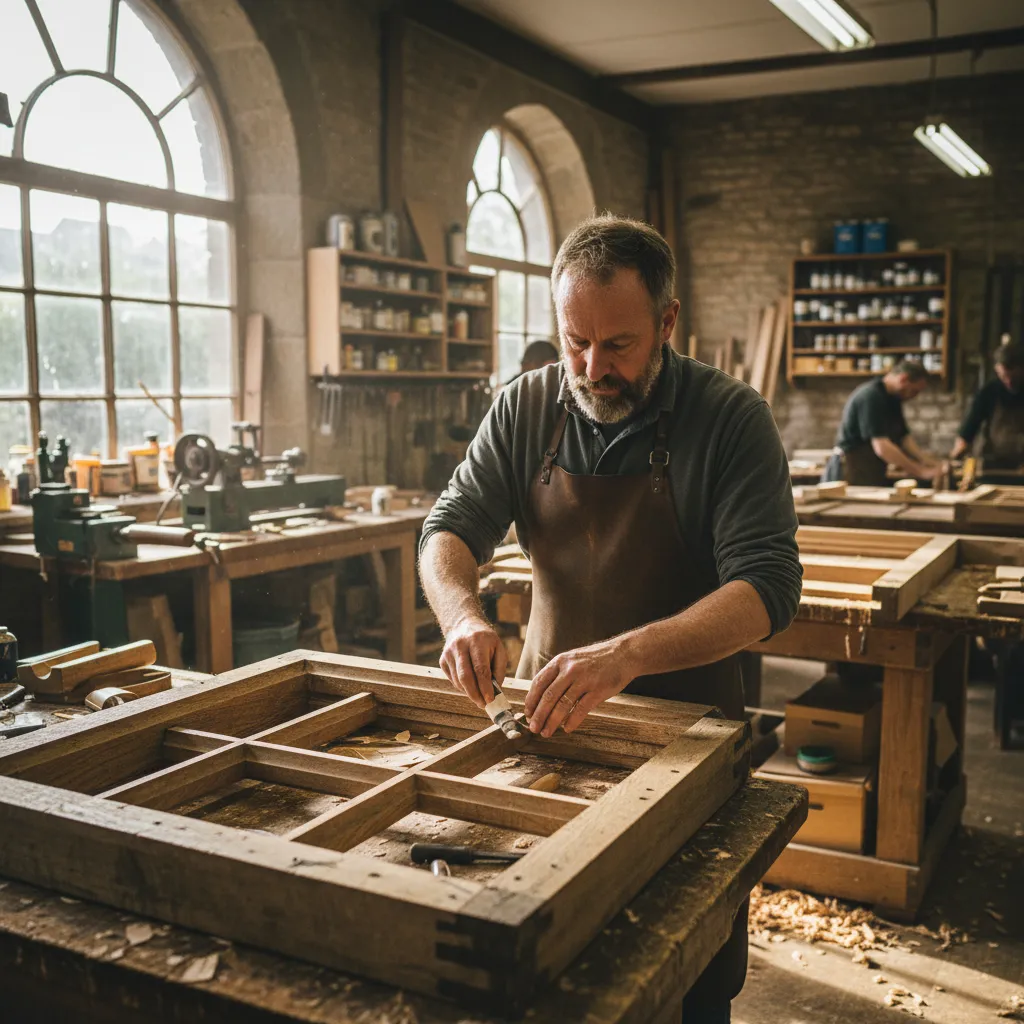
Conservation officers draw the line between repair and alteration in different places, so our workshop photographs every section of rotten fabric we remove from a job in Crossley Mills before splicing in FSC-certified oak or locally reclaimed timber. That visual record protects the homeowner if the local planning authority later questions the scope of work. Where the position is genuinely unclear, a Certificate of Lawfulness is the safer route than guessing.
Call Daniel Fitzpatrick on 01484 666 333 or email enquiries@historic-joinery-yorkshire.co.uk to discuss a specific element before any timber is touched. Further reading is on our heritage joinery service page.
Understanding Like-for-Like Repairs and Where Consent Applies
Do repairs require listed building consent?
Repairs to a listed building do not automatically require consent, but they do when the work affects the structure's special architectural or historic interest. Splicing a new section of matching oak into a rotten window cill is widely treated as maintenance and usually proceeds without an LBC application. Replacing that same cill with a different species, a thicker section, or a modern composite crosses the line into alteration and triggers consent.
Does the four-year rule apply to listed buildings?
No. That immunity period covers only unauthorised works to non-listed properties and has no equivalent under the Planning (Listed Buildings and Conservation Areas) Act. Executing unauthorised timber repairs on a listed building stays a criminal offence at any interval, and an enforcement notice can be served years later. The local planning authority can also require reversal of the work.
What are the renovation restrictions for a Grade II-listed building?
A Grade II listing carries the same legal restrictions as Grade II* and Grade I. Listed building consent is required for any demolition, alteration, or extension affecting character. Routine timber repairs in matching species, mouldings, and dimensions are normally permitted without consent, while full replacement of historic windows, staircases, or panelling almost always needs an application. Conservation officers in West Yorkshire often take a stricter line on 17th-century timber frames than on later Victorian sash windows, so an early conversation with the conservation officer is the surest route through.
The Legal Framework: Section 7, Conservation Officers and Grey Areas
Legislative background and Section 7 requirements
Listed building consent for timber repairs in England sits within Section 7 of the Planning (Listed Buildings and Conservation Areas) Act 1990, which makes it a criminal offence to alter a listed building in any way that affects its character without consent. Wales follows a parallel route under its own legislation, while Historic England advises owners in both countries on what that "character" means in practice. The National Planning Policy Framework and Planning Practice Guidance set out how local planning authorities should weigh those decisions, with Building Regulations applying separately to structural and safety matters.
Repairs versus alterations: the threshold for consent
Conservation officers generally treat a repair as work that restores fabric without changing what the building is, and an alteration as anything that does. Splicing a matching section of English oak into a decayed cill with the same profile and section is usually accepted as repair. Replacing a Victorian single-glazed sash with a double-glazed timber unit, even where the mouldings match, usually crosses the line and triggers LBC.
Working with your conservation officer and local planning authority
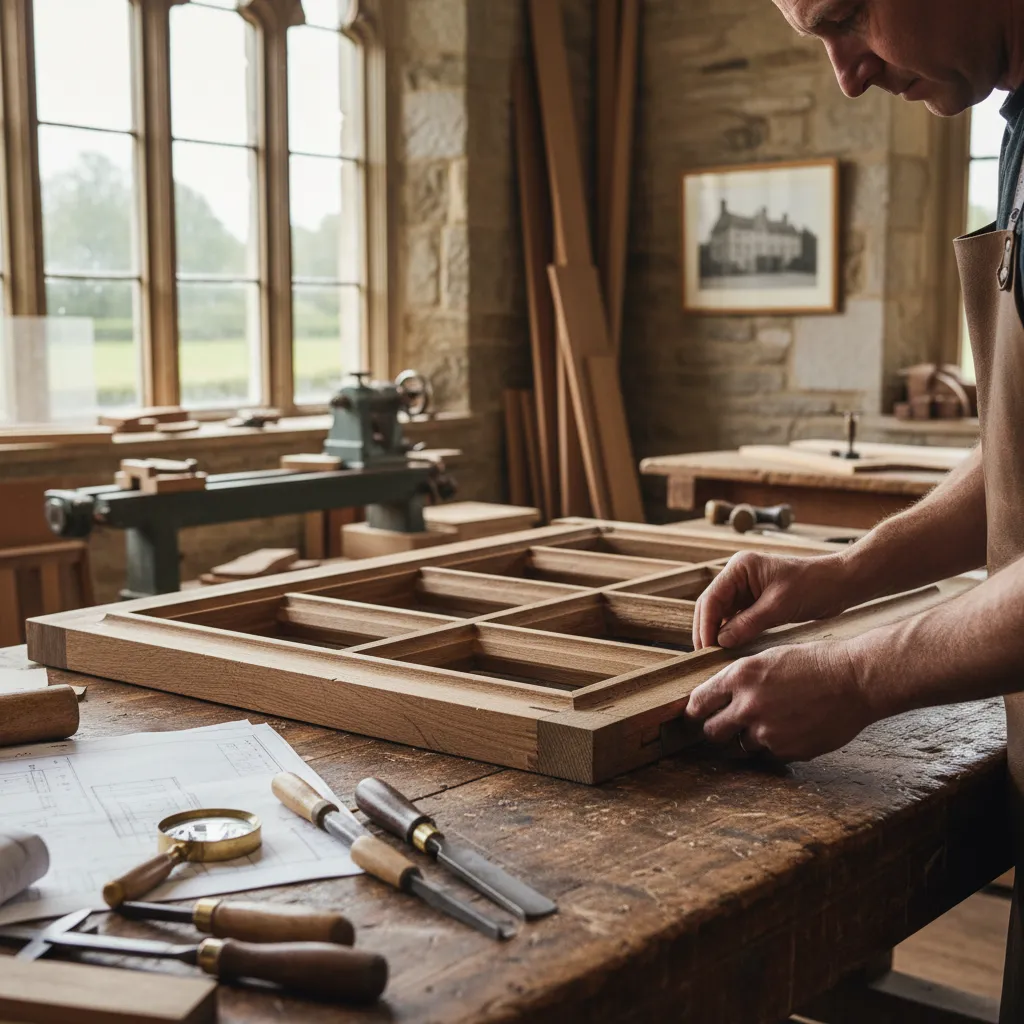
Before any timber repairs begin, ring the conservation officer attached to your local planning authority and ask whether the work needs an application or a Certificate of Lawfulness. Photograph every rotten section before removal, label the species and section size, and submit these with any query. Daniel Fitzpatrick, master craftsman at Historic Joinery Yorkshire's Crossley Mills workshop near Holmfirth, supplies this documentation on every job so the conservation officer can decide on evidence rather than assumption. A 30-minute pre-application conversation often prevents a retrospective consent problem later.
Next step: Photograph the affected timber and call the workshop on 01484 666 333, or email enquiries@historic-joinery-yorkshire.co.uk with measurements, to scope the work before approaching your local planning authority.
Practical Next Steps for Heritage Timber Work
Heritage joinery ripon and joiner services holmfirth: when to involve a specialist conservation joiner
Bring a conservation joiner in before any paperwork is submitted, not after consent has been granted on incomplete drawings. Daniel Fitzpatrick's Crossley Mills workshop has produced spliced cills, sash window sections, and matched door mouldings for Grade II and Grade II* buildings since 1993, so the detail drawings conservation officers want to see are already familiar territory. The team regularly handles heritage sash windows Leeds projects and full replacement timber windows in Holmfirth commissions, alongside bench joinery for private clients.
Ask the joiner to identify which elements are repair and which are alteration, and to specify timber species, section dimensions, and moulding profiles in writing. That single sheet often decides whether the local planning authority treats the work as maintenance or as something requiring formal listed building consent.
Where can I find experts in traditional joinery for my home renovation?
The right workshop will talk you through species choice, section size, and moulding profile before quoting, and will give you a written scope separating repair from alteration. Malbrook Heritage Joinery trades under the same single-craftsman ethos we do, and several owners in the Holme Valley now book our joiner services Holmfirth team for sash and casement window frame repair, door refurbishment, and staircase joinery.
Find skilled artisans for custom furniture using heritage joinery methods
Look for a workshop that hand-selects stock, hand-executes mouldings, and documents every splice with photographs you can hand to your conservation officer. Our cabinetmaking and furniture restoration work follows that same benchmark, and clients needing heritage door restoration Leeds commissions or one-off cabinet pieces can commission them through the same scope-of-works route.
Getting in touch for a consultation
Phone 01484 666 333 or email enquiries@historic-joinery-yorkshire.co.uk to arrange a site visit within Yorkshire, or a postal consultation for projects further afield. Photographs of each timber element, with a scale reference and notes on access, speed up the first assessment.

Following the visit, you receive a written scope of works separating genuine repair from alteration, with a quotation for the joinery package. That scope can be sent straight to your conservation officer alongside the listed building consent application, or used as evidence for a Certificate of Lawfulness where no consent is needed. Contact the workshop to start the conversation.
Sources
- Listed Building Consent: Requirements for Alterations and Repairs
- Grade 2 Listed Building Restrictions | Heritage Consulting
- Brookeswood
- Heritage Survey | Repairs and maintenance - is Listed Building Consent needed?
- Do You Need Consent? A Homeowner's Guide to Listed Building Works | GFD Homes
- HEAG304 Listed Building Consent
- Heritage Floor Restoration: Listed Building Specialists | Dyfed Richards
- Making alterations to a listed building