Reclaimed Oak Conservation Joinery: A Practical UK Guide
By Daniel Fitzpatrick, Master Craftsman · Guild of Master Craftsmen
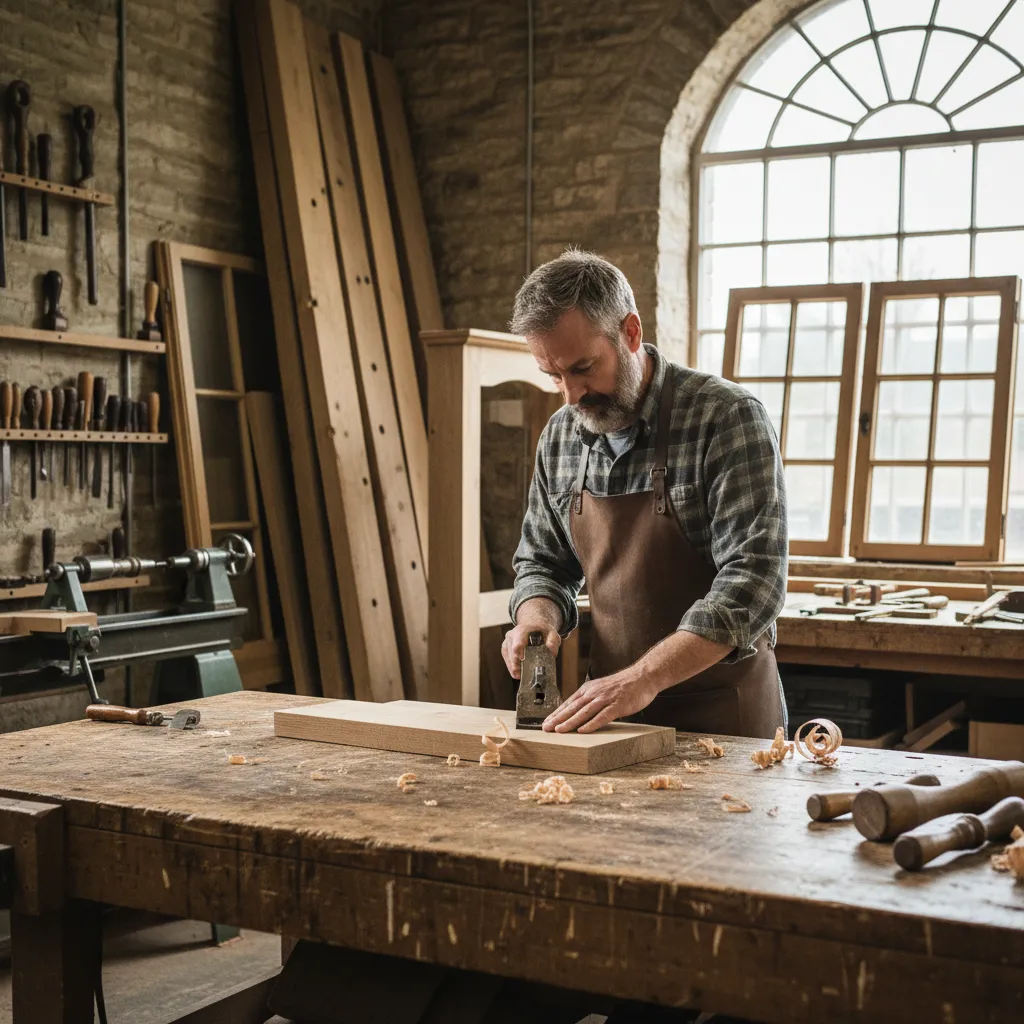
Reclaimed Oak Conservation Joinery: A Practical Guide
Reclaimed oak conservation joinery is the repair and replacement of historic timber elements using oak rescued from old buildings, then hand-shaped to match the original sections, joints, and finish.
It is the default approach on listed properties across London, Kent, Surrey, Hampshire, Berkshire, Dorset, Wiltshire, Suffolk, Lincolnshire, and Wales where like-for-like work is needed to satisfy listed-building consent.
Ecclesiastical projects, country houses, and estate buildings follow the same route. The workshop notes below show how one specialist practice handles sourcing, fabrication, and on-site fitting from a single yard.
Quick Answer: Reclaimed Oak Conservation Joinery
What it is and who it serves
Reclaimed oak conservation joinery uses oak salvaged from demolished barns, longhouses, and estate buildings, then cut with hand tools to mirror original mouldings, joints, and finish. It serves owners of listed and historic properties, heritage asset managers, conservation architects, and ecclesiastical clients who need work that passes listed-building consent and keeps period fabric honest.
Daedalus Conservation, a long-running consultancy listed in The Building Conservation Directory, treats this style of repair as standard practice on protected buildings for exactly that reason.
Why reclaimed oak rather than new
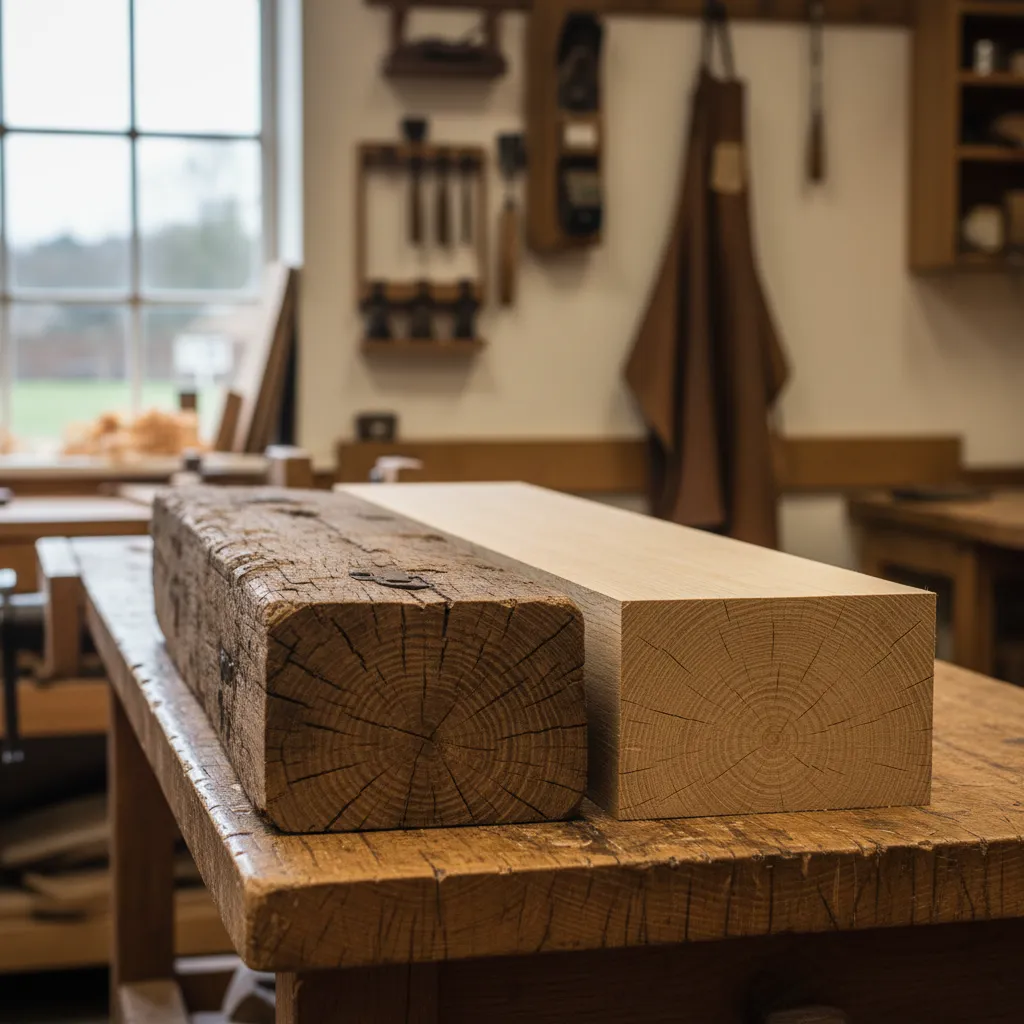
Reclaimed oak carries a patina, grain tightness, and tannin profile that new timber cannot match inside 150 years of seasoning. Conservation officers reviewing a listed-building application usually expect a like-for-like species, and aged oak from a Suffolk tithe barn, a Yorkshire farmhouse, or a Welsh longhouse is the closest fit available. Fresh-sawn oak cups, moves, and finishes pale beside original sections, especially on church screenwork and panelled doors.
Where it fits on a project
Choose this approach when more than 20% of a timber element has decayed, when a section has failed structurally, or when earlier unsuitable repairs need undoing. Skip it for surface wear, lifting veneer, or finish failure alone, where a careful clean and wax will do. The trade-off is lead time: drying checks, mortise matching, and hand-turning add three to six weeks compared with a factory-made hardwood substitute.
What to confirm before commissioning
Ask three questions before signing a quote. Where was the oak reclaimed, and can it be traced to FSC or equivalent stock? Will the workshop produce a sample section, joint, and finish for sign-off before full fabrication begins? Will the craftsman hand-finish on site, or only machine-shape in the workshop? A clear answer to each saves costly rework once Listed Building Consent is in place.
Sourcing the Right Materials and Matching the Original Fabric
Reclaimed oak beams and wide oak floor boards for like-for-like repairs
The aim in any historic repair is a like-for-like substitution: same species, same dimension, same grain character. Daniel Fitzpatrick and the team at Historic Joinery Yorkshire hold a stocked bench of FSC-certified and locally reclaimed oak, sorted by section and age. That way, a failed beam end in a Berkshire manor or a 220 mm floor board in a London townhouse can be replaced without importing timber that visibly dates from last week.
Wide oak boards are scarcer than standard flooring and carry a premium; reclaimed boards have usually air-dried for decades, so they take a finish more evenly than kiln-dried new oak. Buyers should note the trade-off: genuinely old reclaimed boards arrive with old iron staining, nail holes, and variable widths, all of which read as authentic on a 17th-century floor and as defects on a new-build. Specify character grade for listed work; specify cleaner stock for a sympathetic extension.
Heavy oak carpentry and structural timber frame repairs
Heavy oak carpentry covers the work a bench joiner cannot do: scarfing a 300 mm by 300 mm principal post, splicing a decayed sole plate, or pegging a new brace into a cruck frame. Each splice follows the original joint geometry and is fixed with hand-drawn oak treenails or copper boat nails, not resin or modern bolts.
The decision rule from three decades on site: if more than 40% of a member's cross-section is sound, repair it; if less, replace it in matching oak. Anything between is a judgement call resting on loading, exposure, and what the local conservation officer will accept. Historic Joinery Yorkshire covers projects across Yorkshire, the Midlands, Wales, and the Home Counties, and the workshop near Holmfirth is set up to machine, steam-bend, and hand-finish green oak for frame repairs on site or in-shop.
Bespoke Joinery and Interior Conservation Details That Protect Value
Bespoke bronze casement windows and doors
Bespoke bronze casement windows and doors suit period and listed buildings where original ironmongery, frame profiles, and glazing bars must be matched rather than replaced. Bronze was the standard architectural metal for high-status windows and doors from the 17th to 19th centuries, before galvanised steel and aluminium took over.
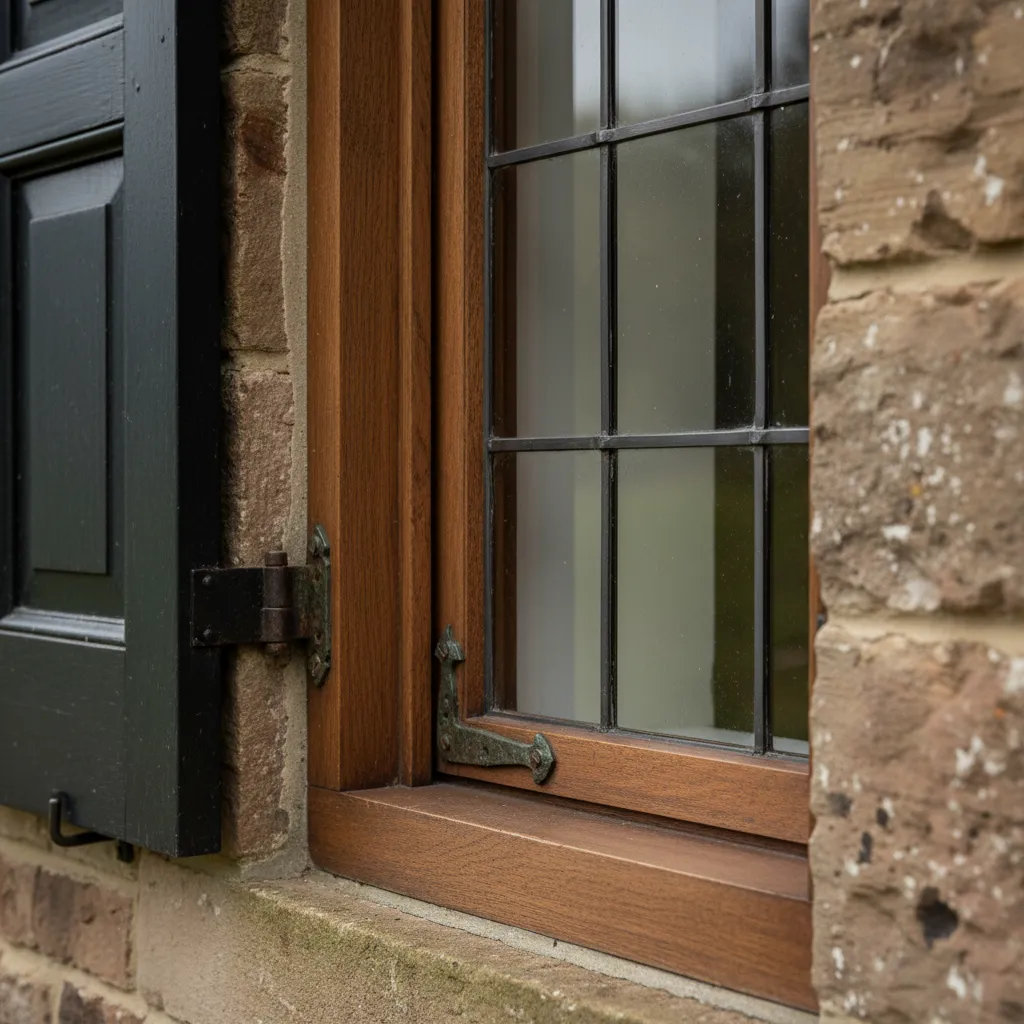
Each frame is drawn from measured surveys, then hand-cut, jointed, and fitted at the Crossley Mills workshop near Holmfirth. New casements are matched to existing opening patterns, mouldings, and glazing thicknesses so the building's rhythm stays intact.
Conservation of interior woodwork and decorative arts
Interior woodwork loses character the moment it is sanded back to bare timber. Surviving patina, old polish, and worn edges carry the evidence of a room's use across generations, and they are treated as part of the artefact rather than as surface dirt.
Work begins with a room-by-room survey recording which panels, doors, and dado rails can be retained, which sections need splice repairs in matching oak, and which decorative elements need a specialist decorative finish. Where original material has failed, replacements are sourced as FSC-certified or locally reclaimed oak, then hand-finished to blend with what survives.
Before any cutting, ask three questions: can this piece be repaired in place, can a single timber species carry the repair, and will the new fix leave a readable repair line for future conservators.
Speak to a Master Craftsman About Your Project
For work on a Grade II* staircase in a Hampshire rectory, a panelled library in a Mayfair townhouse, or a Lincolnshire farmhouse with failing principal posts, the first call should reach a workshop where the craftsman will personally handle your timber. Daniel Fitzpatrick has run Historic Joinery Yorkshire from Crossley Mills near Holmfirth for over three decades, holding Guild of Master Craftsmen credentials and specialising in fully hand-executed work rather than CNC production. Daedalus Conservation and entries in The Building Conservation Directory often direct owners toward workshops of this kind when specialist joinery is specified.
Before the phone rings, gather three items: scaled photographs of each damaged element, the listed-building consent reference if applicable, and any architect's drawings. These let the workshop quote realistic lead times and flag whether the FSC-certified stock or locally reclaimed timbers in the yard suit your species and section.
Trade-offs worth knowing: bespoke bronze casement windows run longer lead times than like-for-like timber repairs, and authentic reclaimed oak costs more per cubic metre than new European oak because of de-nailing and acclimatising. Re-joining a sash rather than replacing it can halve the schedule, but only suits cases where rot affects under 30% of the frame.
Call 01484 666 333 or email enquiries@historic-joinery-yorkshire.co.uk with those three items to start a measured conversation about scope, species, and timing for your reclaimed oak conservation joinery project.
Sources
- Fine Architectural Joinery
- Architectural joinery - The Building Conservation Directory
- Conservation of Historic Timber Structures | PDF | Carpentry | Lumber
- Conservation movement - Wikipedia
- What does conservation mean?
- A visit to the Conservation Fund's website
- Merriam-Webster's definition of conservation
- The Nature Conservancy: people and nature thriving together