Repair or Replace Sash Windows in a Listed Building: UK Guide
By Daniel Fitzpatrick, Master Craftsman · Guild of Master Craftsmen
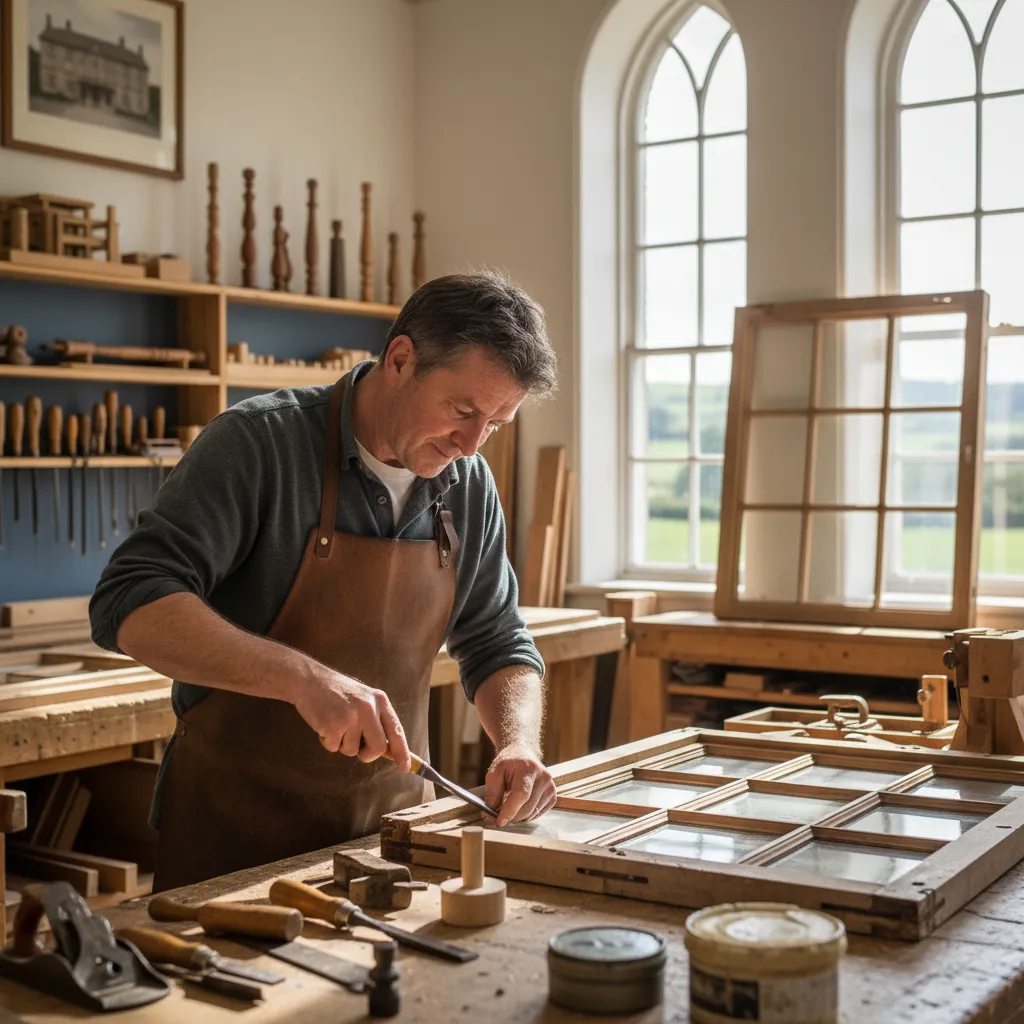
Repair or Replace Sash Windows in a Listed Building: Costs, Consent, and Choices
Repair or replace sash windows listed building owners usually pick repair.
Original timber can be spliced, draught-proofed, and overhauled for a fraction of the cost of a like-for-like replacement, and most repair work falls outside Listed Building Consent when the fabric stays put.
Quick answer: repair or replace sash windows listed building owners face
The repair or replace sash windows listed building question almost always tips toward repair when the timber is sound and the box frame still works. Listed Building Consent is needed only when windows are removed or altered in a way that affects historic character. Routine repair, including splicing, cord renewal, and draught-proofing, normally does not. That single distinction shapes everything that follows.
Is it cheaper to repair or replace sash windows?
Yes, in most cases repairing original sash windows is cheaper than full replacement. A like-for-like restoration from a heritage joiner typically starts around £720 per window, while full replacement of a Grade II Georgian-style sash runs £1,800 to £3,600 per window before consent fees.
The saving comes from keeping the existing box frames and counterweight mechanisms. New joinery carries the labour of carving mouldings, glazing bars, and horns to match the originals, which inflates the bill. Timber splice repairs to a decayed sill or bottom rail cost a fraction of a new frame and can extend service life by decades.
Replacement only wins on price when the frame is beyond saving: wet rot through both sills, missing horns, or sash boxes that have collapsed. In every other situation, restoration delivers better value, particularly when the original sash window mechanism is still working.
Am I permitted to swap out the windows of a listed property?
You can, but only with Listed Building Consent from your local planning authority, and only where the existing windows are beyond reasonable repair.
Historic England guidance states that where original sash or casement windows contribute to a building's significance, they should be retained and repaired where possible. If replacement is approved, the new units must be accurate copies in matching timber, with the same glazing bar profiles, horn details, and mouldings. uPVC is not acceptable in most listed buildings, and standard double glazing is treated as alteration.
Speak to your conservation officer before commissioning any joiner. Submitting drawings and a method statement speeds up the decision and avoids wasted cost on a design the authority will refuse.
Can I get a grant to repair a listed building?
Possibly. Grants exist, but they are limited, competitive, and usually focused on repair rather than replacement.
The main routes are Historic England grants for high-significance buildings at risk, local authority repair grants in some areas, and schemes from bodies such as the Architectural Heritage Fund. Funding typically covers traditional materials and skilled labour, and it almost never pays for upgrading to double glazing or routine maintenance.
Contact your local authority conservation officer first to ask which grants currently operate in your area. Applying takes weeks, so start before any work begins.
What can't you change on a Grade II listed building?
On a Grade II listed building you cannot alter, remove, or replace any element deemed to contribute to its special architectural or historic interest without Listed Building Consent. That covers windows, doors, original shutters, staircases, fire surrounds, and sometimes even paint colours on protected interiors.
For windows specifically, you cannot change the opening pattern, glazing bar layout, frame dimensions, or timber species without consent. Swapping single glazing for standard double glazing counts as alteration and is refused on most Grade II buildings. Slim-profile double glazing or secondary glazing can sometimes be approved, but only where the original glass and putty are documented and the new units leave the historic fabric intact.
Repair or replace sash windows: the cost picture
What the cost benchmarks actually show
Repairing sash windows in a listed building is cheaper than replacing them in nearly every case our workshop sees at Crossley Mills. A full sash window restoration typically starts at around £720 per window. Reglazing combined with restoration begins near £1,750 per window. A like-for-like timber replacement built to match original glazing bars, horns, and mouldings runs £1,800 to £3,600 per window, before Listed Building Consent fees and officer liaison time.
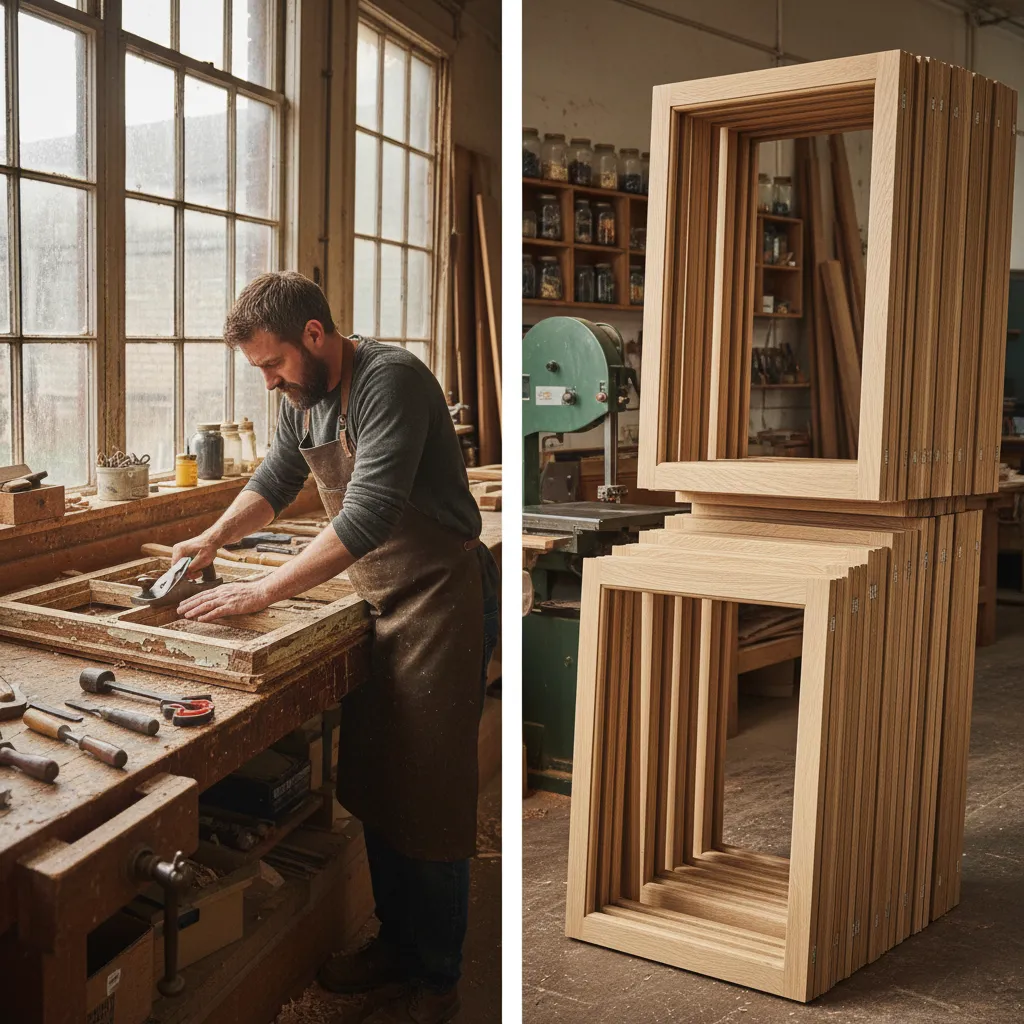
These figures align with Historic England's own position: keep the historic fabric where possible, and only replace when repair is no longer viable. Restoration also keeps the original timber, which is usually denser and more stable than modern-grown alternatives, and it keeps the original sash window mechanism intact rather than replacing it with new weights and cords.
When replacement costs more than you expect
Replacement budgets balloon once consent, scaffolding, and joinery detailing enter the picture. Conservation officers frequently ask for glazing bar profiles, putty chemistry, and ironmongery to match the existing window before granting Listed Building Consent, and each iteration adds drawing and fabrication time.
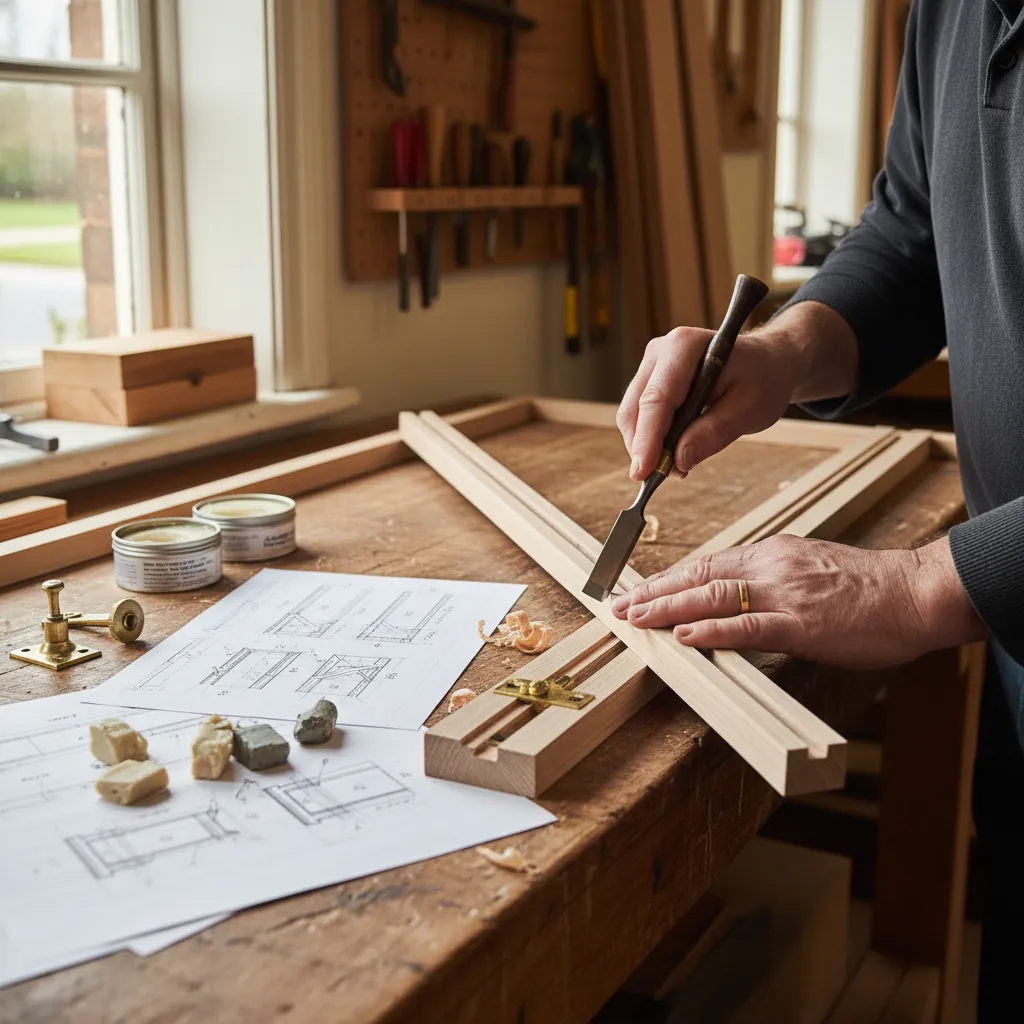
Other hidden costs appear after the windows come out: re-plastering reveals, lime mortar repairs to stone sills, and redecorating interior panelling around disturbed frames. A repair keeps the original box frame in place, sidestepping most of that follow-on spend. When a sash sticks or rattles, the fix is often a cord renewal, a parting bead adjustment, or a splice in the bottom rail, and we routinely complete that scope in a day per window rather than across a week-long contract.
For most listed-building owners we meet, the honest answer is that repair wins on cost, lead time, and consent risk. Replacement only pays for itself when the frame itself has failed, and that is rarer than most replacement-sash firms admit. The same logic applies across Yorkshire terraces, where the original softwood is often still sound beneath layers of paint.
Is it possible to put new windows into a listed property?
The short answer
You can replace windows in a listed building, but you will need Listed Building Consent from your local planning authority before any work begins. Planning permission and Listed Building Consent are two separate approvals, and both can be required.
What consent covers
Consent is required for the removal of existing sash or casement windows and the installation of new units. It applies to Grade I, Grade II*, and Grade II buildings alike. Like-for-like repairs usually fall outside the consent process. Sash cord renewal, for example, does not typically require approval, because the work returns the window to its original function without altering its character.
Where owners get caught out
Conservation areas add another layer. An Article 4 Direction can withdraw permitted development rights, so even minor external changes that would normally be exempt from planning permission still need a formal application. In Northern Ireland the Department for Communities issues the equivalent guidance, while Historic England covers the same ground in England. uPVC units are generally refused where timber was the original fabric, and slimline double glazing is reviewed case by case.
What Historic England expects from any replacement
Where replacement is unavoidable, the new joinery should be an accurate copy of the original. That means matching timber species, glazing bar profiles, horn details, mouldings, and the depth of the sash box. The aim is for a passer-by to see no difference between old and new.
Before any decision is made, a conversation with your local conservation officer will clarify what is acceptable on your specific property. Where owners want to keep the original timber and joinery methods alive, the same craft base that covers sash window repair also supports broader heritage work, so finding a workshop used to heritage joinery methods is the practical first step. Across the region, owners looking for period property windows york projects routinely weigh repair against replacement on the same heritage grounds.
Can I get a grant to repair a listed building?
Where grant funding realistically sits
Grants for listed-building repairs exist, but window work sits in a narrow band of what they will fund. Historic England administers targeted repair grants through its Historic Environment Repair Programme, and bodies such as the Heritage Fund, Architectural Heritage Fund, and some local councils run similar schemes. Most apply to buildings of recognised significance in conservation areas, registered parks, or places of worship, rather than to routine homeowner upkeep.
A typical grant will cover 10% to 90% of eligible costs, depending on the fund. Nearly all require matched owner contribution, a clear conservation statement, and quotes from suitably qualified contractors. Owners should expect to fund the initial assessment themselves.
Past awards include churches for timber window restoration and shopfront schemes, so sash window contracts are within scope. Applicants must usually show the works meet Historic England's standards for repair of historic fabric.
How to strengthen a grant application
Start by reading the funder's guidance for the current funding round, then assemble three documents: a heritage statement from a conservation architect, contractor quotes matching the funder's required format, and dated photographic evidence of the existing condition.
Good applications explain why repair, not replacement, is being proposed and link the work to a wider conservation area plan. Owners who can show their own funding matched and a clear timetable tend to score higher.
For projects in Yorkshire, our team can prepare timber surveys and methodology notes to support an application. Call 01484 666 333 or email enquiries@historic-joinery-yorkshire.co.uk.
Listed Building Consent: repair vs replacement, side by side
Repair work that usually needs no consent
Repair work that matches the existing fabric in timber species, section sizes, mouldings, and ironmongery generally falls outside Listed Building Consent. Replacing broken sash cords with new cotton or waxed hemp cord is treated as routine maintenance, as is splicing a new section into the bottom rail of a decayed sash using oak or Accoya to match the original.
Stripping built-up paint, easing sticking sashes, re-bedding loose glazing with linseed-oil putty, and adjusting beads are all classed as repair, not alteration. Conservation officers in West Yorkshire routinely confirm that this scope of work does not require Listed Building Consent, though a quick call to the duty planning officer before scaffolding goes up is worth the five minutes.
Replacement work that always does
Full replacement of a sash window frame, or fitting new sashes into a retained box, requires Listed Building Consent every time, whether the building is Grade II, Grade II*, or Grade I. Even an "identical" replacement is treated as new work in the planning sense, because the joinery has to be drawn, specified, and signed off by the conservation officer.
Reglazing with slim-profile double glazing sits in a grey zone: if you are removing single glazing and installing sealed units in the existing sash, most authorities want an application and a heritage statement. Skipping that step is the single most common reason consent retrospective enquiries open on Georgian and Victorian terraces. For a clear read on your specific window before you commit to scaffold costs, call 01484 666 333 or use the contact page to send photos and the listing description.
Grade I, Grade II*, and Grade II rules for windows explained
What you cannot change on a Grade II listed building
On a Grade II listed building you cannot alter the windows in any way that affects their historic character without first obtaining Listed Building Consent from your local planning authority. Historic England treats original sash windows as a significant feature, so any change to the glazing bar profile, horn detail, timber section, or paint colour needs consent before the work begins. Even a like-for-like replacement using accurate copies requires written approval, and unauthorised work can lead to enforcement notices or criminal prosecution.
What you can usually do without consent is routine repair: splicing decayed bottom rails, renewing sash cords, easing sticky frames, and repainting every four to five years. Conservation officers in our experience are pragmatic about repairs that use matching timber species and traditional joinery methods, because the original fabric stays in place. Draught-proofing and overhauling sash windows falls into this permitted category when no external appearance changes.
Slimline double glazing and secondary glazing options
Slimline double glazing is acceptable on Grade II listed buildings when the glazed unit fits within the existing sash and keeps the original glazing bar profile visible. Typical slim units run 11 to 14 mm overall, narrow enough to slot into a 16 mm rebate without resizing the timber. Secondary glazing is a separate internal frame fitted to the reveal, leaving the original window untouched, which most conservation officers accept without consent.
The trade-off is straightforward: slimline units improve thermal performance by roughly 30% to 40% over single glazing, while secondary glazing can reach 60% when magnetically sealed. Slim glazing requires careful measurement and a conservation officer sign-off; secondary glazing costs less upfront but adds an extra frame to operate during cleaning. We have fitted both approaches in Yorkshire townhouses where the original single glazing had to be kept.
Draught-proofing and overhauling existing sash windows
What an overhaul actually involves
An overhaul addresses the moving parts and the seal, not the historic fabric. The sashes are lifted out, the old cords cut away, new waxed sash cords fitted to the original cast-iron weights, and the pulley wheels checked for wear. Staff bead and parting bead are replaced if split. The box frame is then re-seated, the sashes eased with a light plane where they bind, and new brush pile or silicone weatherstripping routed into the staff bead to close the perimeter gap.
Where a sash window mechanism has worn past safe use, the same overhaul lets us drop in a new set of weights and cords matched to the original sash weight. That keeps the appearance unchanged while restoring smooth operation, and it is the standard first step when restoring sash windows on period homes. For homeowners weighing up the choice to repair or replace sash windows listed building advice almost always starts with this overhaul scope.
Common problems and their targeted fixes
Draughts usually trace to three points: the meeting rail, the staff bead, and the sill. Reseating the sashes with new brush seals typically cuts airflow through these joints without altering the appearance. Sticking sashes respond to a thin plane skim on the rails and a fresh coat of linseed-oil putty. Rattling comes from worn parting bead, which is a single length of timber to renew. None of this work touches the historic glazing bars or the original box frame.
Timber splicing, epoxy resin, and putty work
Rot in a bottom rail or sill does not mean a new window. A heritage joiner cuts back to sound heartwood and lets in a splice of matching timber, usually oak or Accoya, bedded in a slow-cure epoxy. Pinholes and small areas of decayed softwood are consolidated with a two-part epoxy resin, shaped back to profile once cured. Failed linseed-oil putty is raked out and re-beaded in traditional glazing putty, then finished to match the surrounding sightline.
Where the sash window mechanism itself is sound, this scope of work is the heart of repairing wooden sash windows on listed homes, and the reason most owners end up spending less than the replacement quote they were first given. Customers often arrive asking how to refurbish sash windows and leave with a splice-and-overhaul plan rather than a full replacement contract.
Joining it together: how to choose
Pull the three threads together: fabric, consent, and cost. If the timber is sound and the sash window mechanism still operates, repair wins on all three. If rot has spread through both sills and the box frame has dropped, replacement with Listed Building Consent becomes the honest answer, and the budget follows. If thermal performance is the real driver, secondary glazing almost always clears consent and avoids altering the historic single glazing.
Where the property sits in a conservation area with an Article 4 Direction, ring your duty planning officer before scaffolding goes up. Where the building is Grade I or Grade II*, expect a longer conversation with the conservation officer and a fuller heritage statement. In every case, get the timber assessed by a heritage joiner before you commit to a replacement contract, because the cheapest quote is rarely the right one for a listed building.
Next step: speak with a heritage joiner
Send a few clear photographs of each sash, including close-ups of any rot, and a short note on the fault. Historic Joinery Yorkshire will assess whether draught-proofing, an overhaul, or partial splicing will resolve the problem before any replacement is discussed. Our Crossley Mills workshop handles the full scope from survey to hand-finished installation, covering listed-building window repair and sash restoration on Georgian terraces across West Yorkshire. Call 01484 666 333, email enquiries@historic-joinery-yorkshire.co.uk, or use the contact page to start a conversation. Homeowners looking for sash window restoration leeds and period property windows leeds work can book a site visit through the same route, and clients further north regularly book in our joiner services holmfirth team for repair or replace sash windows listed building projects.
Sources
- Repairing or Replacing a Listed Building's Windows
- Grade 2 listed building windows: Restoration & Reglazing existing windows
- Replacing and repairing sash windows on listed buildings
- Can You Replace Windows in a Listed Building?
- Department for Communities guidance on caring for windows and doors in listed structures
- Repair a Sash London's primer on restoring windows in graded properties
- Historic England's advice on adapting heritage windows during energy-efficiency upgrades
- An in-depth handbook to sash window refurbishment for period and protected homes