Article 4 Direction: What It Means for Windows and Doors
By Daniel Fitzpatrick, Master Craftsman · Guild of Master Craftsmen
An article 4 direction is a planning direction, usually made by the council, that removes some permitted development rights in an area. Where one applies, replacing windows and doors or painting the front of a house can need a planning application when it normally would not.
If you live in a Yorkshire stone terrace and want new windows or a new front door, you may have heard the words "Article 4" from a neighbour or a solicitor. From our workshop at Crossley Mills in Honley we repair and make timber windows and doors for period homes across the county, so this is the plain-English version of what those rules mean for your joinery.
Key takeaways
- An article 4 direction does not ban work. It means the work needs a planning application instead of going ahead under permitted development.
- Windows, doors, porches and exterior painting are among the works a direction can bring under control.
- Repairs and like-for-like maintenance are usually not affected, but check the wording of your direction.
- In Kirklees, start with the council's postcode check and conservation area maps. In Calderdale, directions are recorded with the local land charges. Either way, ask the council's planning team to confirm.
What is an article 4 direction in planning?
Most houses in England come with "permitted development" rights. These let you carry out some small changes without applying for planning permission. The Planning Portal says you do not usually need permission for repairs and minor improvements such as repainting window and door frames, or for new windows and doors "of a similar appearance to those used in the construction of the house".
Government guidance describes an article 4 direction as a direction under article 4 of the General Permitted Development Order that lets the Secretary of State or the local planning authority "withdraw specified permitted development rights across a defined area" (GOV.UK planning practice guidance). In short, the council takes back a right you would otherwise have, for a named street, area or property.
Directions covering windows and doors are often used in conservation areas. A conservation area on its own already limits some permitted development, but by itself it does not remove the right to make many small changes to windows and doors. Cheshire East Council explains the reason for the extra control well: many small alterations to windows, doors, roofs and boundary walls still do not need permission, and "added together they begin to have a marked effect on the appearance of conservation areas" (Cheshire East Council).
What does it mean if my property is subject to an article 4 direction?
It means one thing in practice: some work you could have done without asking now needs a planning application first. The GOV.UK guidance is clear that a direction "only means that a particular development cannot be carried out under permitted development and therefore needs a planning application". It gives the council the chance to look at the proposal in more detail. It is not an automatic refusal. Your local planning authority can confirm whether a direction covers your house and exactly which works it includes.
A few other points from the same guidance are worth knowing:
- A fee may be payable. The guidance says a planning application fee may be charged even though the work would have been permitted development without the direction.
- Work already done is not caught. A direction cannot prevent development that has already started or been carried out.
- Some directions take effect straight away. An immediate direction can withdraw rights at once, but the council must confirm it within 6 months, after local consultation, for it to stay in force.
- Compensation is limited. It can only arise if the council refuses, or restricts with conditions, work that would otherwise have been permitted development, and only for abortive spending or loss directly caused by losing those rights.
Which works on windows, doors and paint are usually covered?
Every direction lists its own "classes" of work, so the exact wording matters. Across the country, though, the same few items come up again and again. Cheshire East lists windows, doors, roofs, chimneys, architectural details, painting of unpainted properties, boundary walls and porches among the things its directions can include. It also notes that its directions "generally only apply to elevations fronting a highway", so rear windows are often outside them. That is Cheshire East's position, not a national rule, so check your own direction.
| Work to your house | Normally (no direction) | Where a direction covers it |
|---|---|---|
| Repainting window and door frames | Usually no permission needed | Depends on the wording; some directions control painting, others only painting of previously unpainted surfaces |
| Repairs and like-for-like maintenance | Usually no permission needed | Often unaffected; check the direction's wording |
| New windows of similar appearance | Usually permitted development | Planning application likely needed on the covered elevations |
| Changing window style, material or glazing pattern | Depends on whether it still looks similar | Planning application likely needed |
| Replacing a front door | Usually permitted development if similar in appearance | Planning application likely needed if doors are listed in the direction |
| Adding a porch | Permitted development within set limits | Planning application likely needed if porches are listed |
The "normally" column describes houses. Householder permitted development rights do not apply to flats (GOV.UK technical guidance), and the Planning Portal says a listed building needs listed building consent for any significant works, internal or external. Treat the table as a guide only and confirm your own case with your local planning authority.
Painting is worth a note of its own. Exterior painting is permitted development under Class C of Part 2 of the General Permitted Development Order, and "painting" there "includes any application of colour" (legislation.gov.uk). If a direction removes that class, a change of colour on a front door or window frames could need permission. Cheshire East, for example, says its directions do not affect painting or decoration except of previously unpainted brickwork. Other councils word it differently.
What counts as "similar appearance" for windows?
This is where most confusion starts, with or without a direction in place. The government's technical guidance on householder permitted development says new windows must give "a similar visual appearance to those in the existing house, for example in terms of their overall shape, and the colour and size of the frames".
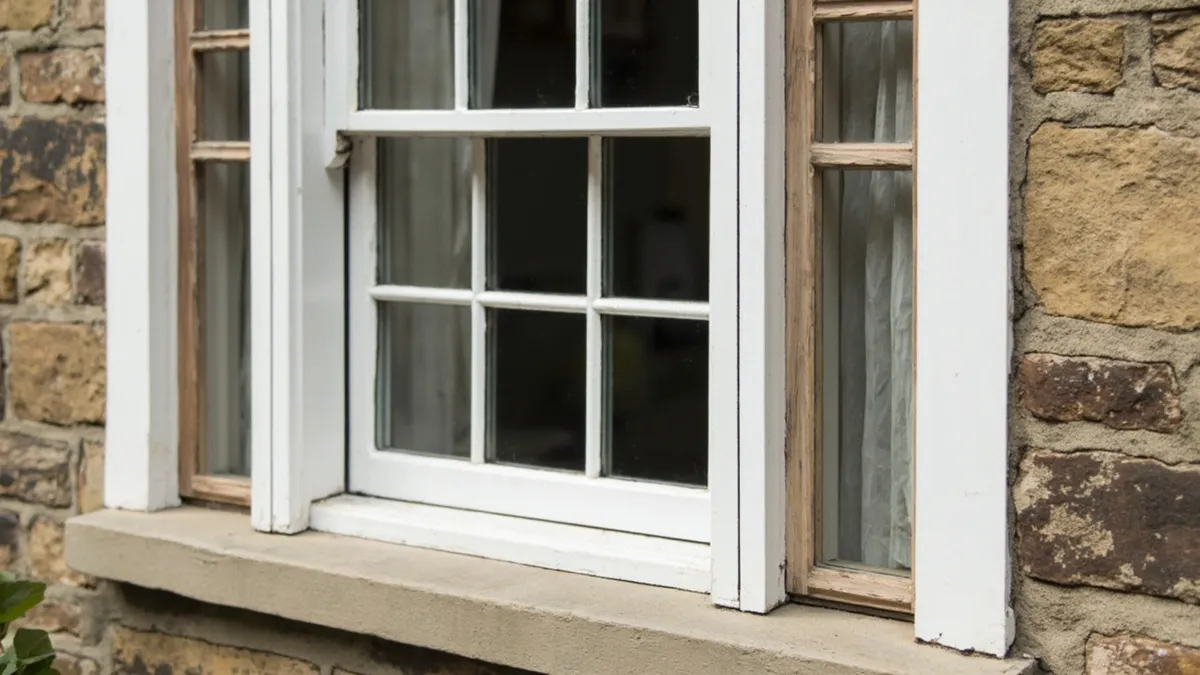
On a stone terrace with slim timber sashes, that bar is higher than many people expect. Thick plastic frames, fake glazing bars and a different opening style all change how a front looks. Inside a conservation area with a direction in force, the council is likely to look closely at those details on the elevations it controls. If you are weighing up what to do with tired casements, our guide to repair vs replace for casement windows in a conservation area goes through the options.
How to check for an article 4 direction in Kirklees and Calderdale
Much of the Colne and Holme valleys, Huddersfield and Halifax is made up of stone-built Victorian terraces, mill buildings and weavers' cottages with long rows of mullioned windows. That is exactly the kind of Yorkshire street where conservation areas are drawn, so it pays to check before you order anything.
Kirklees (Huddersfield, Holmfirth, Honley, Marsden and more)
- Use the postcode search on Kirklees Council's find out if you need planning permission page. Its first stage is to check for local constraints, including listed buildings, conservation areas and planning conditions that restrict or remove permitted development rights. The council also notes that permitted development rights "can be removed as well as granted".
- Look up your street on the council's conservation area maps and appraisals page. It covers areas including Holmfirth, Honley and Marsden, with appraisals for some of them.
- Read the planning history for your house. A condition on an old permission can remove rights on a single property, even with no area-wide direction.
- If anything is unclear, ask the Kirklees planning team before work starts.
Calderdale (Halifax, Hebden Bridge and the upper valley)
- Calderdale publishes its Article 4 Direction plans as open data. The data.gov.uk listing says the plans are found under item 3.9 on the council's local land charges (CON29R) page.
- If you are buying, your solicitor's local search should show them. If you already own the house, ask Calderdale Council's planning team to confirm.
- Check whether the house is also listed. Listed building consent is a separate regime, covered in our guide to listed building consent for timber repairs.
Other Yorkshire councils, such as Leeds, Wakefield and York, keep their own records. The same approach works: check the council's conservation pages, then ask the planning team.
Our rule of thumb: repair first, then match exactly
After years of working on period windows and doors across Yorkshire, our advice where a direction applies is simple. We recommend this order of decisions:
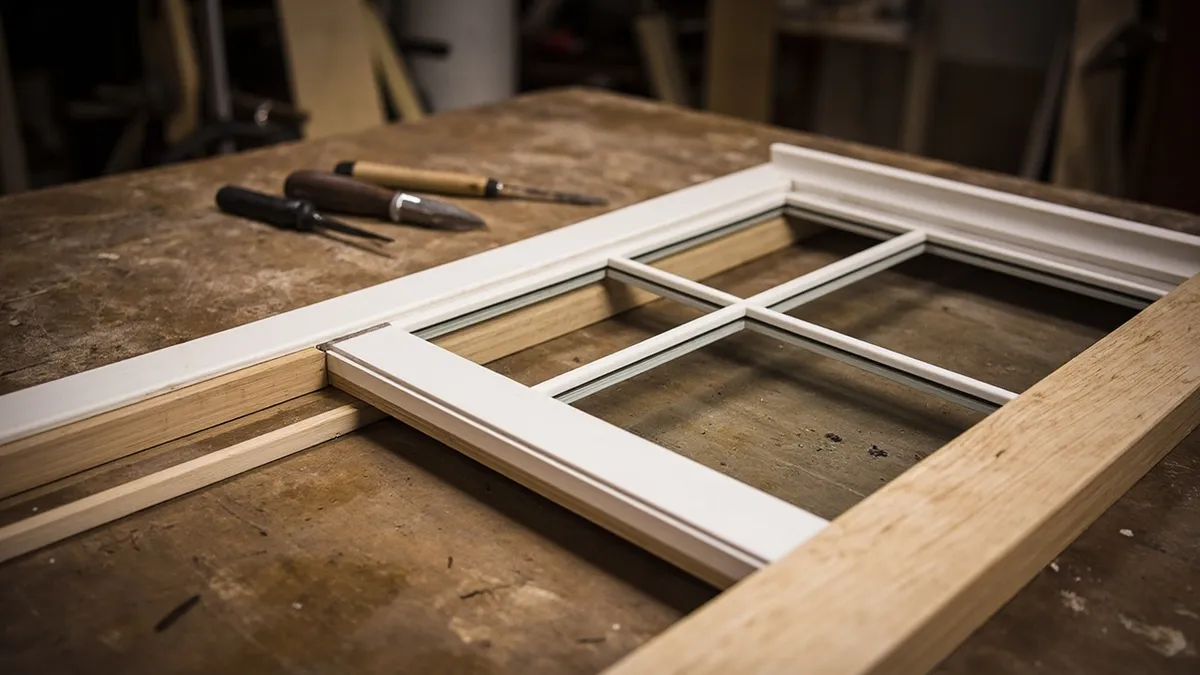
- Can it be repaired? Rotten cills, loose joints and failed putty can often be fixed in the workshop. Repair and maintenance are usually outside the controls, so this is often the quickest route with the least paperwork.
- If a part must be replaced, copy it. We match the timber section, mouldings, glazing bar profile and opening method of the original. The closer the match, the easier the conversation with the council.
- If you want a change, apply first. A new colour, a different door design or new windows in a new style should go to the council before any money is spent on manufacture.
Getting the order wrong is expensive. A replacement ordered before anyone checked the rules may not get permission, and unauthorised work can lead to enforcement by the council. Our heritage joinery service is built around repairing what is there and making careful copies only where a piece is beyond saving.
Do conservation area rules stop draught proofing or better glazing?
Not usually, for an unlisted house. The Planning Portal lists the installation of internal secondary glazing among the works that do not usually need planning permission. Government guidance says building work that does not materially affect the external appearance of a building is not "development" (GOV.UK), and discreet draught proofing on a sash window does not change the look of the front. If the house is listed, check with the conservation officer first, because listed building consent is a separate regime and can cover internal work.
Secondary glazing can be added inside most period windows, and we can advise on what suits your frames. For sashes, our sash window restoration service covers new cords, weights, beads and brush seals. For front doors, our door restoration work covers stripping, splice repairs and refinishing, which keeps the original door in place.
Which areas of London are subject to article 4 directions?
This is a common search, but there is no single London list. Each London borough makes its own directions, and they cover different things, from windows and doors in conservation areas to changes of use. The answer for any address comes from that borough's planning pages or a local land charges search. The same is true here in Yorkshire, which is why we point people to their own council rather than any national map.
Not sure what the rules allow for your windows or doors?
Call us before you commit to anything. Advice is free, and Daniel Fitzpatrick, our master craftsman with over 30 years' experience and a member of the Guild of Master Craftsmen, can look at your windows and doors and tell you what can be repaired and what would need a careful copy. We work across Yorkshire from our workshop at Crossley Mills, Honley.
Ring 01484 666 333, send details through our contact page, or read more about our heritage joinery for period homes.
Frequently asked questions
What does article 4 mean?
It refers to article 4 of the General Permitted Development Order. That article lets a council, or the Secretary of State, withdraw chosen permitted development rights in a defined area. Work that was automatically allowed then needs a planning application, so the council can judge it first. It does not mean the work will be refused.
Can I still repair my windows if a direction applies?
Usually, yes. Repairs and like-for-like maintenance are normally outside the controls, and some councils say so in their guidance. Directions vary, though, so read the wording for your area or ask the planning team. Repair is also the option most likely to keep the original character the direction is there to protect.
Do I need permission to paint my front door a new colour?
On an unlisted house, only if the direction covering it removes the right to paint. Exterior painting is normally permitted development, and in the law "painting" includes any application of colour. Some directions control painting; others only control painting surfaces that were never painted. Check with your council before you change a colour.
How do I know if my house is covered?
Ask your council's planning team, or check the local land charges search, which a solicitor runs when a house is sold. In Kirklees, start with the council's postcode check and conservation area maps. In Calderdale, check the land charges records. In both, the planning team can confirm.
Sources
- GOV.UK: When is permission required? (planning practice guidance)
- GOV.UK: Permitted development rights for householders, technical guidance
- Planning Portal: Doors and windows, planning permission
- General Permitted Development Order 2015, Schedule 2 Part 2 Class C (exterior painting)
- Cheshire East Council: Article 4 Directions, controls in conservation areas
- Kirklees Council: Find out if you need planning permission
- Kirklees Council: Conservation area maps and appraisals
- data.gov.uk: Calderdale Council Article 4 Directions dataset