Dry Rot vs Wet Rot: How to Tell the Difference
By Daniel Fitzpatrick, Master Craftsman · Guild of Master Craftsmen
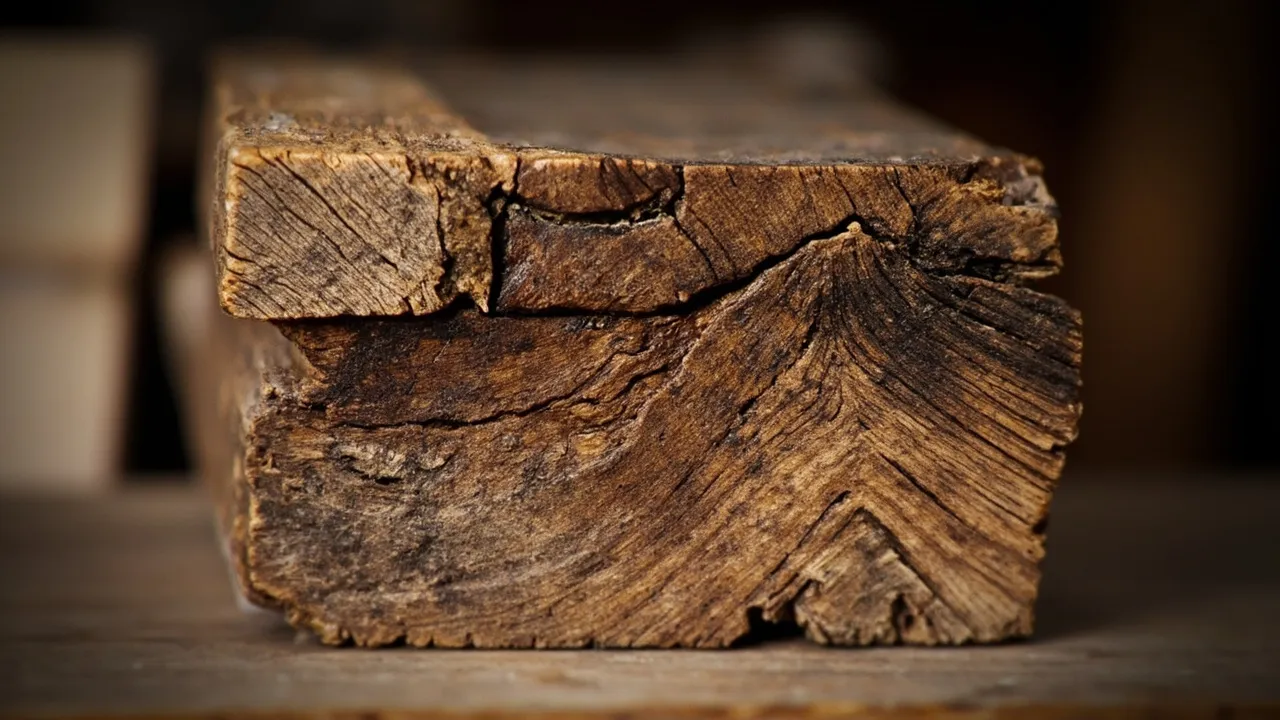
Dry rot vs wet rot comes down to spread. Both are fungal decay in damp timber. Wet rot usually stays where the wood is wet and is common in windows and doors. Dry rot is caused by one fungus and can travel through masonry to reach other timber, so it is more serious.
Both rots turn up in period homes across Yorkshire, and telling them apart decides what happens next. In our workshop at Crossley Mills in Honley we repair timber once the cause of the damp has been dealt with, so we see the results of both. This guide explains how to tell them apart and how the timber is repaired.
Key takeaways
- Both rots need damp. The PCA says fungal decay always arises because timber has become wet, above 20% moisture content, so the first job is to find and stop the water.
- Wet rot usually stays in the wet area and commonly affects windows, doors and other external joinery.
- Dry rot can spread over and through damp masonry to reach timber some distance away, so a suspected outbreak needs a proper survey before anyone starts cutting.
- Once the damp is fixed, decayed timber can be cut out and repaired to match. Wholesale replacement should not be automatic.
Dry rot vs wet rot: what is the difference?
Both are caused by fungi that feed on timber. The Society for the Protection of Ancient Buildings (SPAB) defines dry rot as a brown rot caused by one fungus, Serpula lacrymans. Wet rot covers white or brown rots caused by various fungi, most commonly Coniophora puteana (SPAB, Timber-decaying fungi).
The name "dry rot" is misleading. Wikipedia calls it a misnomer, because all wood-decaying fungi need a minimum amount of moisture before decay begins (Wikipedia, Dry rot). SPAB adds that dry rot thrives at lower moisture levels than wet rot, but still only does real damage where there is damp.
The Property Care Association (PCA) puts the practical difference plainly. Dry rot is the most serious form of fungal decay of timber and can spread into and destroy much of the timber. Wet rot occurs more often but is less serious, and decay is typically confined to the area where timber has become and stays wet (PCA guidance note, Fungal Decay in Buildings).
Dry rot vs wet rot side by side
This table is a guide only. Some wet rots look very like dry rot, and the PCA stresses that the two must be identified correctly because they need different treatment.
| Dry rot | Wet rot | |
|---|---|---|
| Look | Grey or white cotton-wool growth, silver-grey skins with lemon-yellow patches and lilac tinges, grey strands, pancake-shaped fruiting bodies. Timber darkens and breaks into cubes. | Often little visible growth. Cellar fungus (Coniophora puteana) darkens the wood and cracks it mostly along the grain. White rots bleach it and leave it soft, stringy and fibrous, with no cubical cracking. |
| Smell | Often a musty smell. | No distinctive smell is described in our sources. |
| Spread | Can cross non-timber surfaces and penetrate mortar joints and plaster to reach other timber. | Typically confined to the damp area. The fungus does not spread into walls, though it may sometimes grow over masonry. |
| Cause | Damp timber, often in dark, unventilated voids such as beneath floors. | Damp timber, commonly exposed wood such as external joinery, and very damp cellars, solid floors and roofs. |
| Fix | Stop the damp, then a survey to find the full extent before any treatment or cutting out. | Stop the damp, dry the timber, cut out the decay and repair or replace it. |
Sources: SPAB and the PCA guidance note.
What does dry rot look like?
SPAB describes dry rot as the most aggressive wood-destroying fungus. It thrives in dark, unventilated voids such as the space beneath floors, often has a musty smell, and can grow into grey or white sheets like cotton wool before forming orange fruiting bodies. The timber turns darker and develops cube-like cracking as it dries (SPAB).
The PCA adds more detail. In still, humid conditions the growth has bright lemon-yellow patches, and lilac tinges are more common where it is less humid. Its strands are grey, sometimes as thick as a pencil, and turn brittle when dried. A light rust-coloured spore dust may be the first sign of an outbreak. The PCA also notes that fruiting bodies are far more common with dry rot than with wet rots (PCA).
Things that should make you stop and get advice:
- Soft, cotton-wool growth or grey skins on timber, plaster or brickwork.
- Rust-coloured dust on surfaces near skirting boards or floors.
- A flat, fleshy growth like a pancake on a wall or under a floor.
- Skirting boards, floorboards or panelling that have shrunk, cracked into cubes or sound hollow.
- A musty smell in a room or under a floor that does not clear with airing.
What does wet rot look like?
Wet rot, SPAB says, commonly affects exposed wood such as external joinery. The white species leave timber softened, with a bleached, fibrous look. The brown species are easily confused with dry rot, but their fungal threads (hyphae) stay flexible when dried rather than becoming brittle (SPAB).
The PCA names one white rot fungus, Phellinus contiguus, as a major cause of decay in external joinery. It bleaches the wood, which becomes stringy and fibrous, with no cubical cracking. One of the most common wet rots, Coniophora puteana, darkens the wood and cracks it mainly along the grain. Its cross cracks are often hidden under a thin skin of fairly sound wood (PCA).
That thin skin is why we probe cills and bottom rails with a screwdriver: the surface can look fine while the timber behind has gone soft. On windows and doors, the rot is usually at the bottom: cills, the bottom rails of sashes, the feet of door stiles and anywhere water sits on end grain.
What is worse, dry or wet rot?
Dry rot is worse. The PCA calls it the most serious form of fungal decay of timber. Its strands can spread from infected timber over and into damp masonry walls, so large areas of damp wall can become infected, and the full extent must be found before treatment can be done with confidence (PCA).
That does not make wet rot harmless. Left alone, it keeps eating into a cill or rail each wet winter until the joint fails. But in a dry rot vs wet rot comparison, wet rot is usually the smaller job: fix the water, cut out the soft wood, repair the gap.
The PCA warns that a wet rot treatment used against dry rot is less certain to work. A dry rot treatment used against wet rot will work, but it is unnecessary and costly and could breach the COSHH Regulations 2002, as amended (PCA).
Wet rot treatment: what actually works?
Good wet rot treatment starts with the water. The PCA says the source of dampness must be found and corrected. Where wet rot comes from a direct leak, it can often be stopped completely by removing the source and drying the timber thoroughly and quickly. Decayed timber should then be cut out and replaced with pre-treated timber, or restored with resin or other reinforcement. With wet rot, there is no need to sterilise the brickwork (PCA).
SPAB's first step is the same for both rots. Dry timber is immune to attack, so remove all causes of dampness and dry the timber below 20% moisture content, for example by fixing faulty gutters or improving ventilation. Where damage is major, it favours conservative timber repairs and warns against automatic wholesale replacement (SPAB).
For windows and doors, this is where our conservation joinery work comes in. Once the leak, blocked drip or failed paint has been dealt with, we cut back to sound timber and splice in new wood matched to the original profile.
What kills dry rot naturally?
Drying out is the main control. SPAB says dry timber is immune to attack, and the PCA calls drying of the wall the primary control measure against dry rot. It warns that soaking walls with fungicide on a wide scale can rarely be justified, partly because it lengthens that drying time (PCA).
SPAB lists targeted chemical treatment as a possible secondary measure where an attack is serious and the damp will be hard to remove quickly. Even then it should not replace drying. SPAB also says that routinely cutting timber back to a safety margin of 0.3 to 1.0 m beyond the last signs of decay is rarely justified. Using blowtorches on dry rot usually creates an unacceptable fire risk. Hot air heat treatments have been trialled with encouraging early results (SPAB).
For suspected dry rot, get a specialist survey. SPAB advises that advice should come from an independent chartered surveyor or consultant rather than a remedial treatment contractor. We do not treat dry rot ourselves. Our part comes afterwards, repairing or remaking the joinery once the outbreak has been dealt with.
Why do Yorkshire homes get both kinds of rot?
Around Huddersfield and the Holme Valley there are many stone-built Victorian terraces and mill buildings, and weavers' cottages with long rows of mullioned windows in Holmfirth, Honley and Marsden. These buildings sit in wet, exposed Pennine weather in the Colne and Holme valleys. Cills, door bottoms and joinery on the most exposed elevations can stay damp for long spells.
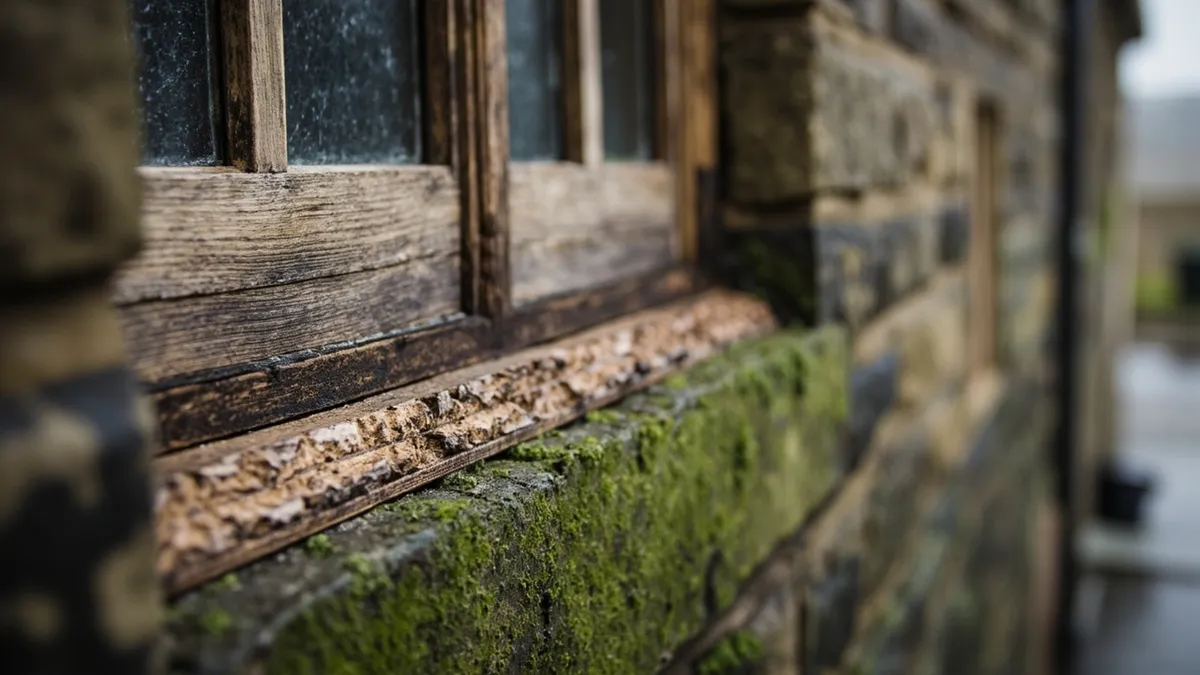
Wet rot is the more common of the two, the PCA notes, and SPAB says it commonly affects exposed wood such as external joinery. The PCA also lists the building faults that let water in on any property, from blocked gutters and deteriorated pointing to faulty flashings around window frames and blocked air-bricks (PCA). If you live in an older house in Holmfirth or around Huddersfield, check those points every autumn before the worst of the weather arrives.
Our rule of thumb for timber repair once the damp is fixed
Our rule of thumb at the bench is simple: we do not repair joinery until the cause of the damp has been fixed and the timber is drying, and we cut back until the screwdriver no longer sinks in. After that, the size and position of the damage decides the repair:
- Shallow, local softness on a face that carries no load: harden, fill and repaint.
- Rot in a joint, or running along a cill, rail or stile: cut it out and splice in new timber of a similar species, with the grain running the same way.
- A component soft from end to end: make a new cill, rail or sash to the original profile, and keep everything else.
- Any sign of dry rot in the surrounding structure: stop, and wait for the survey before any joinery goes back.
Two more details matter. First, prime all faces of new timber, including the ends and the back, before it goes in. Second, keep new timber away from damp masonry. The PCA says replacement timbers must be isolated from damp walls (PCA).
For a period front door with a soft bottom rail, our door restoration service covers exactly this kind of repair. For cills, see our guide to sash window sill replacement on listed buildings. To stop the rot returning, our guide to caring for heritage timber covers finishes and warning signs.
Free advice on rotten joinery in Yorkshire
Not sure what you are looking at when it comes to dry rot vs wet rot in your windows or doors? Get in touch and we will tell you honestly what can be saved. Master craftsman Daniel Fitzpatrick, a Guild of Master Craftsmen member with over 30 years at the bench, oversees every job himself, and advice is free.
Call 01484 666 333, get in touch through our contact page, or read about our conservation joinery and timber repair service. We work from Crossley Mills in Honley and cover Holmfirth, Huddersfield and towns across West and North Yorkshire.
Frequently asked questions
How do I tell dry rot vs wet rot myself?
Look for spread and growth. Cotton-wool growth, grey strands, rust-coloured spore dust or a fleshy fruiting body on nearby masonry point to dry rot. Soft, bleached or darkened wood confined to a wet cill or door bottom usually means wet rot. Some wet rots look very similar, so get anything uncertain checked.
Can I sell a house with dry rot?
Yes, a house with dry rot can still be sold, but it may affect the sale. A buyer's surveyor may well find it, and a buyer may ask for it to be put right first or adjust their offer. Take legal advice on what you need to disclose, and keep any survey and repair paperwork.
Is dry rot covered by house insurance?
It depends entirely on your policy. Read the wording carefully and ask your insurer or broker before any work starts, especially if the damp came from a sudden event such as a burst pipe. Keep photos, the survey and the repair invoices in case you need to make a claim.
Does wet rot spread to other timber?
Not in the way dry rot does. The PCA says wet rot is typically confined to the area of dampness because the fungus does not spread into walls. It will keep working along a wet cill or rail and into its joints, though, so it should still be repaired before it gets worse.