Linseed Oil Paint for Windows and Doors: Pros and Cons
By Daniel Fitzpatrick, Master Craftsman · Guild of Master Craftsmen
Linseed oil paint is a traditional paint made from pigment bound in linseed oil. On windows and doors it soaks into bare timber, stays flexible and weathers slowly, but it dries far more slowly than modern paint and has to go on in thin coats.
It is a question we are often asked. In our workshop at Crossley Mills in Honley we repair and repaint sash windows, casements and period doors from houses across Yorkshire, and the paint question often comes up at the end of a job. This guide sets out the pros and cons honestly, from a joiner's point of view, so you can decide whether it suits your windows.
Key takeaways
- Oil paint made with linseed oil was the normal finish for softwood joinery before modern paints. SPAB says linseed paint might be a justified substitute where the old lead paint can no longer lawfully be used.
- Its strengths are penetration into bare wood, a finish that ages slowly and easy touching-in without heavy stripping.
- Its weaknesses are slow drying, the need for thin coats and good preparation, and poor compatibility with some preservatives and modern coatings.
- Whatever paint you choose, regular maintenance of the paint film is what keeps external softwood protected.
What is linseed oil paint?
It is paint in which the binder, the part that holds the pigment and forms the film, is linseed oil pressed from flax seed. Before the early twentieth century, the Society for the Protection of Ancient Buildings (SPAB) says, oil paint "usually with linseed oil and lead white" was used extensively on softwood joinery and metalwork. Many modern paints, by contrast, are based on plastics such as acrylic and alkyd resins (SPAB, Paint).
Lead white is now largely off the table. SPAB notes that lead-based paint offered excellent durability but that its use is now banned except on exempted buildings (SPAB Technical Advice Note, Repair of Wood Windows). The oil paints sold for joinery today use other pigments in the same kind of linseed binder.
What does linseed oil do in paint?
It is the glue that turns into the paint film. Linseed oil is a "drying oil": it does not dry by water or solvent evaporating, as water-based paints do, but hardens by reacting with oxygen in the air (Wikipedia, Drying oil). Wikipedia describes this polymerisation as happening over a period of days to years, and the films that result as stable and "somewhat elastic".
For a joiner, that chemistry explains most of how the paint behaves:
- It soaks in. Thin oil-rich first coats are drawn into bare timber rather than sitting on top as a skin.
- It stays slightly flexible. Softwood swells and shrinks with the seasons, and a film that can move with it is less likely to crack at the joints.
- It cures slowly. Oxygen has to reach the whole film, which is why thick coats stay soft for a long time.
One point people often miss: linseed oil on its own is not a weatherproof finish. Wikipedia notes that liquid water gets through a plain linseed oil wood finish "in mere minutes" (Wikipedia, Linseed oil). The protection on a window comes from the pigmented paint film built up in several coats, not from oiling the wood.
How does it compare with modern paints?
Most external joinery today is painted with alkyd (solvent-borne gloss and satin) or acrylic (water-based) systems. The table below is our workshop summary of how they tend to compare on windows and doors. It is a general guide from our own practice, not a test result, and individual products vary.
| Point to consider | Linseed paint | Alkyd paint | Acrylic paint |
|---|---|---|---|
| How it dries | Oxidises slowly in air | Oxidises, with solvent evaporating | Water evaporates, film forms quickly |
| Time between coats | Longest; depends heavily on warmth and air | Moderate | Shortest |
| Coat thickness | Must be thin | Normal | Normal |
| How it ages | Tends to dull and wear back gradually | Can become brittle and crack with age | Stays flexible; failure is often loss of adhesion |
| Maintenance | Clean, key and touch in or recoat | Often needs scraping and sanding first | Often needs scraping and sanding first |
| Best substrate | Bare timber or sound old oil paint | Most previously painted joinery | Most previously painted joinery |
The alkyd point in the table is backed by SPAB. Its technical note on wood windows says the elasticity of alkyd paints is good at first but "deteriorates with age", generally meaning more frequent repainting than the old lead systems. The same note says some linseed oil paints now on the market "appear to provide good alternatives to alkyd–based systems" (SPAB). SPAB's Maintenance Matters advice on windows puts it simply: alkyd paints are commonly used, while linseed oil paints offer a durable alternative (SPAB, Maintenance Matters: Windows).
What about breathability?
You will read a lot about "breathable" paint. SPAB lists breathability as a factor when choosing paint for solid walls, alongside exposure, durability, ease of maintenance and film thickness (SPAB). On joinery we treat breathability as one factor among several, not a guarantee. A thin, well-bonded oil film on dry timber lets the wood settle with the weather, and in our experience it wears back rather than trapping water behind a peeling skin. But no paint can save a window if water gets in through failed putty, open joints or a blocked cill drip.
What are the disadvantages of linseed oil paint?
It is not a miracle finish, and it suits some jobs better than others. The main drawbacks we see:
- Slow drying. Coats need much longer between them than modern paint, and cold, damp or still air slows curing further. In a Pennine autumn that can stretch a job out.
- Thin coats only. Laid on thickly, it wrinkles and stays soft. It takes patience and a different brush technique from gloss.
- Not over everything. It bonds best to bare wood or old oil paint. We don't apply it over sound modern acrylic, because the two films behave differently.
- Preservative clashes. SPAB warns that preservatives are incompatible with certain paints, linseed paint among them. When treating small areas of decay under it, SPAB says it is advisable to impregnate the timber with raw linseed oil instead (SPAB).
- Look and sheen. Wikipedia notes that linseed oil use declined as synthetic alkyd resins, which resist yellowing, became available (Wikipedia). Colours and sheen can age differently from a modern gloss, so try a sample first.
- Oily rags. Rags soaked in drying oils may catch fire on their own as the oil cures, and the risk is greater when they are bunched or piled (Wikipedia). Wet them and spread them out away from direct sun, or keep them under water in an airtight metal container.
Is linseed oil paint any good on sash windows?
Yes, when it is used on the right job and applied properly. Of all the places we use linseed oil paint, windows are where it earns its keep, and sashes most of all. Every sash has end grain at the joints, a putty line and a bottom rail that sits in the wet, and each of those places is where a hard, brittle film cracks first. It also works well with traditional linseed putty, since both are based on the same oil.
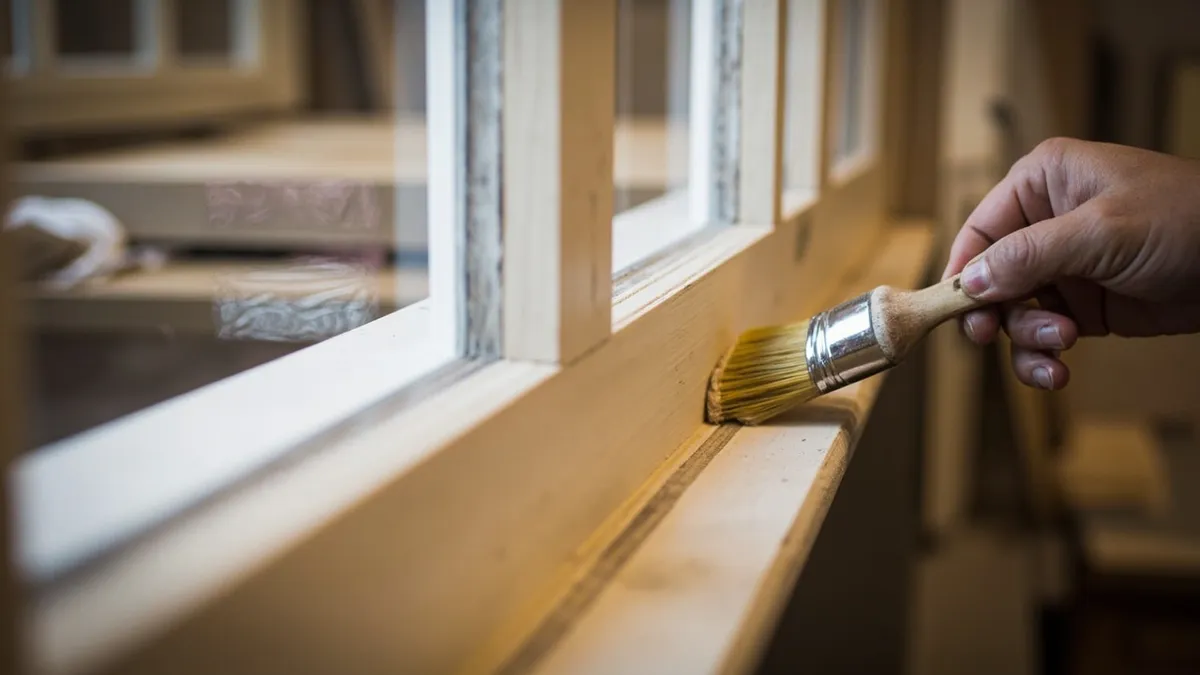
So what is the best paint for sash windows? There is no single answer. For a window we have stripped and repaired back to bare timber, linseed is a strong choice. For a sash with sound modern paint that only needs a refresh, recoating in a compatible modern system is often more sensible than stripping everything. Our sash window restoration service covers both routes, and we explain the repair steps in our guide on how to restore a sash window.
Doors are similar. Linseed paint suits a panelled door stripped for repair, but it needs time to cure before the door goes back into heavy use. Our door restoration work often includes this decision.
Painting windows in wet Yorkshire weather
Weather matters more with linseed than with most paints. Around Holmfirth, Honley and Marsden, weavers' cottages have long rows of mullioned windows facing the wet, exposed Pennine weather of the Colne and Holme valleys. Stone-built Victorian terraces and mill buildings around Huddersfield take the same beating. On those elevations we plan linseed painting for the drier months, work under cover where we can and do the first coats in the workshop on sashes we have taken out for repair.
Further north, the Victorian and Edwardian villas of Harrogate often have large sashes with deep mouldings where a thick modern paint build-up has blurred the detail. Thin oil coats keep those profiles crisp. Across Yorkshire, Georgian and listed buildings in York and Wakefield may also raise a consent question if a paint change alters the building's character, so check with your local planning authority or conservation officer first.
Our rule of thumb: when we recommend linseed paint
We recommend it when the timber is bare, or will be made bare by the repair, and the owner is happy with slower drying and simple, regular maintenance. We recommend a compatible modern system when the existing paint is sound and well bonded, because SPAB's advice is that complete paint removal is "rarely necessary or desirable" (SPAB). Stripping a good paint film just to change paint type wastes original material and money.
SPAB also advises that where old lead paint remains, overcoating it can be safer than removing it, and it may still be protecting the joinery (SPAB). If old paint must be disturbed, follow Health and Safety Executive guidance on lead.
How do you apply and maintain it?
The steps below are how we paint a repaired window with linseed paint in the workshop:
- Make sure all repairs are done and the timber is dry. Paint seals in any water behind it.
- Remove loose and failed paint. Rub down with wet abrasive paper, as SPAB advises for old paintwork because of the risk from lead (SPAB).
- Apply a thin first coat, thinned as the maker directs, and work it well into end grain and joints.
- Brush each following coat out thinly and evenly. Wait until the previous coat is properly dry, not just touch dry.
- Carry the paint about 1 mm onto the glass over the putty line to seal against moisture, as SPAB recommends (SPAB).
- Leave sliding surfaces, such as the junction between the pulley stile and sash stile, unpainted and waxed so the sash runs freely, as SPAB advises.
For maintenance, SPAB advises examining windows carefully at least once a year (SPAB). Wash off dirt, and touch in worn areas on cills and bottom rails before bare wood shows. Our guide to caring for heritage timber covers the yearly check in more detail.
Where can I buy linseed oil paints in the UK?
In our experience these paints are easiest to find through specialist heritage and conservation paint suppliers rather than general DIY shops. We don't recommend brands here. When choosing, ask for the full technical sheet, check it suits exterior joinery, and make sure the primer, putty and top coats are designed to work together. If you're not sure, we are happy to advise on what to look for.
Get free advice on painting your period windows
Not sure whether linseed is right for your windows or front door? Master craftsman Daniel Fitzpatrick, a Guild of Master Craftsmen member with over 30 years at the bench, will look at the timber and the existing paint and give you an honest view. Advice is free.
Call 01484 666 333, send photos through our contact page, or read about our sash window repair and restoration work. We work from Crossley Mills in Honley and cover Holmfirth, Huddersfield and towns across West and North Yorkshire, including Harrogate and York.
Frequently asked questions
Is linseed oil paint breathable?
It is often described that way, and in our experience a thin oil film on dry timber tends to wear back rather than peel. But breathability is only one factor. SPAB lists exposure, durability, maintenance and film thickness too. No paint protects a window if water gets in through failed putty or open joints.
How long does linseed paint take to dry?
Longer than modern paints, and it varies with the weather. It hardens by reacting with oxygen rather than by evaporation, so warmth, good airflow and thin coats all speed it up. Cold, damp, still conditions slow it down. Always wait until each coat is properly dry before the next.
Can you put linseed paint over existing paint?
It bonds best to bare timber or to sound old oil paint. We don't put it over modern acrylic paint. If existing paint is sound and well bonded, it is often better to recoat with a compatible system than to strip good paint only to change the type.
Do I need a preservative under linseed paint?
Not usually. SPAB warns that preservatives are incompatible with certain paints, including linseed oil paint. For small repairs under this kind of paint, SPAB advises impregnating the sound timber with raw linseed oil instead. The best protection is dry timber and an intact paint film.