How to Remove Water Marks from Wood: White vs Black Rings
By Daniel Fitzpatrick, Master Craftsman · Guild of Master Craftsmen
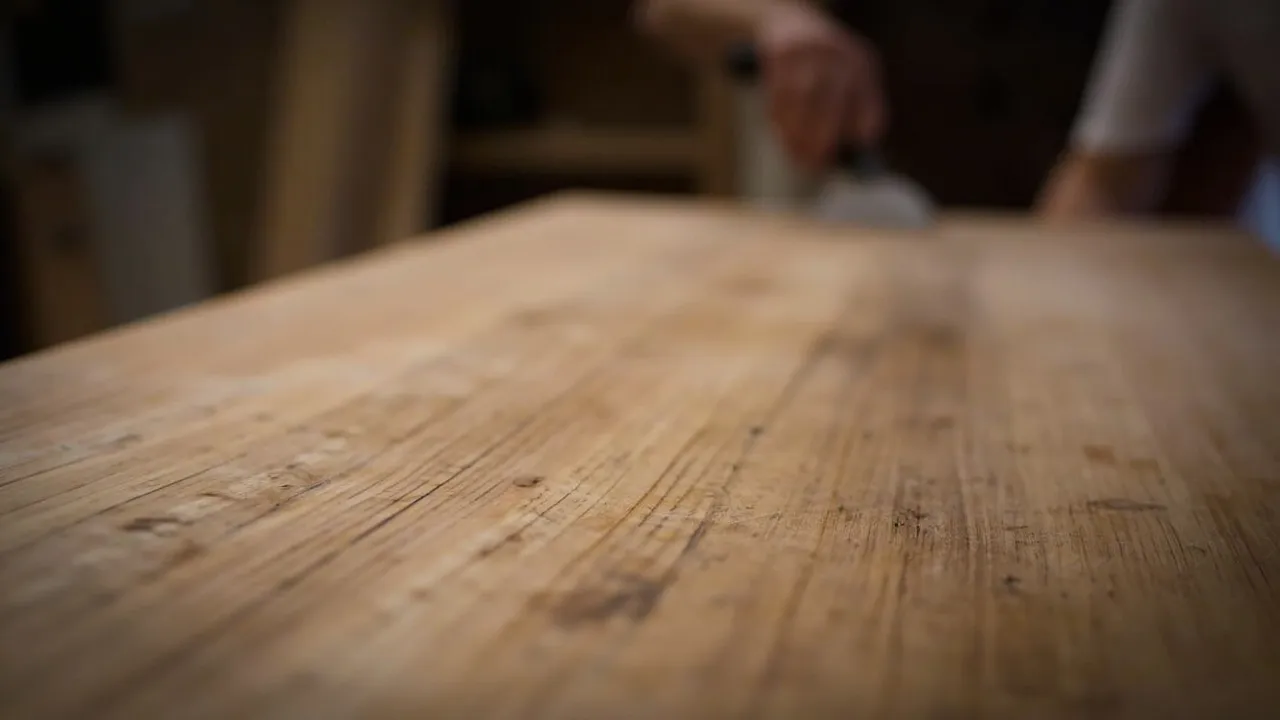
How to remove water marks from wood depends on the colour. A white ring sits in the finish and often fades with time, gentle warmth or a light polish. A black mark has reached the timber itself and usually needs the finish lifted and the stain bleached out.
Both kinds of mark turn up on tables, sideboards and chests in homes across Yorkshire, and both are routine repairs for our workshop at Crossley Mills in Honley. This guide explains how to read the mark, which home methods are safe, which popular tips harm old French polish, and when to call a restorer.
Key takeaways
- White or cloudy rings are moisture trapped in the finish. They are usually fixable without touching the wood.
- Black or dark grey marks mean water has soaked through into the timber. They rarely come out with home remedies.
- Start with the gentlest method: time, then low warmth, then a very light rub. Stop as soon as the mark fades.
- Old French polish is easily damaged by heat, alcohol and harsh rubbing, so be most careful with antiques.
Why do water marks appear on wood?
Most furniture has a clear finish over the timber: wax, oil, shellac, varnish or a modern lacquer. When a wet glass, a hot mug or a leaking vase sits on it, moisture gets into that finish or through it. What you see depends on how far the water went.
Conservation guidance on furniture notes that water spilt from flower displays most commonly leaves white marks, and cups and glasses leave rings on polished surfaces. The National Trust's advice on caring for collections at home also warns that even a few drops of spilt liquid will leave light or dark stains on wood.
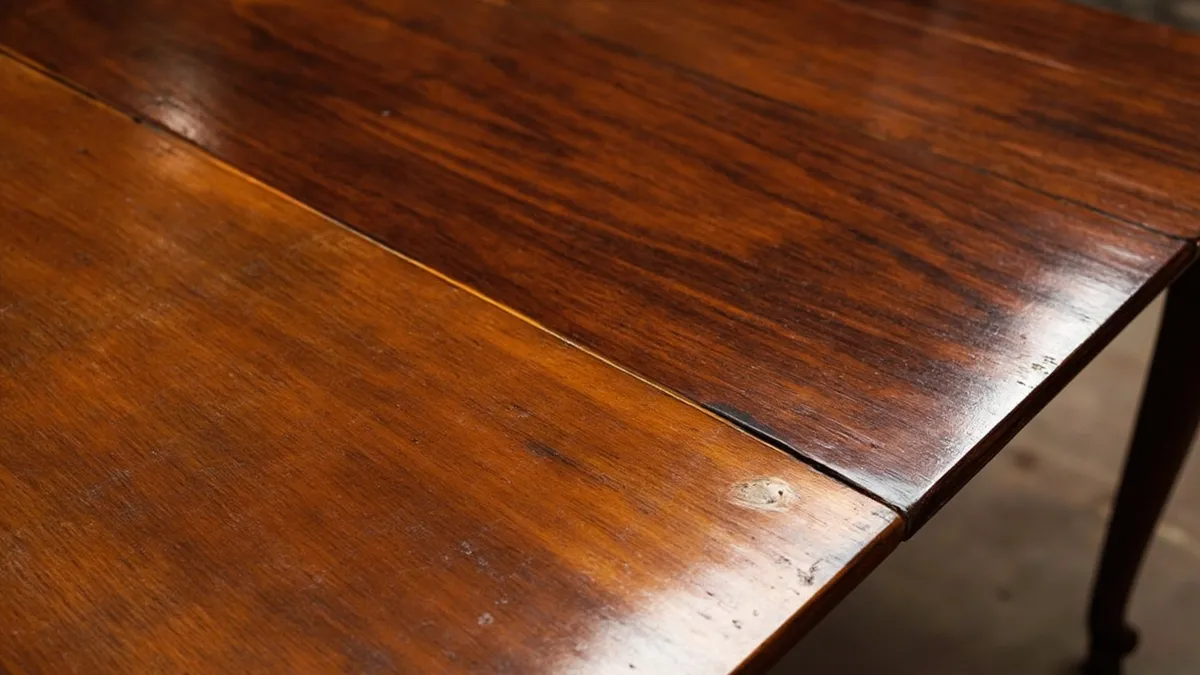
The first step in how to remove water marks from wood is telling light marks from dark ones. This table shows the difference.
| What you see | Where the damage is | Usual cause | Can you treat it at home? |
|---|---|---|---|
| White, milky or cloudy ring | In the finish only | Condensation from a cold glass, steam or heat from a hot mug | Often, with patience and gentle methods |
| Grey haze over a wider area | In the upper layers of the finish | Damp cloths, spills left overnight, a humid room | Sometimes; a restorer may need to revive the finish |
| Dark brown or black ring | In the timber under the finish | Water left for a long time, often from a plant pot or vase | Rarely; usually needs local stripping and bleaching |
| Black mark with bare, raised grain | Finish gone, timber stained | Repeated wetting over months or years | No; this is a restoration job |
How to remove white rings from a wood table
A white ring is the best news you can get. The water is trapped in the finish, not in the wood, and the aim is simply to let it out. If you are wondering how to remove water marks from wood without harming the finish, this is the order we work in, from gentlest to strongest.
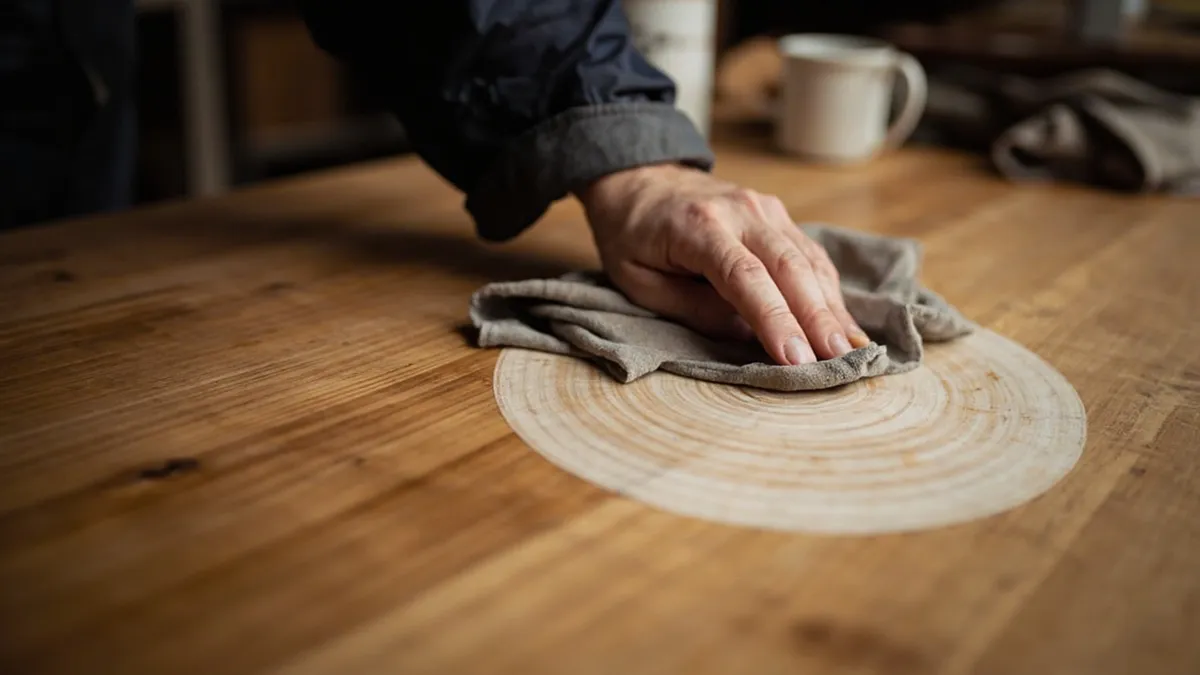
- Wait. Clear the surface and leave the mark alone for a while in a warm, dry room. Fresh rings often fade on their own as the moisture escapes.
- Dry, gentle warmth. Hold a hairdryer on its lowest heat setting well away from the surface and keep it moving. Stop the moment the ring starts to fade, and stop at once if the finish goes soft or tacky.
- A light rub with a soft cloth. Rub along the grain with a clean, dry cotton cloth. The friction and slight warmth are sometimes enough on a waxed surface.
- A very fine abrasive, used sparingly. A small amount of a mild polishing cream on a soft cloth can cut the cloudy layer. Test on a hidden spot first, work along the grain and check every few strokes, because it will also dull the sheen around the mark.
- Re-wax or re-polish the area. Once the ring has gone, a thin coat of good paste wax evens out the sheen.
What we do not recommend on an old piece is the clothes iron over a tea towel. It works on some modern finishes, but it is easy to overheat the surface, and on shellac it can do more harm than the original ring.
Are water stains on wood permanent?
White water stains on wood are rarely permanent. They are in the finish, and a finish can usually be cleaned, revived or, as a last resort, locally rebuilt by a restorer. Even stubborn white rings that have been there for years often respond to professional treatment.
Black water stains on wood are a different matter. The water has carried dirt or dissolved iron into the timber fibres, or has reacted with natural chemicals in the wood itself. Oak is especially prone to this, which is why old oak tables and chests often show dark rings where a plant pot once stood. The mark is not in the finish any more, so no amount of polishing will shift it. It can often be lightened a great deal, but only by working on the bare timber.
Does vinegar or mayonnaise remove water stains on wood?
These tips come up most, along with toothpaste and petroleum jelly. Our honest answer is that some of them occasionally work on a modern, tough finish, and all of them carry risks on an antique.
Vinegar
Vinegar is mostly water with a mild acid in it. Putting more liquid onto a water mark is not a good start, and acid is not kind to old wax or shellac. We would not use it on any piece you care about.
Mayonnaise and petroleum jelly
The idea is that the oil works into the finish and pushes the moisture out overnight. On a hard modern lacquer it sometimes helps a light ring. The problem is what it leaves behind: oil soaked into a soft wax or shellac finish, which can darken it, hold dirt and make later repairs harder.
Toothpaste, ash and salt
These are all mild abrasives. They can polish out a shallow ring, but they cut the finish as they do it. On a thin, century-old French polish it is very easy to rub straight through to bare wood.
Why French polish needs extra care
French polish is built up from many thin coats of shellac dissolved in alcohol. It is beautiful but delicate: it is particularly sensitive to spills of water or alcohol, which may produce white cloudy marks, as does heat damage, and hot cups can leave marks on it. The same source notes the good news too: French polish is simpler to repair than other traditional and modern varnish finishes. The conservation guidance on furniture is blunt about spirits: alcohol spilt will remove the polished surface almost instantly. So never try to "clean" a ring on French polish with methylated spirits, surgical spirit or any product containing alcohol.
How to remove water marks from wood when the mark is black
If the ring is dark, the finish has already failed and water has reached the timber. Knowing how to remove water marks from wood at this depth is really about knowing when a home fix will not do, because the work involves chemicals and bare wood.
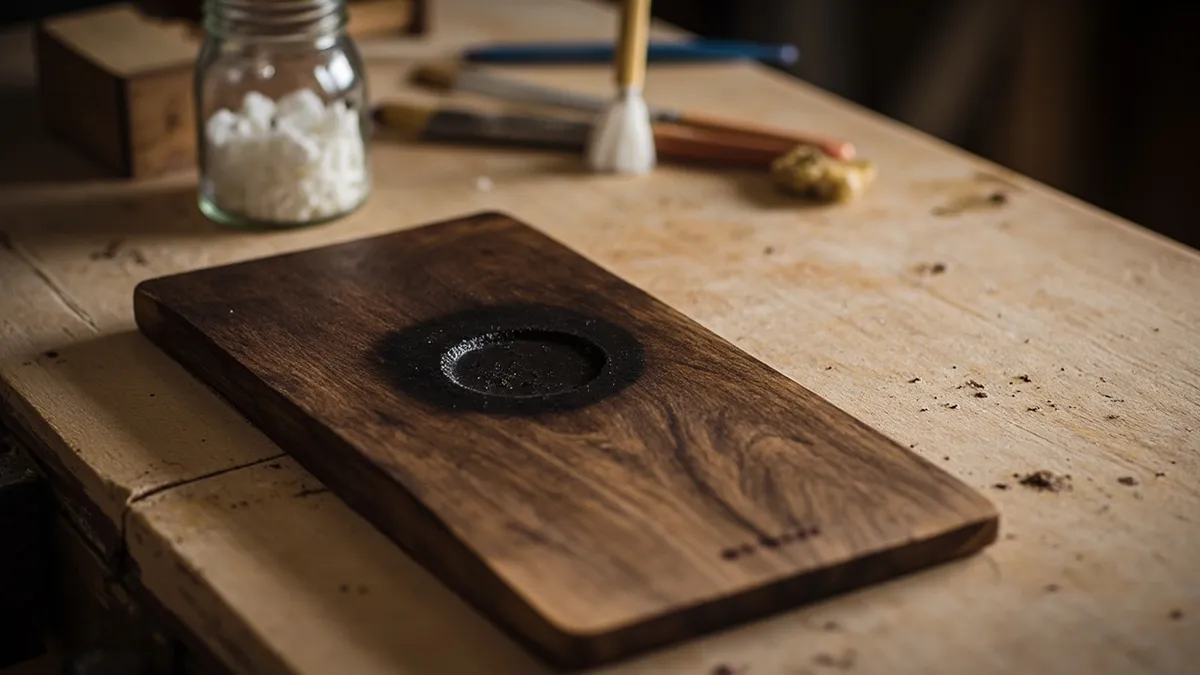
In the workshop, the usual sequence is:
- Remove the finish from the stained area only, keeping as much of the original surface as we can.
- Clean the bare timber and let it dry fully.
- Apply a wood bleach suited to the stain. For dark marks caused by iron, oxalic acid is the traditional choice. It is also known as wood bleach and is used to remove rust because it forms a water-soluble complex with iron.
- Neutralise and rinse, let the wood dry again, then match the colour.
- Rebuild the finish so that it blends with the rest of the top.
Oxalic acid is not a kitchen-cupboard product. It can be toxic if swallowed in significant quantities, and concentrated forms can cause chemical burns. Bleaching can also lighten the wood around the mark, leaving a pale halo that needs careful colouring. For that reason we suggest leaving black water marks on good furniture to a restorer.
What is the best watermark remover for wood?
There is no single best watermark remover for wood. When people ask us how to remove water marks from wood, our answer is always the gentlest method that works on that finish.
For a white ring, that is usually time, low warmth and a soft cloth. For a black mark, it is a restorer with the right bleach and the skill to colour-match afterwards. In between, what matters most is what you avoid:
- Avoid furniture oils for regular care. Many contain drying oils such as linseed, and conservation guidance warns that repeated use creates a gummy, insoluble surface coating that darkens the grain.
- Avoid silicone polishes. They leave a film that is difficult to remove and can interfere with future finish treatments, which makes a proper repair harder later.
- Avoid sanding. Sandpaper removes the finish and the aged surface of the wood, and neither can be put back.
That last point matters on older pieces. Conservation guidance now treats stripping and refinishing as a last resort, because an early finish is as important to historic furniture as any other original element, and once it is removed it cannot be recovered.
Our rule of thumb: when to stop and call a restorer
After many years repairing furniture and joinery, our rule of thumb is simple. If a gentle method has not improved the mark after two careful tries, stop. Pushing harder turns a small white ring into a bare patch.
We recommend calling a restorer straight away, without trying anything at home, if:
- the mark is black, dark grey or brown
- the finish feels rough, sticky or has lifted around the mark
- the piece is veneered and the veneer has bubbled or lifted
- the item is an antique with an original French polish or a valuable patina
- alcohol, perfume or a solvent was spilt, not water
Most white rings on everyday furniture, though, are well worth trying at home first. Our guide to caring for heritage timber covers the day-to-day care that keeps finishes in good order.
Water marks in Yorkshire homes: where they come from
Many of the pieces we restore come out of older Yorkshire houses: stone-built Victorian terraces around Huddersfield and the Holme Valley, weavers' cottages in Holmfirth and Marsden, Georgian townhouses in York and spa-town villas in Harrogate. The marks tend to come from the same few places.
Plant pots and flower vases are the worst offenders, especially on tables set in front of a window. The National Trust's advice is to place waterproof mats under plants and vases and to move them elsewhere to be watered, which is the single best habit you can adopt. Cold glasses on a sideboard, damp cloths left on a table, and hot dishes set down without a mat account for most of the rest.
Old houses in the wet Pennine valleys can also be damp in winter. A room that stays humid does not cause rings by itself, but it slows the drying of any moisture that does get into a finish. Coasters, mats and keeping furniture off damp outside walls prevent more marks than any remedy cures.
If a mark is beyond a home fix, our furniture restoration service covers finish repairs and stain removal on tables, chests and cabinets. You can read more about our workshop and how we work.
Get free advice on water-marked furniture
Not sure whether a ring is safe to tackle yourself? Get in touch and we will tell you honestly. Master craftsman Daniel Fitzpatrick, a member of the Guild of Master Craftsmen with over 30 years' experience, oversees every job himself, and advice is free.
Call 01484 666 333, get in touch through our contact page, or see our antique furniture restoration service. We work from Crossley Mills in Honley and help customers across West and North Yorkshire.
Frequently asked questions
How long does it take for a white water ring to disappear?
It varies with the finish and the room. A fresh, faint ring on a waxed or lacquered surface can fade on its own as the trapped moisture escapes, especially in a warm, dry room. Older or deeper rings may not, and usually need gentle warmth or light polishing.
Can I use a hairdryer on an antique table?
Yes, with care. Use the lowest heat, hold it well away from the surface and keep it moving. Shellac softens with heat, so watch closely and stop if the finish looks glossy-wet or feels tacky. If you are nervous about a valuable piece, ask a restorer to look at it first.
Why did my water mark turn black?
A black mark means the water went through the finish into the timber and stayed there. Dirt, iron from a metal pot or tray, or natural chemicals in woods such as oak can darken the fibres. Because the stain is in the wood itself, polishing the surface will not remove it.
Will a restorer have to strip my whole table?
Usually not. A good restorer works as locally as possible, treating the mark and blending the finish into the surrounding surface. Keeping the original finish is better for the piece's character and value. Full stripping is a last resort, considered only after other methods have failed.