Church Doors: Restoring Historic Oak Doors in Yorkshire
By Daniel Fitzpatrick, Master Craftsman · Guild of Master Craftsmen
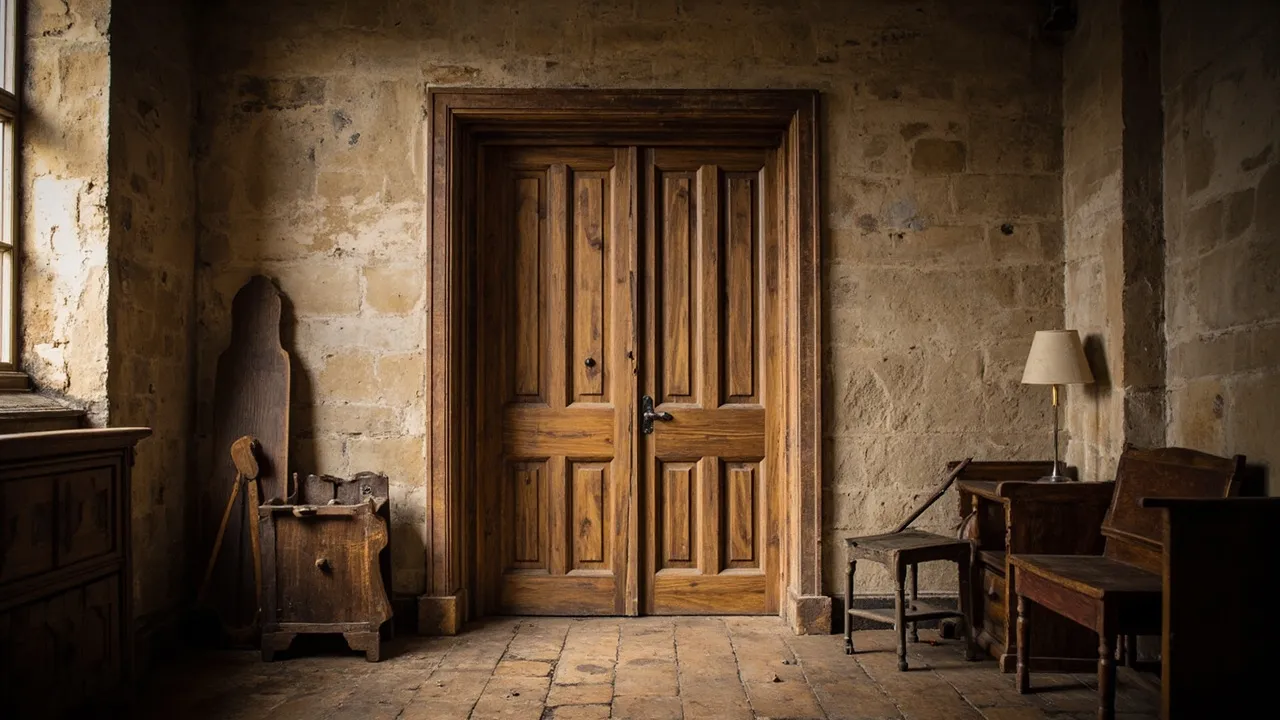
Church doors made of oak can usually be repaired rather than replaced. Deal with the water first, splice new oak into rotten feet and rails, keep the old ironwork, and choose a finish that suits the door's history. Check what consent is needed before work starts.
Old oak doors on churches, chapels and civic buildings take a lot of weather and heavy daily wear. In our workshop at Crossley Mills in Honley we restore doors and joinery for councils and civic buildings across Yorkshire, including doors at Grade I listed Morley Town Hall. This guide covers how we assess a historic door, what repairs and finishes suit it, and the consent rules that apply to listed churches.
Key takeaways
- Damage is usually local. Rot at the foot of a door or a split panel can be repaired without losing the door.
- Finish depends on history. Very old unpainted oak is usually best left without stain or varnish; later doors that already carry a stained or lacquered scheme can have that scheme renewed.
- Listed churches of the Church of England and some other denominations, while used for ecclesiastical purposes, are covered by the ecclesiastical exemption instead of the usual listed building consent. Check the church's own approval process, and your conservation officer, before work starts.
- Keep the original ironwork. Hinges, latches, locks and studs are part of the door's character.
What are church doors called?
Most people simply say the church door, but a few older terms turn up in listing descriptions and church guides. The grand entrance opening, with its surrounding stonework, is often called a portal. Wikipedia describes a portal as an opening in a wall, especially a grand entrance to an important structure (Wikipedia, Portal (architecture)).
Doors are also named by position, such as the west door or the south door, and some large doors have a small wicket door set into one leaf.
Old oak doors in churches tend to be one of three types:
- Boarded doors: vertical oak boards fixed to horizontal ledges or a second layer of boards behind, often held with iron nails or studs.
- Framed and ledged doors: boards set into a framework of stiles and rails.
- Panelled doors: a frame of stiles and rails holding moulded panels, common on Victorian churches, chapels and civic buildings.
Can old oak church doors be repaired instead of replaced?
Usually, yes. The Society for the Protection of Ancient Buildings (SPAB) says existing doors can frequently be repaired, and that replacement is a last resort which should usually be like-for-like in style and materials (SPAB, Doors). SPAB also points out that decay is often limited to a small area, such as wet rot at the door foot, and that a skilled carpenter can in many cases splice in well-seasoned, matching new timber.
On heavy oak doors the trouble usually shows in the same places:
- The bottom of the boards or the bottom rail, where splash-back from paths and steps keeps the timber wet.
- Joints between stiles and rails that have opened as the wood moves.
- Panels that have split because paint or old finish has locked them in the frame.
- Hinge fixings that have worked loose under the weight of the leaf.
- Worn thresholds and door stops that let rain drive in.
SPAB's advice is to deal first with the cause of any active decay, for example a leaking gutter or a defective lead flashing. On a church that often means the porch roof, the gutter above the doorway or a path that slopes towards the threshold.
How we restore historic oak doors
Our process for heritage doors follows the same steps on any historic oak door. It is set out in more detail on our door restoration service page.
- Record the door. Photographs and notes of every joint, repair, fixing and piece of ironwork before anything is moved.
- Find the water. Check gutters, the porch roof, the threshold and drainage so the repair is not soaked again.
- Probe the timber. Test the feet of the boards, the bottom rail and the joints to find where sound oak starts.
- Remove old finishes where needed. Where a door carries failed paint or stain that has to come off, we strip it carefully so the surface and joints are not harmed.
- Repair, don't renew. Cut out only the decayed wood and splice in matching oak with the grain running the same way.
- Refit and rehang. Reset the ironwork, pack or re-plug worn hinge fixings, and adjust the door so it closes without binding.
- Finish to suit the door. Match the finish to the door's history and to the woodwork around it.
SPAB warns that sandblasting spoils the surface of timber, and that dipping in acid baths may raise the grain and weaken joints by softening the glue (SPAB, Doors). That is why we avoid bulk stripping methods on historic doors.
| Problem | What it usually means | Typical repair |
|---|---|---|
| Soft wood at the foot of the boards | Wet rot from splash-back or a poor threshold | Cut out and splice in seasoned oak, then fix the threshold |
| Split panel | Panel shrank but was held fast by paint or finish | Free and glue the panel, or glue in a timber spline |
| Door drops and scrapes the floor | Loose hinge fixings or opened joints | Re-plug and refix hinges, re-wedge or repair joints |
| Door binds in wet weather only | Seasonal swelling | Often best tolerated; light easing only if needed |
| Patchy, flaking or darkened finish | Old coatings failing or built up over years | Careful stripping and a finish that suits the door |
Several of these repairs follow SPAB's guidance, which covers regluing or splining split panels, tolerating seasonal binding, and re-fixing loose hinges with glued dowels.
What colour should church doors be?
There is no single right colour. It depends on the door's timber, age and past finishes. Painted church doors in strong colours are a well-loved tradition in some places, but some old oak ones were never painted at all.
SPAB notes that most old doors are softwood that was originally painted, but that pre-18th-century oak doors, if not limewashed, were sometimes left unpainted. It says stripping old doors is usually historically inappropriate, and that it is generally inadvisable to apply linseed oil, stain or varnish to unpainted oak doors (SPAB, Doors).
So a medieval or early oak door that has weathered silver-grey is usually best left as it is. A later door designed with a stained and varnished finish is different: renewing that scheme is part of looking after it. Any change of colour on a listed church should be agreed through the consent route described below.
Our public-sector door work: Morley Town Hall
An ongoing public-sector door project of ours is at Morley Town Hall, one of our council and public sector projects. The building is Grade I listed and was completed in 1895 to a design by Henry Holtom and George Arthur Fox. The scope covers three stages:
- Removing the existing paint and stain from the doors.
- Refinishing the prepared timber in a dark oak stain.
- Applying a sprayed lacquer top coat for a consistent, hard-wearing surface.
Between stripping and finishing, the exposed timber is prepared for repairs and a new finish. In an occupied civic building the work can be planned around people using the building, with access, phasing and handover discussed with the project team before work starts.
The same kind of planning would apply to a church, where services carry on around the work. Morley sits within our Leeds area, and we restore doors and joinery for councils and civic buildings across Yorkshire.
Do you need consent to restore a listed church door?
It depends on the denomination, whether the building is still used for worship and what work you plan. For ordinary listed buildings, listed building consent controls apply to demolition, alteration or extension likely to affect their special character. The Planning Portal says it is a criminal offence to carry out work which needs listed building consent without obtaining it first, and that the term listed building includes any object or structure fixed to it (Planning Portal, Listed building consent).
Many churches work differently. The Ecclesiastical Exemption (Listed Buildings and Conservation Areas) (England) Order 2010 keeps the exemption for church buildings within the faculty jurisdiction of the Church of England. It also keeps it, restricted to works carried out by or on behalf of the church, for church buildings of the Roman Catholic Church, the Methodist Church, certain Baptist Union churches and certain United Reformed Church buildings (legislation.gov.uk, SI 2010/1176). The Order treats any object or structure fixed to a church building as part of it, and it only applies while the building is used for ecclesiastical purposes.
In practice, that means:
- A Church of England parish church in use: work is controlled through the church's own faculty system. Speak to your diocese early.
- A church of another exempt denomination: usually that denomination's own approval procedure applies.
- A chapel of a non-exempt group, a closed church or a converted church: ordinary listed building consent is likely to apply. Check with your local planning authority's conservation officer.
What needs approval is for the relevant body to decide, not the joiner; if in doubt, ask your local planning authority's conservation officer. Our guide to listed building consent for timber repairs explains the secular side in more detail.
Do church doors stay open?
Some churches like to keep their doors open during the day, and that has practical effects on the joinery. A heavy oak leaf held open puts steady load on its hinges and can be caught by the wind. When restoring a church door, we would check the hold-open fittings, door stops and hinge fixings, and make sure the door swings freely without dropping.
SPAB advises keeping old door furniture, and notes that maintenance involves little more than occasionally oiling locks and hinges (SPAB, Doors). If a door must be more secure, we recommend improving the existing lock and bolts, or adding discreet fittings, rather than replacing original ironwork.
Our rule of thumb for oak doors
We recommend a simple decision rule on every historic oak door, from church doors to an oak front door on a period house: repair the part that has failed, keep every piece of original oak and ironwork that is still sound, and never change the finish until you know what the door was meant to look like. If the door has weathered naturally and was never coated, we leave it uncoated. If it was stained and varnished when made, we renew that scheme rather than inventing a new one.
The same thinking runs through our conservation joinery work.
Looking after oak doors in Yorkshire weather
Doors on churches and chapels in the Pennine towns take a lot of rain. In the wet, exposed Colne and Holme valleys, the doors facing the prevailing weather stay damp for long spells, and the foot of the door is where decay starts. Stone steps and flagged paths add splash-back.
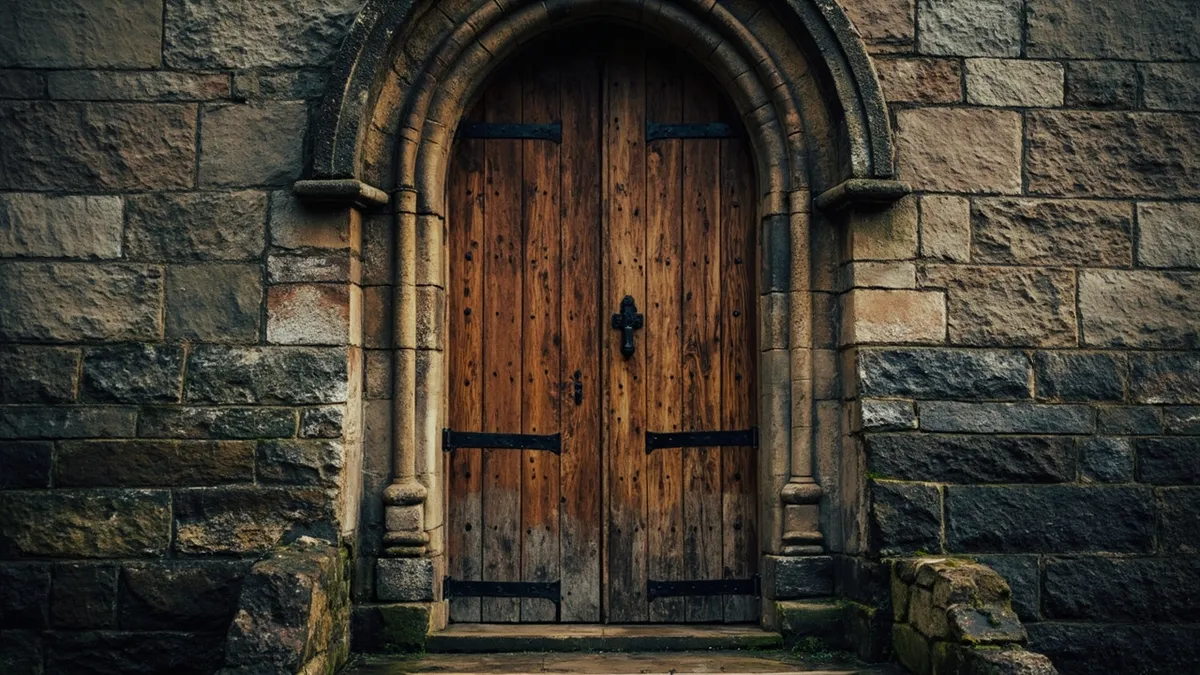
A short check each spring and autumn catches most problems early:
- Clear the gutter and drip above the doorway.
- Look at the foot of the door for dark, soft or crumbling wood.
- Check that the door closes cleanly and does not scrape the floor.
- Oil hinges, latches and locks.
- Note any new splits in panels or boards.
Free advice on church doors and historic oak doors
If your church, chapel or civic building has an oak door that is sticking, splitting or rotting at the foot, we can tell you what can be saved. Master craftsman Daniel Fitzpatrick, a member of the Guild of Master Craftsmen with over 30 years' experience, oversees every job from inspection to installation, and advice is free.
Call 01484 666 333, send photos through our contact page, or read more about our door restoration for councils and public buildings. We work from Crossley Mills in Honley and give advice to churches, chapels and public buildings across Yorkshire.
Frequently asked questions
How long does it take to restore a church door?
It depends on the size of the door, how much decay there is and whether it has to come off its hinges. Small repairs can sometimes be done in place. Larger work may mean taking the door to our workshop, so temporary security and timings would be agreed with the church first.
Should an old oak church door be varnished?
Usually not, if it was never coated. SPAB says it is generally inadvisable to apply linseed oil, stain or varnish to unpainted oak doors. A door that was originally stained and varnished is different: that original finish can be carefully renewed, with approval where the building is listed.
Can a new oak front door be made to match an old one?
Yes. If an oak front door or church door is beyond repair, a new one can be made at the bench to the same pattern, with matching boards, mouldings and joints. Where possible we reuse the original ironwork so the new door keeps a link with the old one.
Who approves work on a listed church door?
For most churches in use by the Church of England and other exempt denominations, approval comes through the church's own system, such as a faculty. For other listed buildings, listed building consent from the local planning authority may be needed. Check with your diocese or conservation officer first.