How to Strip Paint from Wood: A Safe Guide for Period Homes
By Daniel Fitzpatrick, Master Craftsman · Guild of Master Craftsmen
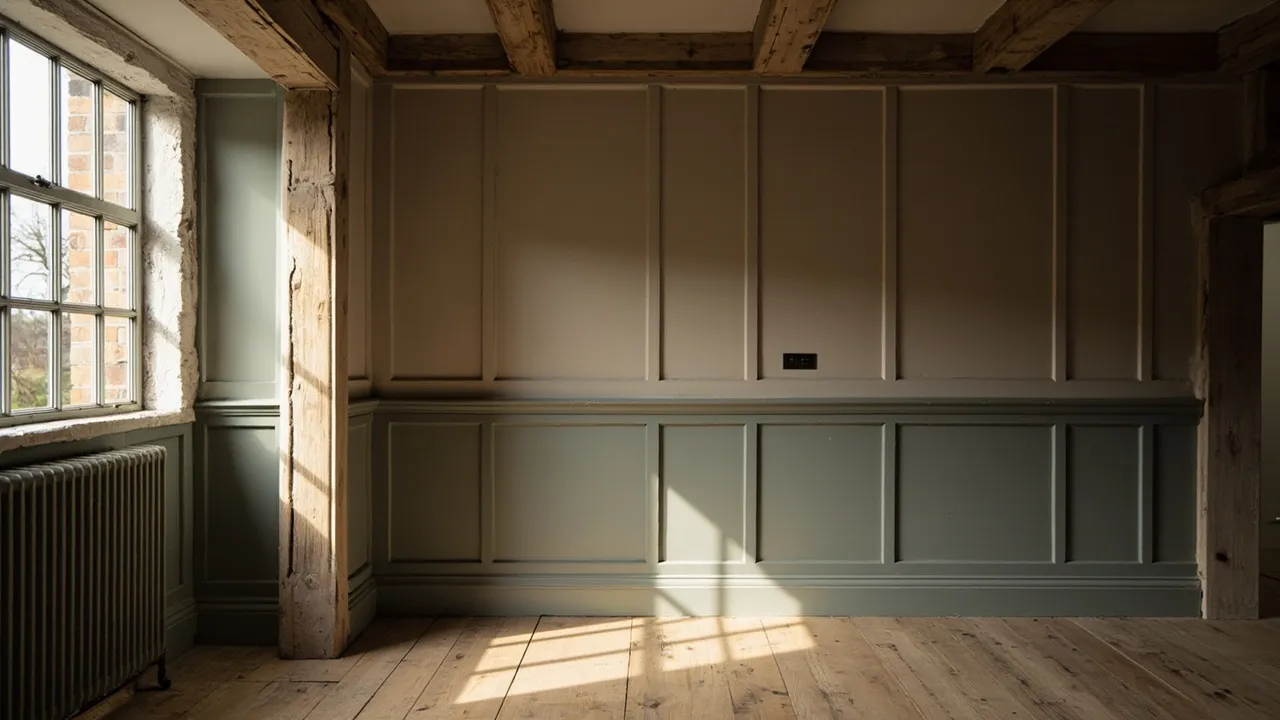
How to strip paint from wood safely: assume old layers contain lead, never dry sand or burn them, and choose the gentlest method that works. On period joinery that usually means a poultice or chemical stripper, or low-temperature heat, with wet abrasives to finish.
Stripping old paint is often part of our door, window and staircase restoration work at our workshop at Crossley Mills in Honley, for period homes across Yorkshire. This guide explains why lead paint comes first, how each stripping method works on old timber, what to avoid, and when it is better not to strip at all.
Key takeaways
- Treat old paint as possible lead paint until a test says otherwise, especially in pre-1960s buildings. Dust from sanding old lead paint is the greatest hazard.
- Only strip what you need to. Sound old paint can often be keyed with wet abrasive paper and painted over.
- Poultice and chemical strippers suit mouldings and detail. Low-temperature heat suits flat faces. Blowlamps and gas torches should not be used on old paint.
- Caustic dipping, coarse sanding discs and aggressive scraping cause more lasting damage to period timber than the paint ever did.
Why does lead paint change how you strip old woodwork?
Because the paint on period woodwork may well contain lead. The Society for the Protection of Ancient Buildings (SPAB) says lead paint was popular until the 1960s, particularly on timber and metalwork, and that it might be present in nearly any pre-1960s building (SPAB, Lead paint). The Health and Safety Executive (HSE) adds that lead pigments were not removed from commonly used paints until the early 1980s, and that lead paint can be found under existing paintwork in older buildings (HSE, Old lead paint: what you need to know as a busy builder).
That last point matters. A door that was glossed white twenty years ago may still have Victorian lead paint underneath. Stripping paint from wood goes straight through every layer, so the oldest coats are the ones you end up disturbing.
SPAB is clear that a health risk only exists where lead is ingested or inhaled from unsound or disturbed paint, and that dust from the inappropriate sanding of old lead paint is the greatest hazard (SPAB). The HSE lists headaches, tiredness, irritability, nausea and stomach pains among the symptoms of exposure, with more serious effects such as kidney, nerve and brain damage from continued uncontrolled exposure (HSE, Frequently asked questions on lead).
How do you know if you have lead paint on windows and doors?
SPAB gives a few clues: old lead paint often has a creamy or soft colour, may show a fine, oblong pattern of cracking rather than peeling, can have a chalky surface, and loose flakes feel heavier than other paint. It adds that lead paint can be confirmed with a DIY test kit or more detailed analysis (SPAB). Because SPAB says it was used particularly on timber, it is sensible to assume lead paint on windows, doors and their frames until tested.
Should you strip the paint at all?
Often, no. Before working out how to strip paint from wood, ask whether it needs stripping. The HSE's first step for anyone removing old paint is to plan the work and only strip back old paint if it is flaking, chipping or a risk to children (HSE). SPAB goes further: where lead paint is found, it could be safer to renew or overcoat it than to try to remove it, and the presence of lead paint does not justify stripping out historic joinery (SPAB).
If the paint is sound, the HSE suggests using wet abrasive paper to make a key for the new coat (HSE). That keeps dust down and the old paint keeps protecting the wood.
There are good reasons to strip, though. Heavy paint build-up can fill mouldings until they lose their shape, stop sashes sliding, and hide rot in cills and bottom rails. And if you plan a clear or waxed finish on a hardwood door, all the paint has to come off.
How to strip paint from wood: which method should you use?
The right answer to how to strip paint from wood depends on the shape of the piece, the timber, and what is underneath. Here is how the main methods compare on period joinery.
| Method | Best for | Risks on old timber |
|---|---|---|
| Poultice stripper | Mouldings, ornament, panelling and thick layered paint | Slow; needs thorough washing off and drying before repainting |
| Solvent or gel chemical stripper | Smaller areas, detail and vertical faces | Fumes; residue must be removed or the new paint may not bond |
| Low-temperature heat (hot air or infrared) | Flat faces of doors, frames and skirtings | Scorching, cracked glass near glazing, fire risk in dry old timber |
| Wet abrasive paper | Keying sound paint and cleaning up after stripping | Slow on thick layers, but keeps dust down |
| Dry sanding, blowlamps, caustic dipping | Nothing on period joinery | Lead dust and fume, burnt timber, loosened joints and raised grain |
Poultice strippers
A poultice is a thick paste spread over the paint, covered so it stays moist, and left to work through the layers. When it is lifted, most of the paint comes away with it. Because there is little scraping, it is the gentlest way to clear paint out of deep mouldings and ornamental detail. It takes patience: thick paint can need a long dwell time or a second application, so always do a small test patch first.
Chemical strippers
Chemical strippers come as liquids or as gels that cling to vertical surfaces (Wikipedia, Paint stripper). There are two broad types. Caustic removers break down the paint film and must be neutralised, or the new finish will fail early. Solvent removers swell the paint so it lets go of the surface; dichloromethane has been a popular solvent, but its use has been declining because of health concerns (Wikipedia). When taking back non-lead overcoats, SPAB advises removing all stripper residue thoroughly (SPAB).
Low-temperature heat
Heat softens paint so it can be lifted with a scraper. The HSE says hot air guns or infrared equipment should be set below 500°C, and that gas torches and blow lamps should not be used (HSE). SPAB also lists low-level heat, alongside wet sanding and chemical strippers, as an acceptable way to remove lead paint (SPAB). Keep the tool moving, keep it away from glass, and remember that fire is a possible hazard of using heat guns (Wikipedia).
How can you remove paint from wood without sanding it?
If you want to know how to strip paint from wood without a sander, use a poultice, a chemical stripper or gentle heat to lift the paint, then clean up with a scraper and wet abrasive paper. Sanding is the last step, not the first. The HSE's advice for paint in poor condition is a combination of chemical paint stripper, wet abrasive paper and on-tool extraction (HSE), and it names dry sanding of old paint as one of the jobs that puts people most at risk (HSE).
Avoiding power sanders is also better for the timber. Coarse discs round over crisp moulding edges, cut through the hard surface of old softwood and leave swirl marks that show through new paint.
How do you strip paint from wood safely, step by step?
This is how to strip paint from wood when you have decided the paint really has to come off. It follows the HSE and SPAB guidance cited above.
- Test first. Assume lead unless a test kit or analysis shows otherwise.
- Clear and protect the room. The HSE advises removing or covering soft furnishings and surfaces with plastic sheeting, and wearing disposable overalls and an FFP3 mask (HSE).
- Keep people away. SPAB says children and pregnant women should not be present (SPAB).
- Do a test patch with your chosen stripper to see how many layers it lifts and how long it needs.
- Lift the paint with a poultice, chemical stripper or low-temperature heat. Scrape gently with the grain using a sharp, rounded scraper.
- Clean up wet. Use wet abrasive paper, never dry. Wipe debris with a damp cloth and bag waste, cloths and paper in plastic for disposal (HSE).
- Vacuum properly. SPAB says vacuum cleaners must have HEPA filters (SPAB).
- Wash hands and forearms before eating, drinking or smoking (HSE).
- Neutralise and dry. Wash off stripper residue, let the timber dry fully, then prime all bare wood before it is exposed to the weather.
What should you avoid when stripping old timber?
Most of the damage we repair on stripped joinery comes from a few habits:
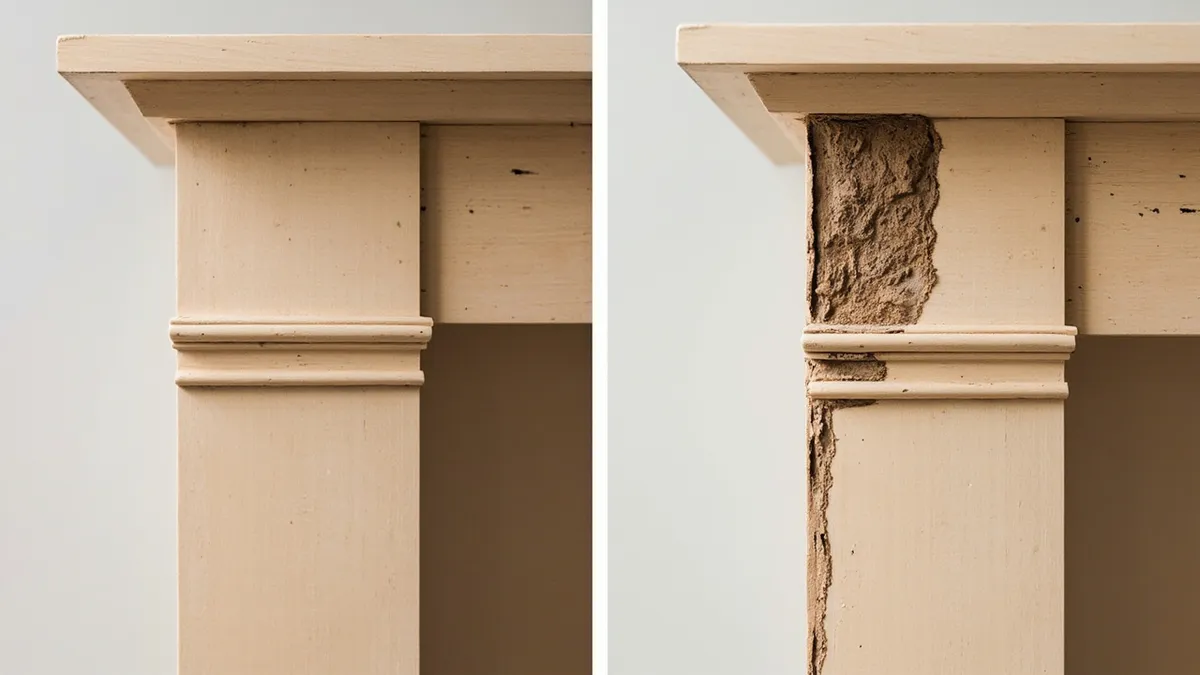
- Blowlamps and gas torches. They create lead fume and scorch the timber. The HSE says not to use them (HSE).
- Caustic dip tanks. Soaking a whole door in caustic solution can soften old glue, open up joints, raise the grain and leave the wood furry and discoloured.
- Leaving stripper residue. Caustic removers that are not neutralised can make the new finish fail early (Wikipedia).
- Stripping wet exterior timber and leaving it bare. Bare end grain on cills and bottom rails soaks up rain fast. Prime the same day if you can.
- Stripping for the sake of it. Painted softwood joinery was usually meant to be painted.
Here in Yorkshire, that last-but-one point matters a lot. Stone-built Victorian terraces and mill buildings around Huddersfield and the Holme Valley sit in wet, exposed Pennine weather, and weavers' cottages around Holmfirth, Honley and Marsden have long rows of mullioned windows with a lot of exposed timber. Bare wood left out for a few wet days soon starts to take up water. See our guide to caring for heritage timber.
What is our workshop rule of thumb?
Our rule is simple: if the paint is sound and the detail still reads, we key it and repaint; if the paint is failing, hiding rot or filling the mouldings, we strip it, working from the gentlest method upwards. That means poultice or chemical stripper on mouldings, low-temperature heat only on flat faces, and wet abrasives to finish. We never dry sand or burn old paint, and we don't send period joinery to a dip tank.
Stripping was part of our door restoration work at Grade I listed Morley Town Hall, where we removed old paint and stain before applying a dark oak stain and a sprayed lacquer top coat. You can read more about that job on our council and public sector projects page. Stripping is often the first stage of our wider conservation joinery work, because it shows us exactly what state the timber is in before we repair it.
On a listed building, check with your local planning authority or conservation officer before stripping historic paint schemes, as they may form part of the building's character.
Does vinegar remove paint from wood?
Not in any useful way on period joinery. In our experience, household vinegar does very little to the layered oil paint found on old doors and windows, and soaking timber with it raises the grain. If you are wondering how to strip paint from wood without harsh chemicals, a poultice stripper or gentle heat is a more reliable choice, and both can be used with the lead-safe precautions above.
Get free advice before you strip period woodwork
Not sure whether to strip, repaint or repair? Get in touch and we will tell you what we would do. Master craftsman Daniel Fitzpatrick, a member of the Guild of Master Craftsmen with over 30 years at the bench, oversees every job himself, and our advice is free.
Call 01484 666 333, get in touch through our contact page, or read about our conservation joinery and paint stripping work and door restoration. We work from Crossley Mills in Honley and cover Holmfirth, Huddersfield and towns across West and North Yorkshire.
Frequently asked questions
What's the easiest way to strip paint?
The easiest way depends on the surface. On flat surfaces, low-temperature heat is usually quickest: soften the paint and lift it with a scraper. On mouldings and detail, a poultice or gel stripper is easier because it does the work for you. Whichever you choose, assume old paint contains lead and avoid dry sanding and blowlamps.
What is the best paint remover for wood?
For period joinery, the best paint remover is the gentlest one that lifts the layers without scraping hard. Poultice strippers suit ornamental and moulded work; gel strippers suit smaller areas. Always test a patch first, and wash off all residue so the new paint bonds properly to the timber.
Can I use a heat gun on lead paint?
The HSE says hot air guns and infrared equipment should be set below 500°C, and that gas torches and blow lamps should not be used on old paint. Protect the room, wear an FFP3 mask, keep the tool moving and away from glass, and collect scrapings for disposal.
Should I strip old sash windows back to bare wood?
Only if the paint is failing or the build-up stops the sashes working. Stripping paint from wood on sashes is often part of a full overhaul, when the sashes are out and the timber can be repaired and primed. See our sash window restoration service for how we approach it.