Edwardian Front Door: Features, Colours and Restoration
By Daniel Fitzpatrick, Master Craftsman · Guild of Master Craftsmen
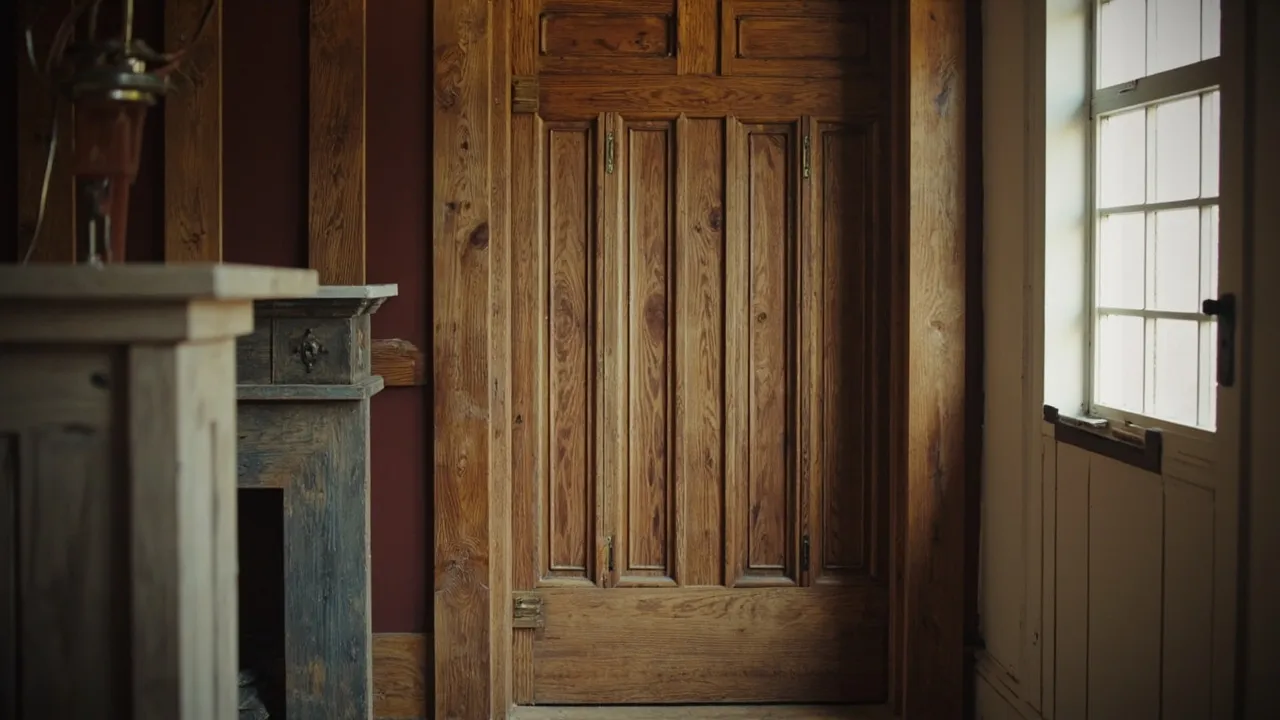
An Edwardian front door usually has a glazed upper half with leaded or coloured glass, solid panels below and lighter, simpler mouldings than a Victorian door. Most are painted softwood and can be repaired rather than replaced.
Yorkshire has many period homes, from stone-built terraces around Huddersfield to the Victorian and Edwardian spa-town villas of Harrogate, and some still have their original front doors. Door restoration is part of the work of our workshop at Crossley Mills in Honley. This guide covers what an Edwardian front door looked like, how to tell it apart from a Victorian or Georgian one, which colours suit it, and how we restore it.
Key takeaways
- The Edwardian era ran from 1901 to 1910 and is often stretched to 1914. Doors from this time put the decoration in the glass, usually in the upper half of the door.
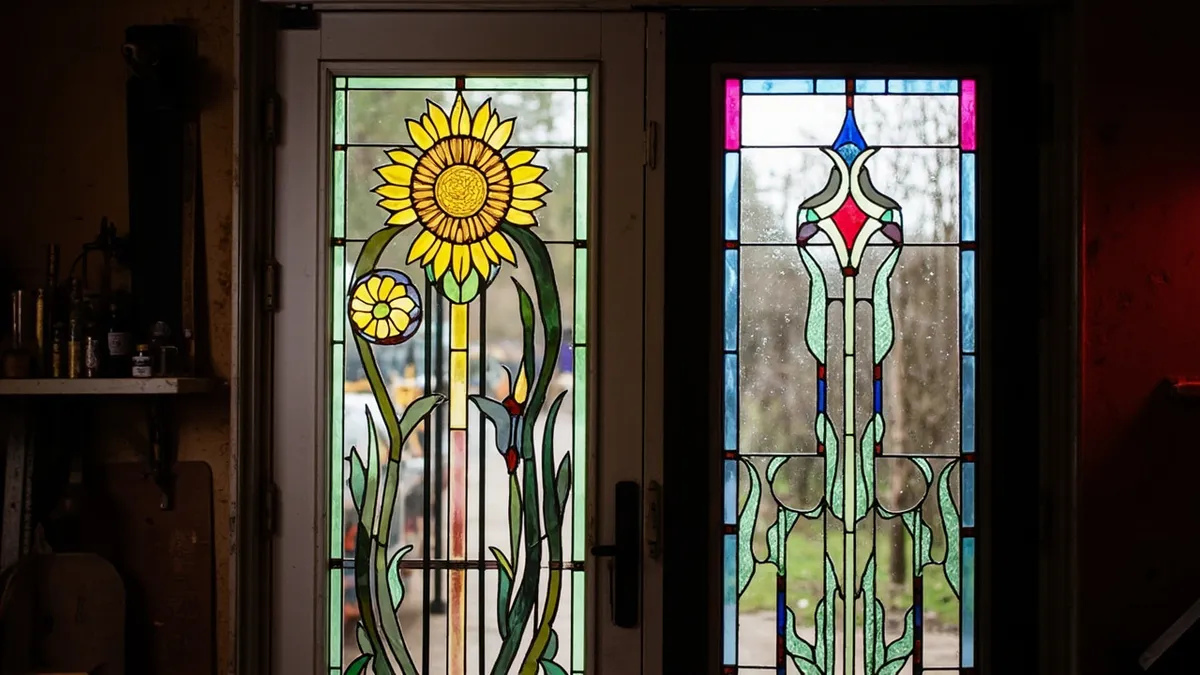
- Leaded glass with long, flowing, plant-like lines often points to the Edwardian years. Before the First World War the front entrance was the main place for decorative leaded glass in a house.
- Most old doors are softwood that was painted from the start. Stripping them bare is usually the wrong thing to do.
- Rot at the foot of the door, split panels and loose joints can all be repaired. Replacement should be the last resort.
What did Edwardian front doors look like?
The Edwardian era is named after King Edward VII. Wikipedia describes it as the period that spanned his reign from 1901 to 1910, and notes that it is commonly extended to the start of the First World War in 1914. Front doors from these years often share a few features:
- A glazed upper section. The top third or top half of the door is often glass, split into one or more lights by glazing bars.
- Leaded or coloured glass. The glazed area was the main place for decoration, with coloured, textured or bevelled pieces set in lead.
- Solid panels below. One to three panels in the lower half, often with a simple moulding round each one.
- Lighter proportions. Mouldings tend to be plainer and slimmer than the heavy, deeply cut work on many Victorian doors.
- A matching fanlight or side lights. The glass above the door, and sometimes at the sides, often carries the same design as the door itself.
- Brass or iron door furniture. A letter plate, knocker, knob or bell pull, often fitted at the time the door was made.
The Wikipedia article on leadlight sums up the period well. It says that before the First World War the front entrance remained the focus for decorative leadlighting in houses, and that the Art Nouveau style dominated the design, bringing in many long curved sections of glass that had never been a feature of leadlight windows before.
What are common Edwardian house features?
The front door is one feature of a wider look. On Edwardian houses we commonly see:
- Timber porches or recessed entrances, often with a tiled floor.
- Leaded glass in the front door, the fanlight and the stair window.
- Bay windows with timber sashes or casements.
- Painted timber joinery throughout, including skirtings, architraves and staircases.
The Leadlight article says leadlight windows were a regular feature in many private houses from the 1860s to the 1930s, and that their style is often a clue to the age of the building. If your door glass and stair window match, that can be a sign both are original.
Wikipedia describes Art Nouveau as often inspired by the curves of plants and flowers, popular between 1890 and 1910, with roots in Britain in the floral designs of William Morris and the Arts and Crafts movement.
Victorian vs Edwardian front door: how can you tell them apart?
The Victorian vs Edwardian front door question comes up often, because builders did not change their patterns overnight in 1901. The table lists the signs we look for. None is proof on its own, so we weigh them together.
| Feature | Georgian | Victorian | Edwardian |
|---|---|---|---|
| Glass in the door | Usually none; light comes from a fanlight above | Often small glazed panels in the upper half | Larger glazed upper section, often leaded |
| Glass design | Clear glass in a fanlight with glazing bars | Coloured and patterned glass, often geometric or with birds and flowers | Flowing, curved leaded lines and stylised plants and flowers |
| Panels | Often six panels | Often four panels, with heavier mouldings | Fewer panels below the glass, plainer mouldings |
| Overall look | Symmetrical and restrained | Solid and ornate | Lighter, with the decoration in the glass |
A Georgian front door is the easiest to spot, as the door itself is usually solid and the light comes through the fanlight. If you have one of those, our guide to the cost of restoring a Georgian six-panel door covers the work involved.
Dating a door from its glass
The glass is usually the best clue. The Leadlight article says 19th-century Arts and Crafts designs often included lilies, tulips and sunflowers, while the Art Nouveau style of the years before the First World War brought in many long curved sections of glass. So long, curving pieces of glass following plant stems point more towards the Edwardian years. The same article says that after the First World War decoration on the front door became less common and leaded glass moved to the front windows. The Wikipedia entry on stained glass adds that in Britain Art Nouveau appears in the refined and formal leadlight designs of Charles Rennie Mackintosh.
Checking the door and frame
- Does the door fit its opening closely, without packing strips or a trimmed bottom rail?
- Are there old, filled screw holes where earlier hinges, bolts or letter plates were fitted?
- Do the fanlight and side lights share the same glass style as the door?
- Are the joints pegged or wedged, and do the mouldings match on every panel?
- Do the layers of paint build up evenly, suggesting the door has been painted in place for a long time?
What colour is most suitable for an Edwardian front door?
There is no single correct colour. Most old doors were painted from the start. The Society for the Protection of Ancient Buildings (SPAB) says most old doors are of softwood that was originally painted, and that the recent fashion for stripping them is usually historically inappropriate and can cause damage. So the question is which paint colour, not whether to paint.
Our advice is practical rather than fixed:
- Look for the original colour. When loose paint is taken back, earlier colours can often be found in the corners of the mouldings. That is the best evidence you will get for your house.
- Let the glass lead. A colour that picks up one of the colours in the leaded glass usually looks right.
- Check local rules. In a conservation area or on a listed building, ask your local planning authority or conservation officer before a big change of colour.
A sound paint film keeps rain out of the joints and end grain, where rot starts. Our guide to caring for heritage timber explains how to keep it in good order.
How do we restore an Edwardian door?
SPAB says that existing doors can frequently be repaired and, if necessary, upgraded for better security or draught-proofing, and that replacement is a last resort. Our door restoration service usually follows this order:
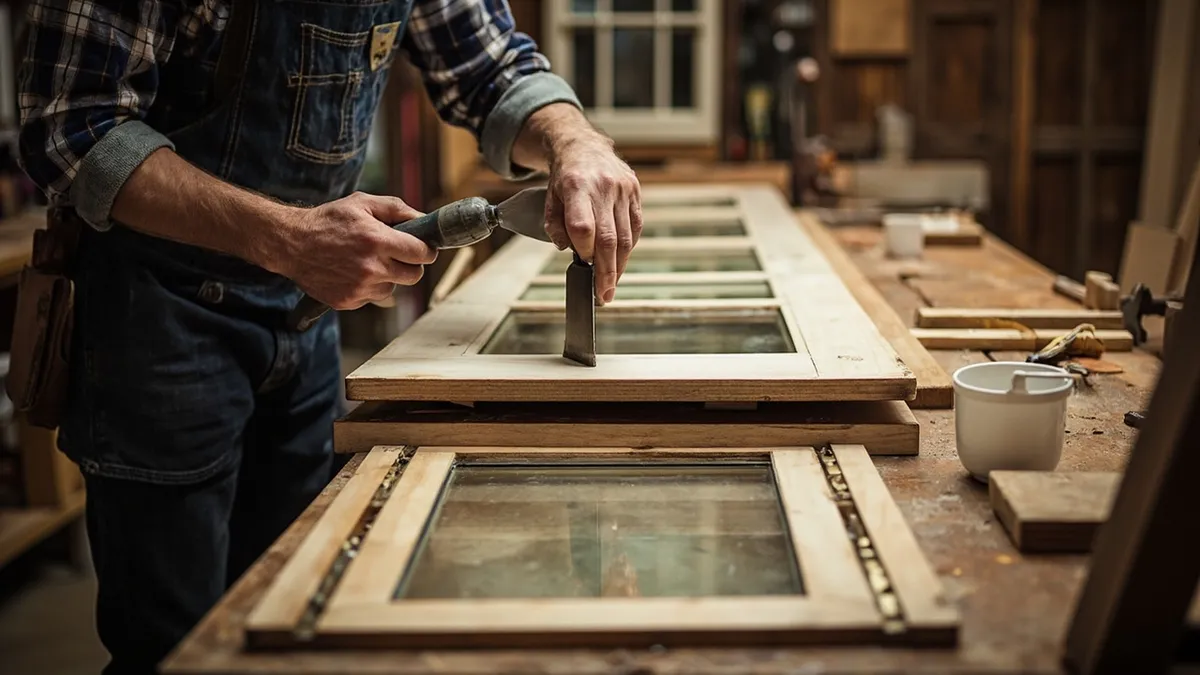
- Inspect. We check the door, frame, cill and threshold, probe for soft timber and see how the door hangs. SPAB notes that commonly only a small area is affected, such as the door foot where there is wet rot, and that the cause of any active decay, such as a leaking gutter, must be dealt with first.
- Protect the glass. Leaded panels are the most valuable part of the door. We protect them or take them out before any heavy work.
- Take back failed paint. We remove loose paint and any build-up that locks the panels. SPAB says panels often split when they shrink but cannot move within their frame, generally because of paint build-up. It also warns that sandblasting will spoil the surface of timber and that acid baths may raise the grain and weaken joints. Old paint may contain lead, so we handle it with care.
- Repair the timber. SPAB says a skilled carpenter can often splice in well-seasoned, matching new timber. We cut out rotten sections of the bottom rail or stile foot and splice in new wood to the same profile. Split panels can be glued, or have timber splines glued in and finished flush.
- Re-hang and refit. Loose hinges are re-fixed, binding edges are eased and the original door furniture goes back on. SPAB says old door furniture should always be kept.
- Prime and paint. Bare timber is primed and painted so it is protected from the weather.
Why do Edwardian doors in Yorkshire need extra care?
Yorkshire has plenty of period housing. Around Huddersfield and the Holme Valley there are stone-built Victorian terraces, and Harrogate has Victorian and Edwardian spa-town villas.
The weather is the main enemy. In the Colne and Holme valleys, wet and exposed Pennine weather drives rain against doors. Water runs down the glass, collects on the lock rail and bottom rail, and soaks into open joints and cracked paint. Stone steps splash the foot of the door, so the bottom rail and the lower ends of the stiles are often the first parts to decay. Old leaded panels can also loosen or bow over time, and a leaded-glass specialist can often re-cement or re-lead them while we repair the timber.
Our rule of thumb: repair, upgrade or replace?
We recommend a simple decision rule, based on the doors we see in the workshop:
- If the rot is limited to the foot of the door or the bottom rail, repair it. A splice keeps the original door and its character.
- If the glass is original, keep the door. Original leaded glass is the hardest thing to replace well, so it tips the balance towards repair.
- If the door rattles or lets in draughts, upgrade it. SPAB says existing doors can frequently be repaired and, if necessary, upgraded for better security or draught-proofing.
- Only replace when most of the timber has failed or the door has already been lost. Then copy the original. SPAB warns that a common mistake is fitting mass-produced "period style" doors that are too grand or out of keeping with the property.
How much should a new front door cost installed in the UK?
It depends too much on the door to give one figure. Size, timber, the amount of glass, leaded work, the frame and the door furniture all change the price. A made-to-measure copy of a period door with leaded glass is skilled work.
For most original doors, repair keeps the glass and door furniture that date the house. An inspection is the only way to know what the work involves, and our advice is free.
Planning rules can also apply. The Planning Portal says you do not usually need planning permission for repairs and maintenance, or for new doors of a similar appearance to those used when the house was built. It adds that listed buildings need listed building consent for any significant works, and that there may be extra restrictions in a conservation area or where an Article 4 Direction applies (Planning Portal, Doors and windows). Check with your local planning authority or conservation officer before replacing a front door.
Get free advice on your Edwardian front door
If your Edwardian front door is sticking, rotting at the foot or losing its paint, we can help. Daniel Fitzpatrick, our master craftsman, is a member of the Guild of Master Craftsmen with over 30 years' experience, and he oversees every job from inspection to installation. We work from Crossley Mills in Honley and cover homes across Yorkshire.
Call us on 01484 666 333 or send us a message for free advice. You can also read more about our period door restoration work.
Frequently asked questions
When is a door classed as Edwardian?
The Edwardian era covers the reign of Edward VII, from 1901 to 1910, and is commonly extended to 1914. Builders did not change style overnight, so doors from the late 1890s and the early 1900s often look alike. The glass, panels and mouldings together are a better guide than a single date.
Should I strip my door back to bare wood?
Usually not. SPAB says most old doors are softwood that was originally painted, and that stripping them is usually historically inappropriate and can cause damage. Removing loose, failed paint and heavy build-up is a different job. Any bare timber should then be primed and painted to protect it from the weather.
Can original leaded glass be kept during a door repair?
Yes, in most cases. We protect or remove the leaded panels before timber repairs and refit them afterwards. If the lead has loosened or the panel has bowed, a specialist in leaded glass can often re-cement or re-lead it. Keeping the original glass is one of the best reasons to repair rather than replace.
Can an old front door be made warmer and more secure?
Often, yes. SPAB says existing doors can frequently be repaired and, if necessary, upgraded for better security or draught-proofing. Sound joints, a close fit in the frame, draught-proofing round the edges and a good lock make a real difference, while keeping the original timber, glass and door furniture.