Linseed Putty for Sash Windows: Why It Still Works
By Daniel Fitzpatrick, Master Craftsman · Guild of Master Craftsmen
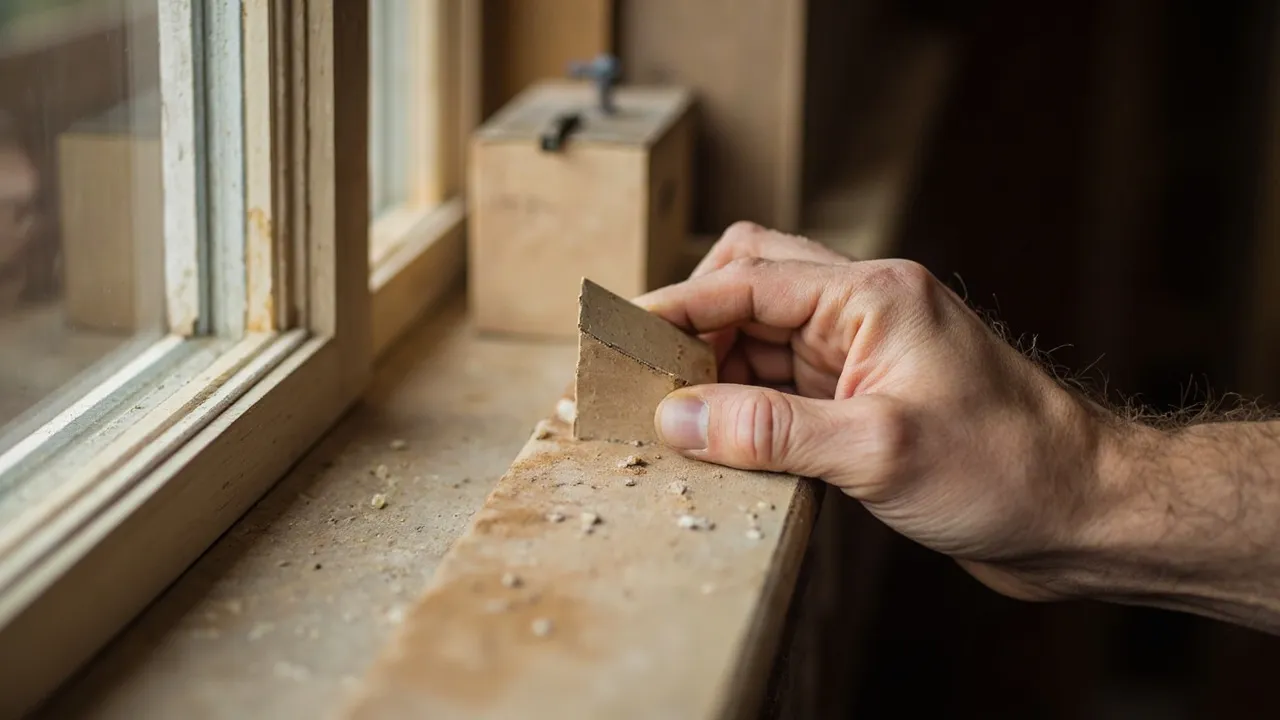
Linseed putty is a traditional mix of chalk and linseed oil used to bed and seal glass in timber windows. It sets slowly, bonds well to primed timber, takes paint and can be softened and removed again for repairs. That is why it still suits old sash windows.
Cracked, loose or missing window putty is one of the most common faults we find on period sashes across Yorkshire. In our workshop at Crossley Mills in Honley, reglazing sash windows is a regular part of our restoration work. This guide explains what the putty does, how to reputty a window properly, when you can paint it, and how to keep it in good order.
Key takeaways
- Traditional glazing putty is whiting (finely ground chalk) mixed with linseed oil, used for fixing and sealing glass in wooden sashes.
- The Society for the Protection of Ancient Buildings (SPAB) advises that reglazing in timber sashes and casements should be carried out in linseed oil putty, with the glazing rebates primed first.
- SPAB advises painting new putty within a day or two, taking the paint about 1 mm onto the glass to seal out moisture.
- Failed putty lets water into the sash. SPAB advises dealing with it promptly, as it may lead to decay of the timber below.
What is linseed putty used for?
Linseed putty is used to hold panes of glass in timber window frames and to seal the joint between glass and wood against rain. Wikipedia's article on putty explains that glazing putty is traditionally made by mixing whiting, which is finely ground chalk, with linseed oil, and that putty has been used extensively for fixing and sealing panes of glass into wooden frames and sashes (Wikipedia, Putty).
On a sash window it does three jobs at once:
- It beds the glass. A thin back layer of putty in the rebate gives the pane an even seat, so it does not rattle or crack under pressure.
- It holds the glass. Small metal sprigs or pins stop the pane moving, and the front bevel of putty locks it in place.
- It sheds water. The sloping front fillet carries rain off the glass and away from the timber below.
That last job matters most. SPAB's technical advice note on wood windows says the breakdown of paintwork or putty should be dealt with promptly, as it may lead to decay of the timber below (SPAB, Repair of Wood Windows). Cracked putty is a common way for water to reach the bottom rail.
Why does linseed putty suit old sash windows?
It suits them because it is the material they were traditionally glazed with, and it works with the timber and the paint around it.
SPAB is clear on the choice of material. Its technical advice note states that reglazing in timber sashes and casements should be carried out in linseed oil putty (SPAB, Repair of Wood Windows). From our own bench work, the practical reasons are these:
- It can be undone. Old putty can be softened and cut out without wrecking the timber or the old glass.
- It takes paint well. The paint seals the putty, and the putty gives the paint a smooth slope that sheds water.
- It is easy to patch. Small cracks and short lengths can be repaired without reglazing the whole sash.
- It looks right. A hand-formed bevel gives the crisp sightline of a period window.
Wikipedia notes that putties made with linseed oil slowly polymerise and become stiff (Wikipedia, Putty). That slow hardening is normal. Left unpainted, old putty tends to become hard, cracked and loose.
What can I use as a substitute for linseed putty?
There are alternatives, but for original timber sashes we rarely use them. Wikipedia lists synthetic alternatives such as polybutene-based putties, where the polybutene replaces the linseed oil (Wikipedia, Putty). Some window types need something different: for metal windows, SPAB advises using a metal window glazing compound or butyl-based mastic instead of linseed putty (SPAB, Maintenance Matters: Windows).
| Glazing method | Where it fits | What to watch for |
|---|---|---|
| Linseed oil putty | Original timber sashes and casements, and new sashes made to match | Rebate must be primed; putty must be painted and the paint kept in good order |
| Synthetic (non-oil) putty | Some modern timber joinery | Check it is compatible with the paint and primer you plan to use |
| Metal window glazing compound or butyl mastic | Steel and other metal windows | Not a like-for-like material on a timber sash |
| Silicone or other sealant from a gun | Not suitable for reglazing a period timber sash, in our experience | Hard to paint, hard to remove later, and can hide water getting in behind |
| Timber glazing beads | Some later or replacement joinery | Changes the look of the sightline, so usually wrong on an original sash |
If your house is listed or in a conservation area, like-for-like materials are usually expected. Check with your local planning authority or conservation officer before changing how the windows are glazed.
How to reputty a window, step by step
Reglazing sash windows is slow, careful work, but it is not complicated. This is the order we follow in the workshop and on site. Our guide on how to restore a sash window puts this in the context of a full overhaul.
- Remove only what has failed. SPAB advises removing only loose or defective paint, putty or filler with a scraper (SPAB, Maintenance Matters). Sound, well-bonded putty can stay.
- Soften hard putty, don't hack at it. SPAB says hard or brittle areas may be softened by prolonged contact with raw linseed oil, a citrus- or solvent-based remover, or, on timber frames, gentle warming with an infrared putty lamp (SPAB). Its technical note adds that extreme care and patience are needed, as several applications may be required (SPAB, Repair of Wood Windows).
- Check the timber. Probe the rebate and the bottom rail. Soft wood has to be repaired before any new putty goes in.
- Prime the rebate. SPAB advises that the glazing rebates should be primed before putty is applied (SPAB, Repair of Wood Windows). In our experience, bare, dry timber draws oil out of fresh putty and it fails early.
- Back-bed the glass. Knead the putty until smooth, press a thin layer into the rebate, then press the pane in gently and evenly.
- Fix the pane. SPAB advises that metal sprigs or pins should be fixed with a small gap between sprig and glass, to avoid fracturing thin, delicate glass (SPAB).
- Form the front fillet. Press putty into the rebate and draw a putty knife along it at a steady angle. SPAB describes forming a smooth fillet and cutting a clean line along the sightline where it tapers onto the glass (SPAB).
- Clean up and paint. Trim the back putty flush on the inside, clean the glass, and paint as described below.
Old paint on sashes may contain lead. SPAB advises following Health and Safety Executive guidance where old lead paint may be present (SPAB). Its technical note adds that only wet abrasive paper should be used when rubbing down old paintwork (SPAB, Repair of Wood Windows).
How long does linseed oil putty take to dry?
It depends on the weather, the thickness of the bead and the putty itself, and there is no single figure. What matters more is when you paint it. SPAB's technical advice note says putty should be decorated within a day or two after application to avoid it drying out and shrinking. It also says the paint should be taken slightly over the border between glass and putty, covering about 1 mm of the glass, to form an effective seal against moisture (SPAB, Repair of Wood Windows).
In practice, we wait until the surface has formed a light skin that does not smear under a soft brush, then paint. The putty underneath keeps firming up slowly after that, and the paint film protects it while it does. Setting times vary between products, so check the instructions on any putty you buy.
Can linseed putty be used as a wood filler?
For small defects, yes. SPAB's maintenance advice says small areas of timber decay or surface defects can be built up with a two-part filler or linseed putty, but only after any leaks or sources of dampness are resolved (SPAB, Maintenance Matters). Wikipedia also describes painter's putty as a linseed oil-based material used for filling holes, minor cracks and defacements in wood (Wikipedia).
SPAB's technical note explains that traditional fillers, known as stopping, were made from white lead paste and ordinary linseed oil putty, and that where putty is used as a filler today the lead is left out because of toxicity concerns. The same note says that, of modern fillers, two-pack systems are generally more durable than ready-to-use fillers (SPAB, Repair of Wood Windows).
Our advice: use putty for nail holes, fine cracks and shallow dents in sound timber. Anything soft, deep or in a joint needs cutting out and a timber repair instead.
Our rule of thumb: patch, reputty or reglaze?
- Fine surface cracks, putty still firmly bonded: seal and repaint. SPAB says putty thinned with a few drops of raw linseed oil or natural turpentine can seal minor cracks in old putty and extend its life for a few years (SPAB).
- Short lengths loose or missing: cut back to sound putty and make up the gap with new putty, then paint.
- Putty loose along most of a pane, or the glass rattles: take the whole front fillet off that pane and reputty it.
- Soft timber in the rebate or bottom rail: remove the glass, repair the timber, then reglaze. New putty on rotten wood will not last.
Our rule of thumb: if a thin knife slides behind the putty along more than a short stretch of a pane, we reputty that whole pane rather than patching it.
Why putty fails faster on Yorkshire windows
Weather is the main reason. Stone-built Victorian terraces and former mill buildings around Huddersfield and the Holme Valley sit in wet, exposed Pennine country. Rain driven against the glass runs straight down onto the putty and the bottom rail, so the fillets on the weather side of a house usually fail first.
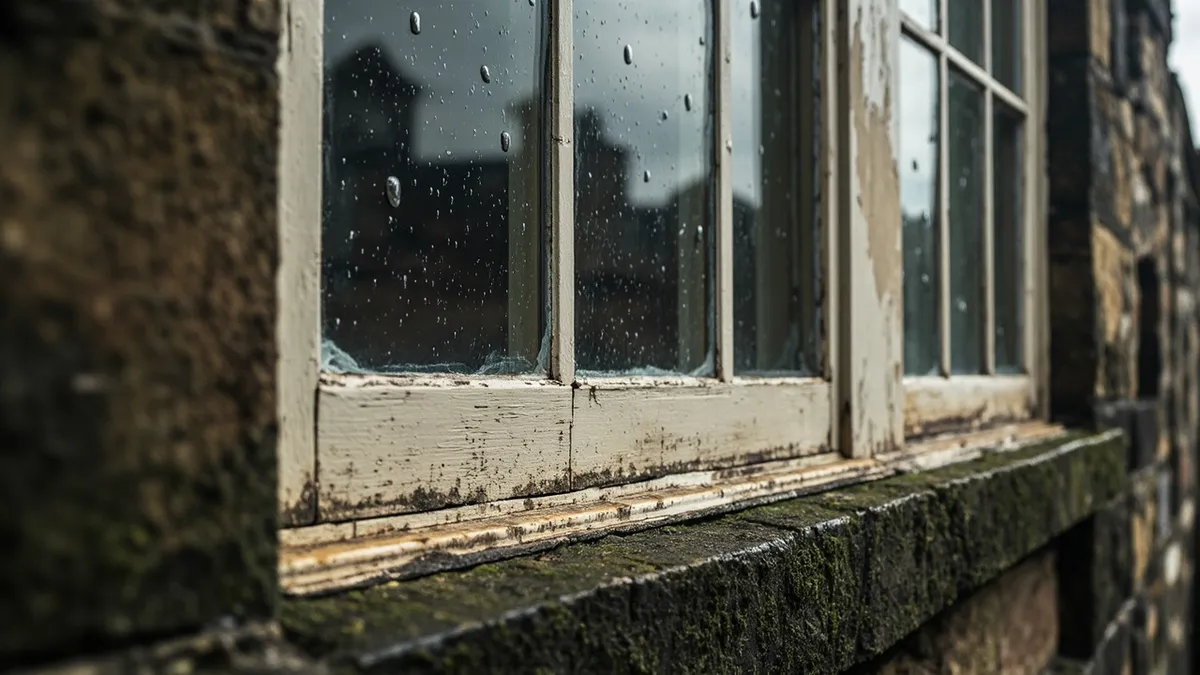
We see this on the long rows of windows in weavers' cottages around Holmfirth, Honley and Marsden, and on the tall sashes of terraces in Huddersfield. When we carry out sash window restoration in West Yorkshire, we check the elevations facing the prevailing weather first.
How to maintain window putty
Good putty is looked after by keeping the paint over it sound. SPAB recommends examining windows carefully at least once a year, and again after severe weather or long damp spells (SPAB, Maintenance Matters). Use this checklist:
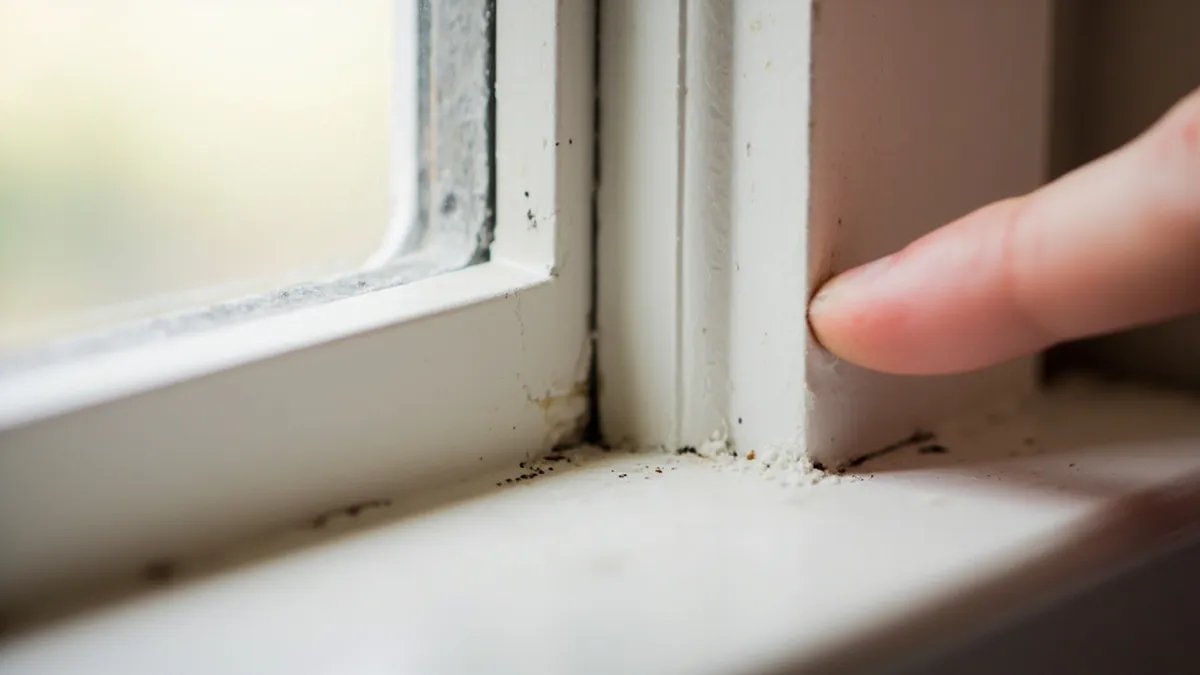
- Look for cracks, gaps between putty and glass, and missing lengths of putty.
- Press gently on the putty. It should feel firm, not crumbly or loose.
- Check the paint line stays about 1 mm onto the glass all round.
- Touch up any bare or cracked paint over the putty before winter.
- Look at the bottom rail and glazing bars for dark staining or soft spots.
- Wipe condensation off the inside of the glass, especially in bedrooms and kitchens.
Our guide to caring for heritage timber covers paint and finishes in more detail. If draughts are the main complaint rather than loose glass, see our sash window draught proofing service.
Get free advice on reglazing your sash windows
If your window putty is cracked, loose or falling out, we can tell you whether it needs patching, reputtying or a fuller repair. Master craftsman Daniel Fitzpatrick, a member of the Guild of Master Craftsmen with over 30 years' experience, oversees every job from inspection to installation, and advice is free.
Call 01484 666 333, get in touch through our contact page, or read more about our sash window restoration service. We work from Crossley Mills in Honley and cover period homes across West and North Yorkshire.
Frequently asked questions
What is linseed putty made of?
Traditional glazing putty is whiting, which is finely ground chalk, mixed with linseed oil. In the past, white lead was sometimes mixed in, so take care when removing very old putty. Fresh putty is soft and easy to work, and it firms up slowly over time once it is in the window and painted.
Can you paint linseed oil putty straight away?
Not quite straight away, but soon. SPAB advises painting new putty within a day or two to stop it drying out and shrinking. Wait until the surface has skinned enough not to smear, then paint, carrying the paint about 1 mm onto the glass to seal the joint.
Can you put new putty over old putty?
Only where the old putty is still firmly bonded. Minor cracks can be sealed with putty thinned with a little raw linseed oil. Where the old putty is loose or lifting from the glass, remove that section back to sound material and prime any bare timber before applying new putty.
How long does window putty last?
It depends on exposure, the quality of the work and, above all, whether the paint over it is kept in good order. Well-painted putty on a sheltered window can last a very long time. Unpainted putty on an exposed Pennine elevation will crack and loosen far sooner.