Listed Building Grades Explained: Grade I, II* and II
By Daniel Fitzpatrick, Master Craftsman · Guild of Master Craftsmen
Listed building grades in England rank how special a building is: Grade I is of exceptional special interest, Grade II* is particularly important and of more than special interest, and Grade II is of special interest. The same consent rule applies to all three.
Many period homes across Yorkshire are listed, and owners often ask us what the grade on their list entry actually means. From our workshop at Crossley Mills in Honley, this guide answers the common questions in plain terms: what the grades mean, how to check whether a house is listed, and what the grade changes for old windows and doors.
Key takeaways
- There are three grades in England: Grade I (exceptional special interest), Grade II* (more than special interest) and Grade II (special interest). Grade II is by far the most common.
- The grade shows how important a building is; it does not change the basic rule. Works that would affect the character of any listed building need listed building consent.
- Unless the list entry excludes particular parts, listing covers the whole building, inside and out, so original windows, doors, staircases and panelling are protected.
- You can check whether a building is listed on the National Heritage List for England. Always confirm planned work with your local planning authority first.
What is a listed building?
A listed building is one that has been added to the national list because of its special architectural or historic interest. The government's Principles of Selection for Listed Buildings sets out how buildings are chosen and explains that the list is compiled under the Planning (Listed Buildings and Conservation Areas) Act 1990.
Age matters a great deal. The same document gives a chronology as a guide, not a fixed rule: before 1700, all buildings that keep a significant proportion of their original fabric are likely to be regarded as of special interest. From 1700 to 1850, most buildings that keep a significant proportion of their original fabric are likely to qualify, though some selection is needed. From 1850 to 1945, progressively greater selection is needed because so many more buildings were put up and survive (DCMS, Principles of Selection).
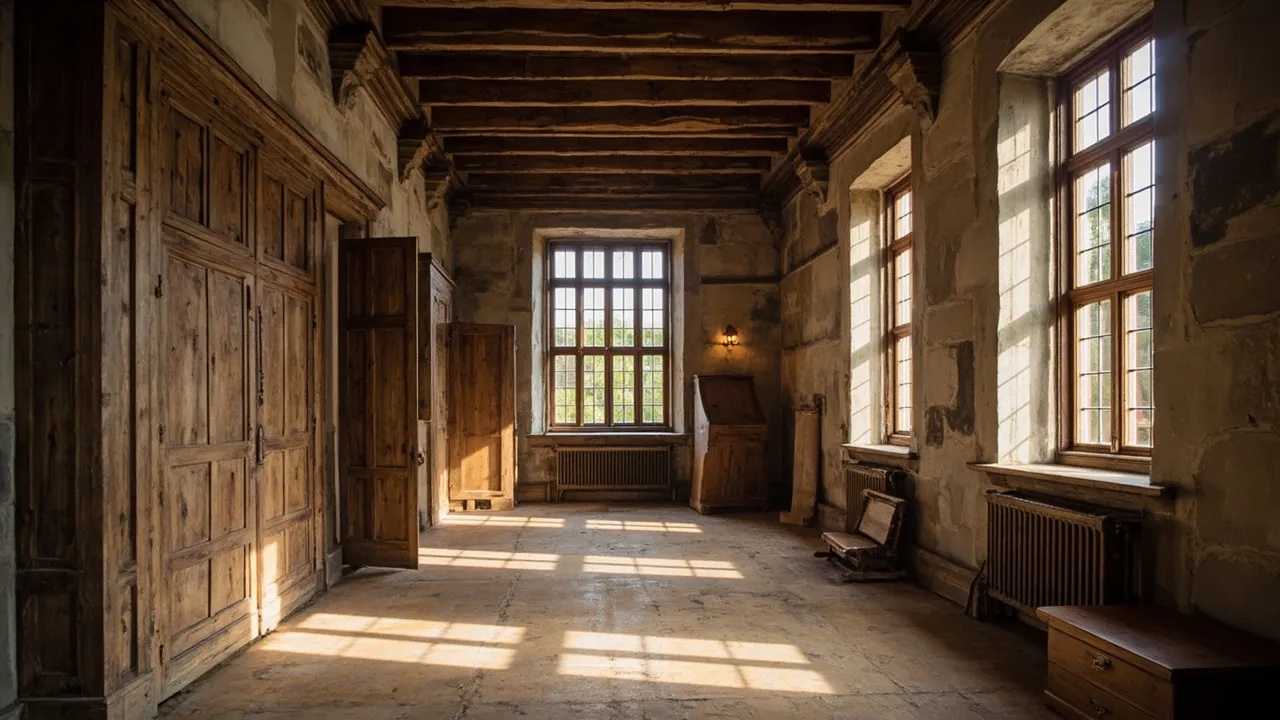
For joinery, the phrase "original fabric" is the one to notice. Historic windows, doors and staircases are part of that fabric, so keeping them intact helps keep what made the building worth listing.
Listed building grades: what do Grade I, II* and II mean?
England has three listed building grades. The official definitions, from the government's selection principles, are short (DCMS):
- Grade I: buildings of exceptional special interest.
- Grade II*: particularly important buildings of more than special interest.
- Grade II: buildings of special interest, warranting every effort to preserve them.
Wales uses the same three grades, while Scotland and Northern Ireland use their own systems. Scotland, for example, uses categories A, B and C (Wikipedia, Listed building).
| Grade | Official definition | Share of list entries (England, March 2010) | What it usually means for joinery |
|---|---|---|---|
| Grade I | Exceptional special interest | About 2.5% | Expect close scrutiny of every repair; original windows, doors and staircases are often central to the building's significance |
| Grade II* | Particularly important, more than special interest | About 5.5% | Similar care to Grade I; repairs should match the original timber, profiles and methods |
| Grade II | Special interest, warranting every effort to preserve | About 92% | The most common grade; like-for-like repair of original joinery is the normal starting point, and changes to character need consent |
The percentages come from the English list as it stood in March 2010, when there were about 374,000 list entries (Wikipedia). The exact shares will have changed since then.
What's the difference between Grade 1 and Grade 2 listed?
The difference is the level of interest, not the law. A Grade I building is judged exceptional; a Grade II building is judged special. The Act itself does not set a separate rulebook for each grade. Section 7 says no one may carry out works to demolish, alter or extend a listed building in any way that would affect its character as a building of special architectural or historic interest, unless the works are authorised (Planning (Listed Buildings and Conservation Areas) Act 1990, section 7).
In practice, the higher the grade, the more significance there is to weigh, so expect proposals for a Grade I or Grade II* building to be looked at especially closely. For a Grade II home, the question is still whether the work would affect what makes the building special. Your conservation officer can tell you how that applies to your building.
What are Grade 3 listed buildings?
Grade III no longer exists. There was once a non-statutory Grade III, which was abolished in 1970 (Wikipedia). If an old deed or sales brochure mentions "Grade III", check the current list entry, because the building may now be listed at Grade II or not listed at all.
You may also see Grades A, B and C on some older church entries in England. These were used mainly for Anglican churches in use and loosely matched Grades I, II and III (Wikipedia).
Is my house a listed building? How to find out if a building is listed
If you are asking "is my house a listed building?", the quickest answer is to search the official register. The government's selection principles say details of listed buildings in England can be found on the National Heritage List for England, hosted by Historic England (DCMS).
Here is how to find out if a building is listed, step by step:
- Search the National Heritage List for England for your building's name, street or town. If nothing comes up, try the older name of the building.
- Read the list entry. It gives the grade, the date of listing and a description of the building.
- Do not rely on the description alone. Older entries can be short, and a feature not mentioned in the text is not automatically unprotected.
- Check your property's title documents and the searches from when you bought it.
- Ask your local planning authority. The conservation officer can confirm the listing and whether the house is also in a conservation area.
What can you not do in a Grade 2 listed building?
You cannot carry out works that would affect the building's character without listed building consent. That applies inside as well as out. Listing covers not just the exterior fabric but also the interior, fixtures, fittings and objects within the curtilage of the building (Wikipedia), unless the list entry expressly excludes particular parts (DCMS).
Doing the work anyway is serious. Under section 9 of the 1990 Act, a person who contravenes section 7 is guilty of an offence (Planning (Listed Buildings and Conservation Areas) Act 1990, section 9). A planning authority can also insist that unauthorised work be reversed at the owner's expense (Wikipedia).
Work that commonly needs consent in a Grade II home includes:
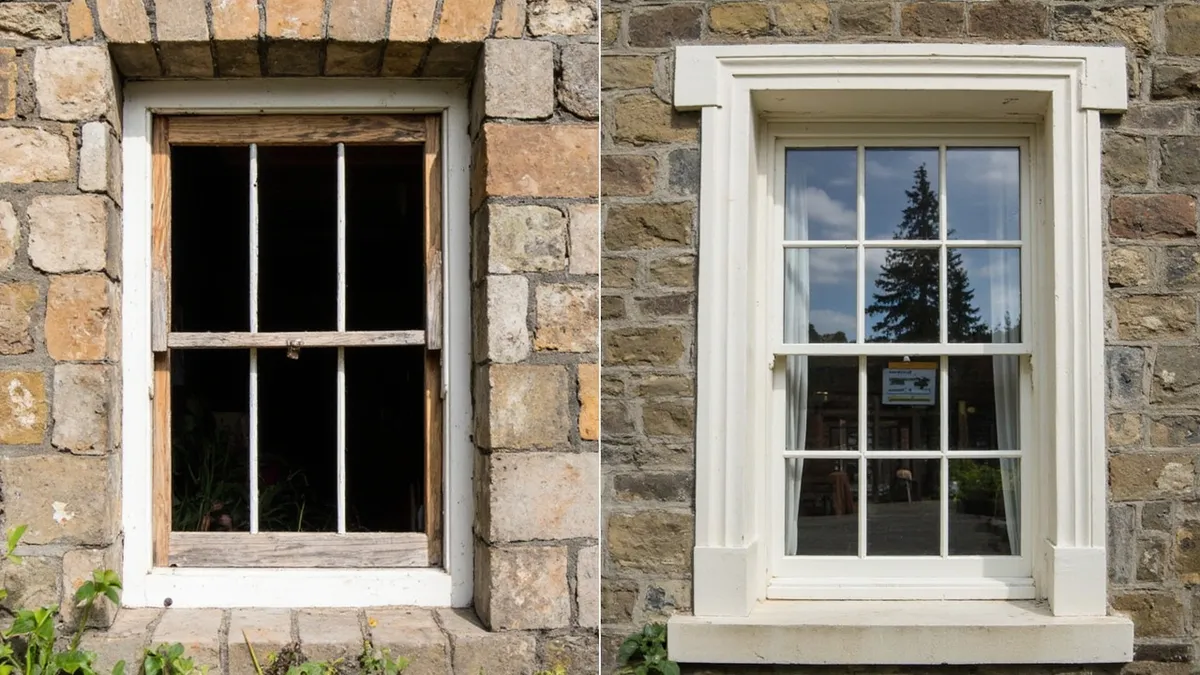
- Replacing original timber windows or doors, or changing their design, glazing bars or opening method.
- Removing or altering an original staircase, balustrade or panelling.
- Stripping out historic doors, architraves or shutters inside.
- Adding, removing or reshaping openings in historic walls for new doors or windows.
Some genuine like-for-like repairs may not need consent, but that is a judgement for the local planning authority, not for us or for you. Our guide to listed building consent for timber repairs explains what to ask. Always check with your conservation officer before work starts.
What do listed building grades mean for your windows and doors?
Whatever the grade, original windows and doors are often part of what makes a listed building special. For owners, that changes the question from "what should I replace them with?" to "how do we keep them working?".
Our rule of thumb in the workshop: if a window or door is original, we repair before we replace, and we replace only the part that has failed. A rotten cill or bottom rail gets a new section made to the original profile; the rest of the timber stays. If a whole sash or door truly cannot be saved, we make a new one as an exact copy, in matching timber, and we recommend the owner agrees it with the conservation officer before we cut any wood.
That approach is the core of our heritage joinery for listed buildings, and it applies across all the listed building grades. For sash windows in particular, our guide to sash window restoration in Grade 2 listed homes goes into the detail of repair, draught-proofing and paperwork.
If draughts are the problem, traditional draught-proofing and careful repair can make old sashes more comfortable without changing how they look. If you want better insulation, glazing upgrades can be added in some cases, and we can advise on what to discuss with your planning authority.
Listed buildings in Yorkshire: what we see locally
Yorkshire has a wide spread of listed buildings, and the joinery in them varies just as much. In York and Wakefield we work on Georgian and listed buildings where the original sashes and panelled doors are a big part of the character. Around Holmfirth, Honley and Marsden, weavers' cottages have long rows of mullioned windows. In Harrogate, Victorian and Edwardian spa-town villas bring their own sash windows, doors and staircases.
The weather is the common enemy. Wet, exposed Pennine conditions in the Colne and Holme valleys soak cills and door bottoms for long spells, so listed joinery here needs regular painting and early repair. We have also restored doors for councils and civic buildings, including the doors at Grade I listed Morley Town Hall, where we stripped old paint and stain, applied a dark oak stain and finished with a sprayed lacquer top coat. You can read more about our council and public sector joinery projects.
Can I get a mortgage on a Grade 2 listed building?
Mortgages are decided by lenders, not by the listing system, and we are joiners rather than financial advisers. What we can say is that a survey may comment on the condition of old windows and doors, and a note about rot or failed joinery can raise questions. If you are buying a listed home, speak to your lender and a surveyor who knows historic buildings, and ask for a joiner's view on any windows or doors flagged in the report. A clear repair plan is far more useful than a vague note saying "windows need attention".
Free advice on joinery in listed buildings
Whether your home is Grade II or your building is Grade I, we can look at the windows, doors and staircase and tell you what can be repaired. Master craftsman Daniel Fitzpatrick, a member of the Guild of Master Craftsmen with over 30 years at the bench, oversees every job from inspection to installation, and advice is free.
Call 01484 666 333, send photos through our contact page, or see our heritage joinery service. Our workshop is at Crossley Mills in Honley, and we work across West and North Yorkshire.
Frequently asked questions
What are the three listed building grades?
In England the three listed building grades are Grade I, for buildings of exceptional special interest; Grade II*, for particularly important buildings of more than special interest; and Grade II, for buildings of special interest that warrant every effort to preserve them. Grade II covers the large majority of list entries.
Is Grade II* higher than Grade II?
Yes. Grade II* sits between Grade I and Grade II. These buildings are described as particularly important and of more than special interest. In March 2010, only about 5.5% of list entries in England were Grade II*, compared with about 92% at Grade II.
Does listing cover the inside of a house?
Yes. Unless the list entry excludes particular parts, listing applies to the whole building, not just the front. It covers the interior, fixtures and fittings as well as the exterior, so original staircases, internal doors, shutters and panelling are protected along with the windows. Check with your local planning authority before altering them.
Can I replace windows in a Grade 2 listed house?
Only with listed building consent if the change would affect the building's character, and replacing original windows often will. Repair is normally the expected first step. Where replacement is agreed, new windows are usually made to match the originals. Talk to your conservation officer before ordering anything.