Resin Wood Repair vs Splice Repair for Rotten Timber
By Daniel Fitzpatrick, Master Craftsman · Guild of Master Craftsmen
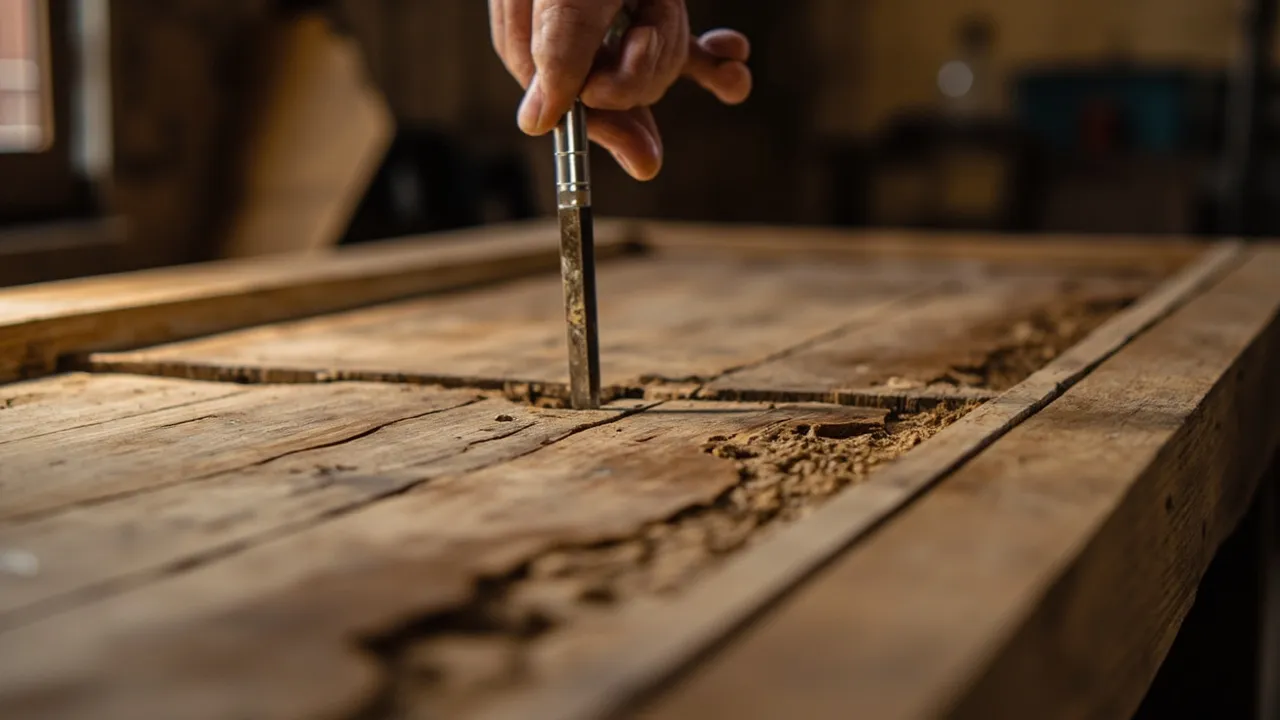
Resin wood repair suits small, shallow pockets of rot in timber that is otherwise sound. Where decay has reached a joint, a cill or the length of a rail, a spliced timber repair is usually the better long-term repair. Dry the wood first either way.
Both repairs have a place, and we use both. In our workshop at Crossley Mills in Honley we repair rotten windows, doors and joinery from period homes across Yorkshire, and a question we often hear is whether a two-part filler will do or whether the rotten part needs cutting out and replacing with new wood. This guide sets out how we decide, what the conservation guidance says, and where each method tends to fail.
Key takeaways
- Neither repair works on wet timber. Stop the water and let the wood dry before you fill or splice anything.
- Resin and two-part fillers are for small, shallow areas where the structure of the window or door is still sound.
- A splice (a new piece of matching timber glued and fixed into a cut-out) is usually the conservation answer for rot in joints, cills, bottom rails and door stiles.
- Good conservation practice removes as little original timber as possible, whichever method you choose.
What is the difference between a resin repair and a splice repair?
A resin wood repair fills the gap left by rot with a synthetic material. The decayed wood is scraped or cut out, the sound timber behind it is prepared, and a two-part filler is packed in, shaped and painted. It replaces lost wood with something that is not wood.
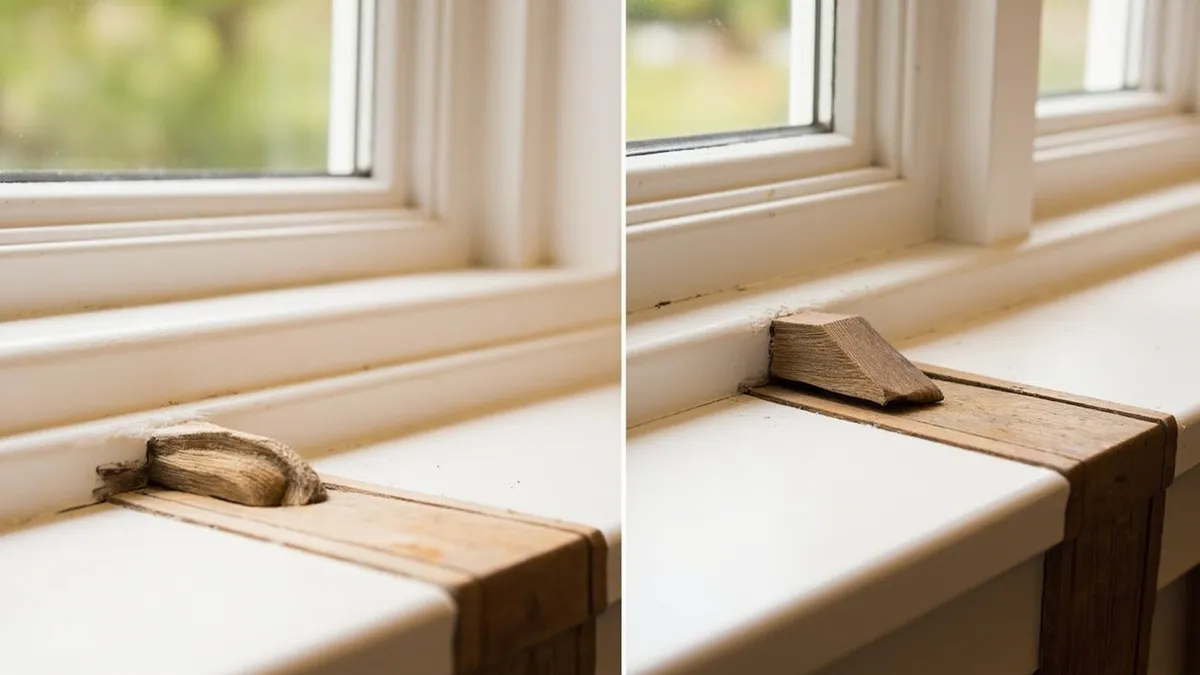
A splice repair replaces lost wood with wood. The joiner cuts away the decayed section with clean, angled cuts, then shapes a new piece of seasoned timber to fit the gap exactly. It is glued in, usually pinned, screwed or pegged as well, and then planed and moulded to match the original profile. Joiners often call the angled version a scarf. A scarf joint is a method of joining two members end to end, and it is favoured in joinery because it gives a barely visible glue line.
| Resin or two-part filler | Spliced timber repair | |
|---|---|---|
| What fills the gap | Synthetic filler | New timber matched to the original |
| Best for | Small, shallow pockets of decay in sound timber | Rot in joints, cills, bottom rails, door stiles and mouldings |
| Strength | Fills a void; does not rebuild a failed joint | Restores the component, especially with mechanical fixings as well as glue |
| Movement | Behaves differently from the timber around it | Moves with the original if species and grain are matched |
| Future repair | Can be hard to remove cleanly later | Can be repaired again in the traditional way |
| Skill needed | Careful preparation | A joiner, plus workshop or careful on-site work |
How can I repair wood with resin?
A resin wood repair is mostly preparation. The filler is only as good as the timber it is bonded to. This is the sequence we follow:
- Find and stop the water. SPAB advises eliminating all causes of dampness and drying the timber to below 20% moisture content, because dry timber is immune to attack. Failed paint, open joints, blocked drips and leaking gutters are the usual culprits.
- Let it dry. Strip the failed paint around the damage and give it time. Filler over damp wood seals the water in.
- Dig out all the decay. Probe with a screwdriver and remove everything soft, back to wood that resists the blade.
- Treat the sound timber. SPAB's technical note on window repair says the remaining sound timber can be treated before filling, and notes that a timber preservative is not suitable with all paint types, so choose a treatment that suits your finish (SPAB, Repair of Wood Windows).
- Pack out large voids with wood first. The same note says larger voids should be filled with a shaped timber patch combined with filler, rather than filler alone.
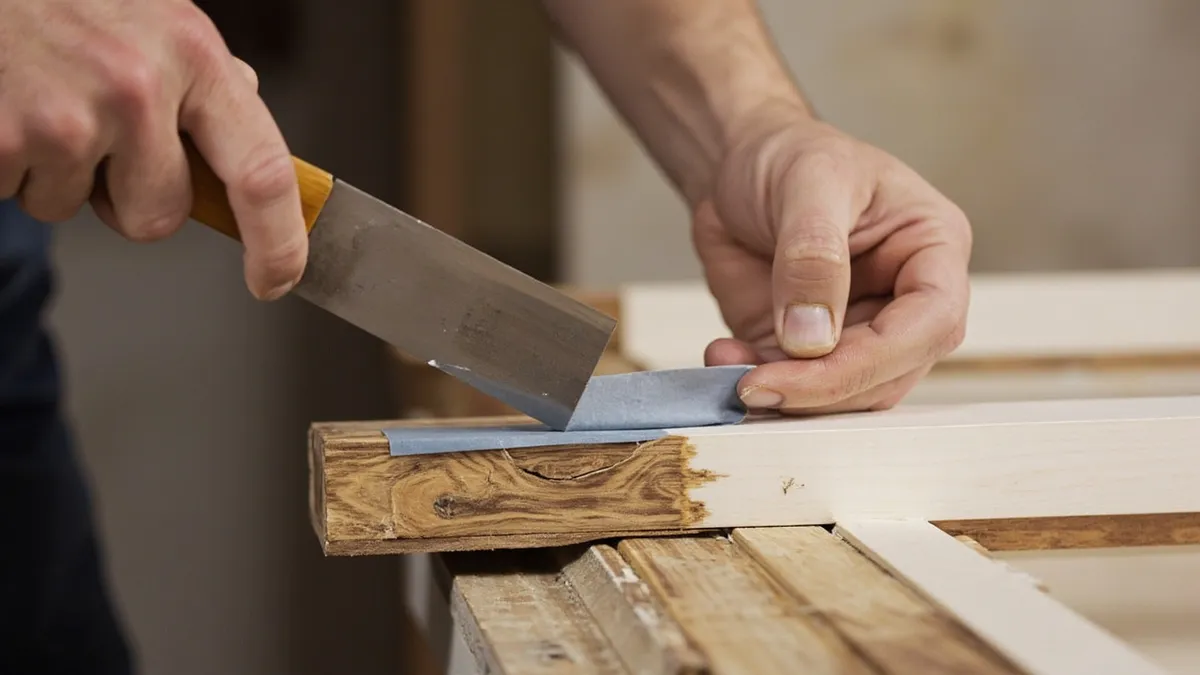
- Fill, shape and prime. Build the filler up slightly proud, shape it to the moulding once cured, then prime and paint the whole area so no bare timber is left.
Wood repair epoxy, polyurethane systems and other two-part fillers all work on the same principle. We do not recommend particular products. What matters far more than the tin is dry, sound timber and a paint film that stays intact afterwards.
Is wood epoxy better than wood filler?
For outdoor joinery, usually yes. SPAB's technical note on repairing wood windows states that, of the modern filler types, two-pack systems such as epoxy resin or polyurethane are generally more durable than ready-to-use fillers (SPAB, Repair of Wood Windows). A one-part filler out of a tube is fine for nail holes and dents indoors. It is not made for a cill that faces the weather.
"Better than filler" is not the same as "better than timber", though. A two-part wood filler is still a patch. It does not have grain, it takes up and loses moisture differently from the wood around it, and if the joint line between filler and timber opens up, water can get in behind it and sit there. On a small, shallow repair that risk is small. On a large repair, or one that carries load, it grows.
SPAB's general advice on timber windows puts it simply: minor areas of decay can simply be built up with two-pack filler, and a skilled carpenter will in many cases be able to let in well-seasoned matching new timber.
When is a timber splice the conservation answer?
When the rot has gone beyond a shallow pocket. SPAB describes the typical case: only a small area is affected, such as the bottom of the window, and a decayed end of a bottom rail might be renewed complete with its tenon, then the joint pegged, re-wedged and glued. A rotten outer section of a cill may be cut back in place and replaced with new timber held by glue and non-ferrous screws (SPAB, Timber windows).
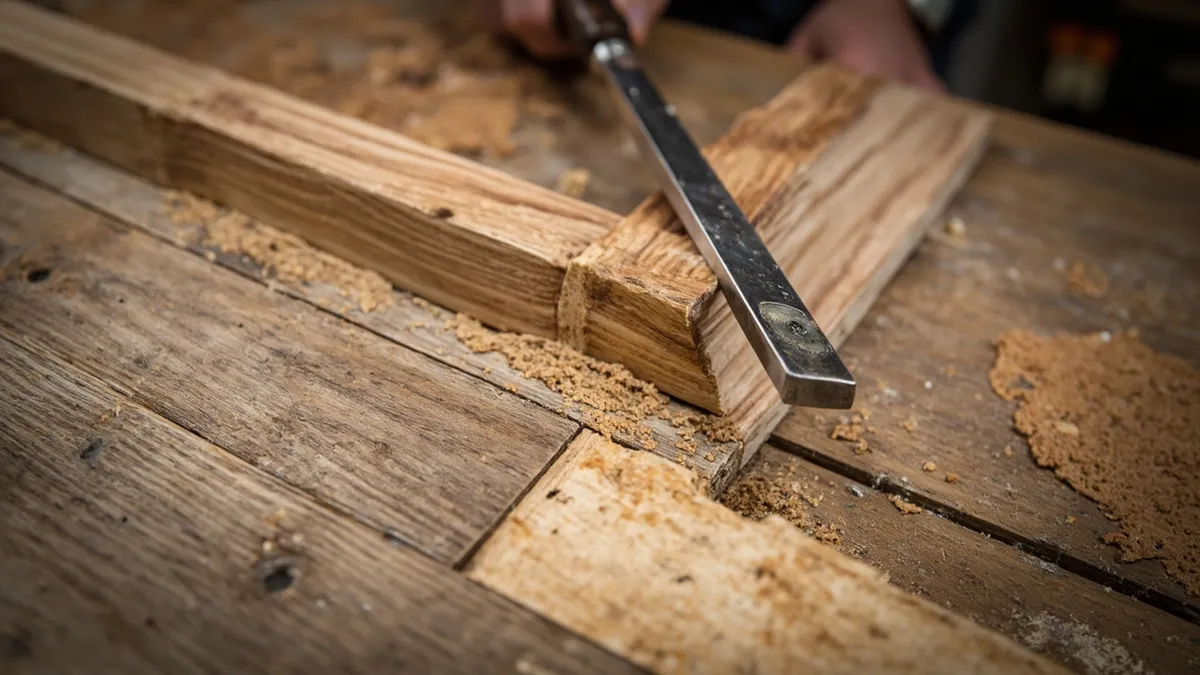
SPAB's technical note sets out the principles a good splice should follow (SPAB, Repair of Wood Windows):
- Remove only the minimum amount of existing timber needed to form an effective repair.
- Work new material to the line of the existing, not the other way round.
- Generally avoid mixing species, because the joint between different timbers is likely to fail as they expand and contract differently.
- Design the splice so moisture is directed towards the outer face and does not lie on the repair joint.
- Use mechanical fixings, such as timber pegs, dowels or non-ferrous screws, as well as glue wherever possible.
- Use well-seasoned timber, with the line and density of the grain matching the existing as closely as possible.
That list is the core of our conservation joinery work. A splice done this way keeps the original frame, its profiles and its history, and it can be repaired again in future by another joiner using the same methods.
Wood rot epoxy repair or splice: our rule of thumb
We recommend a simple decision rule, and it is the one we use at the bench. If the probe finds soft wood only on the surface, and the joint, the tenon and the shape of the part are still sound, we clean it out, treat it and fill it. If the rot has reached a joint, runs along a cill, rail or stile, or has taken away the edge that sheds water, we cut it out and splice in new timber.
Put another way, a wood rot epoxy repair replaces a missing piece of surface. A splice replaces a missing piece of the structure. If you are rebuilding an arris, a drip, a tenon or the foot of a door stile in filler, you are asking it to do a job timber does better.
Use this checklist before choosing:
- Is the timber dry, and has the source of water been fixed?
- Is the decay shallow, with firm wood close behind it?
- Are the joints tight, with no drop in the bottom rail against the stile?
- Does the damaged area carry load or shed water, such as a cill nose or drip?
- Is the building listed, or is the joinery historically important?
- Would a large filler repair make the next repair harder?
If the answer to any of the first three is no, or to any of the last three is yes, a splice is usually the better repair.
Is resin wood repair acceptable on a listed building?
It can be, for small repairs, but get advice first. SPAB describes replacement as the last resort and says it should be like-for-like in style and materials (SPAB, Timber windows). In our experience, a large resin wood repair on a historic window can raise questions that a small, well-made timber splice does not.
Whether a repair needs listed building consent depends on the building and the work. Our guide to listed building consent for timber repairs explains the basics, but always check with your local planning authority or conservation officer before you start.
Which repair lasts better in Yorkshire weather?
In our experience, in exposed spots, the timber splice. Here in Yorkshire, stone-built Victorian terraces and mill buildings around Huddersfield and the Holme Valley take wet, driven Pennine weather, and weavers' cottages around Holmfirth, Honley and Marsden have long rows of mullioned windows with cills that can stay damp for long spells. Timber on those elevations swells and shrinks through every season. A patch that behaves differently from the wood around it is put under the most stress exactly where the weather is worst.
That is why, on weather-facing cills, we usually splice rather than fill. Where a cill has rotted right through, a new one may be the answer; our guide to sash window sill replacement on listed buildings covers that. For homes in the valleys around our workshop, see our joinery work in Holmfirth.
Doors suffer the same way. The bottom rail and the foot of each stile take splash-back from paving and rain running off the panels. A shallow pocket in a moulding can be filled, but a soft bottom rail is a splice job. Our door restoration service covers exactly that kind of repair.
What makes either repair fail early?
Most failures we see come from the same few mistakes, whatever the method:
- Filling or splicing wet wood. The water is trapped behind the repair and decay carries on unseen.
- Leaving decay behind. A thin layer of soft wood under a repair gives it nothing to bond to.
- Leaving the cause. A leaking gutter or failed putty will rot the new work as well as the old.
- Poor splice design. A joint that lets water sit on the glue line will open up. SPAB's note is clear that splices should direct water to the outer face.
- Bare timber left unpainted. Prime all faces of new timber, including the back and ends, and keep the paint film intact afterwards.
For ongoing care after a repair, our guide to caring for heritage timber covers finishes and the early warning signs worth checking each spring and autumn.
Not sure whether to fill or splice? Ask us
Tell us about the rot and we will tell you honestly whether a resin repair will do or whether the timber needs splicing. Advice is free. Master craftsman Daniel Fitzpatrick, a member of the Guild of Master Craftsmen with over 30 years' experience, oversees every job from inspection to installation.
Call 01484 666 333, get in touch through our contact page, or read more about our conservation joinery and timber repair service. Our workshop is at Crossley Mills, Honley, and we work across West and North Yorkshire.
Frequently asked questions
Where can I buy wood repair resin in the UK?
Two-part wood fillers and repair resins are widely sold by builders' merchants and hardware shops. We do not recommend particular products. The result depends far more on preparation: dry timber, all decay removed, the sound wood treated, and a paint film that is kept intact once the repair is finished.
What is the best epoxy resin for repairing rotted wood?
There is no single best product. SPAB says two-pack systems, such as epoxy resin or polyurethane, are generally more durable than ready-to-use fillers. Choose one made for exterior timber that can be shaped and painted, and only use it on small, shallow areas where the joint and structure are still sound.
How long does a resin wood repair last?
It depends on the preparation, the exposure and how well the paint is kept up. A small resin wood repair on dry, sound timber that stays painted can last well. A large one on a weather-facing cill, or one laid over damp or decayed wood, tends to fail much sooner.
Can a splice repair be done without removing the window?
Often, yes. SPAB's guidance says repairs to frames should be done in place where possible, especially where the frame is built into the wall. Sashes and casements can usually be removed without damage and repaired on site or in the workshop, then refitted.