Sash Window Weights and Cords: A Repair Guide
By Daniel Fitzpatrick, Master Craftsman · Guild of Master Craftsmen
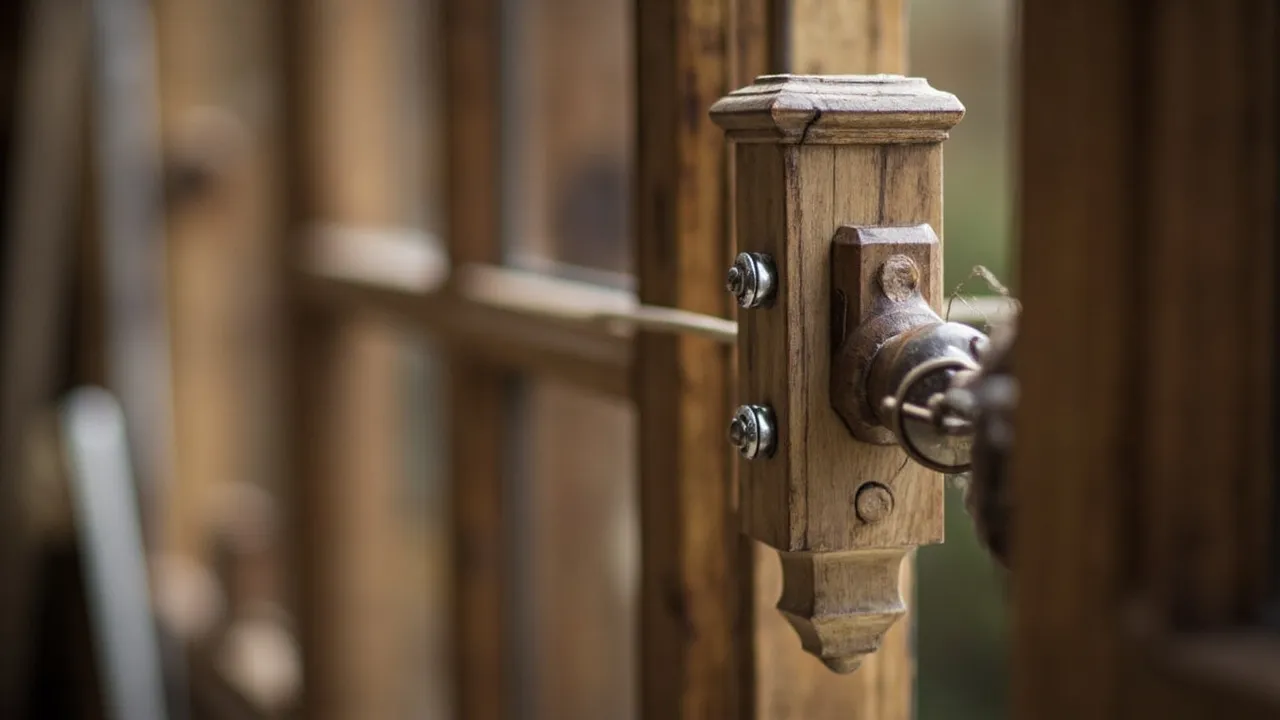
Sash window weights balance each sash through a cord that runs over a pulley at the top of the frame. When a cord snaps or the weights no longer match the sash, the window drops, creeps up or sticks. Many faults are fixed by re-cording and re-balancing.
A sash that crashes down or has to be propped open with a stick is a common problem in period homes across Yorkshire. In our workshop at Crossley Mills in Honley, we re-cord and re-balance sashes as part of our sash window restoration work. This guide explains how the system works, how to spot a failing cord, how weights are matched and why pulleys stick.
Key takeaways
- Each sash hangs on two cords that run over pulleys to two hidden weights. When the balance is right, the sash stays where you leave it.
- A sash window that won't stay up usually has a broken or stretched cord, or weights that are too light for the sash.
- SPAB advises that upper sashes should be about 0.5–0.9 kg lighter than their weights, and lower sashes about 0.5–0.9 kg heavier.
- If one cord breaks, replace every cord on that window, and clear paint and debris from the pulleys and weight pockets while the sashes are out.
How do sash window weights, cords and pulleys work?
A traditional box sash window is a counterbalance. The Society for the Protection of Ancient Buildings (SPAB) describes sashes that typically slide vertically, hung on cords or chains and counterbalanced by metal weights housed in a boxed frame (SPAB, Sash window maintenance). Wikipedia's entry on the sash window adds that the weights are usually steel, lead or cast iron, joined to the sash by a braided cotton cord or a chain that runs over a pulley at the top of the frame (Wikipedia, Sash window).
The parts work together like this:
- The sash. The glazed frame that slides. A double-hung window has an upper (outer) and a lower (inner) sash.
- The window sash cord. One each side of each sash, fixed into a groove in the sash side and running up to the pulley.
- The sash window pulley. A small wheel set near the top of the pulley stile, the upright side of the box frame.
- The weights. Two per sash, hanging in the hollow box each side. A thin timber parting slip hangs inside each box to keep its two weights apart.
- The pocket piece. A removable section of the pulley stile that gives access to the weights.
When the sash and its pair of sash window weights are close to the same total weight, a light push moves the sash and it stays where you leave it. Out of balance, the heavier side wins.
Why won't my sash window stay up?
If a lower sash window won't stay up, the most likely cause is a broken sash cord or one that has stretched or frayed. Weights that are too light for the sash are the next suspect, especially if the sash has been reglazed with heavier glass. SPAB notes that cords gradually degrade and break from time to time, and suggests bending them to see whether they snap or are dried out and liable to fail (SPAB).
Signs a cord has gone or is about to go:
- The sash slides down on its own, or drops as soon as you let go.
- The sash sits crooked in the frame or catches on one side as it moves.
- A cord end is hanging loose from the pulley, or has disappeared into the pulley hole.
- You hear a thud inside the frame: a weight falling to the bottom of its box.
- The visible cord is frayed, hard, dry, or thick with paint.
- The top sash has dropped a little and no longer closes tight at the head, leaving a gap at the top and the meeting rails out of line.
| What you notice | Likely cause | Usual fix |
|---|---|---|
| Lower sash drops as soon as you let go | Broken or stretched cord, or weights too light | Re-cord and check the balance |
| Upper sash slides down and leaves a gap at the top | Cord gone, or weights too light for that sash | Re-cord and add weight |
| Lower sash creeps up on its own | Weights too heavy for the sash | Swap for lighter weights or adjust the balance |
| Sash is stiff and squeaks, cord looks fine | Paint on the pulley or running surfaces, or a tight bead | Free the pulley, strip the paint, ease the beads |
| Sash will not move at all | Painted shut, swollen, or a weight fouled in its box | Do not force it; open up and free it properly |
SPAB's advice is to avoid forcing a sash to move, because this often causes damage (SPAB).
How heavy should sash window weights be?
Sash window weights should roughly match the sash they carry, with a small difference that depends on which sash it is. SPAB says to make sure the weights are correctly sized, otherwise sashes will rise and drop by their own accord. Its guide is that upper sashes should be about 0.5–0.9 kg lighter than the weights, and lower sashes 0.5–0.9 kg heavier (SPAB).
Slightly heavier weights pull the top sash tight against the head of the frame. A slightly heavier lower sash settles onto the cill and stays closed, but still lifts easily.
So the upper and lower weights on one window often differ, even if they look alike, and we label every weight when we take a window apart. There is no standard figure: size, timber, glass and paint all change it, so we weigh each sash and its weights on the bench.
How do you add weight to sash windows?
If a sash is heavier than its weights, you add weight to the weights, not the sash. SPAB notes that additional "make weights" are available (SPAB). These are small extra weights that are tied or fixed on with the original weight so the pair matches the sash again.
A sash usually ends up heavier than its weights because of thicker replacement glass, timber or resin repairs, decades of paint, or weights swapped onto the wrong sash during an earlier repair. Where the box has no room for a bigger weight, a denser metal gives the extra weight in less space. We do this in the same visit as re-cording, while the sashes are out.
Why do sash window pulleys stick?
A pulley often sticks because it has been painted over. SPAB lists broken cords, paint accumulation (which needs removing from pulleys as well as running surfaces) and badly positioned or distorted beads among the reasons sashes stick or jam. It adds that weights can become fouled, or debris can block their movement in the weight pockets (SPAB).
A seized pulley also wears through the cord dragging over it. SPAB's advice when re-cording is to deal with any internal projections or seized pulleys likely to fray cords (SPAB).
To keep pulleys and cords working:
- Never paint the pulley wheels, the cords or the running faces of the pulley stiles.
- Strip old paint off the pulley faces and wheels so the wheel spins freely.
- Lightly lubricate the pulley axle. SPAB suggests a light penetrating oil rather than grease, which attracts dust and hardens over time (SPAB, Maintenance Matters: Windows).
- Rub a little wax on the sliding surfaces. SPAB says the junction between a pulley stile and sash stile can take a thin coat of beeswax mixed with linseed oil or tallow, which also helps keep cords supple and rot-resistant (SPAB).
SPAB also says to keep sash cords paint-free to avoid their premature deterioration (SPAB).
How do we replace a broken sash cord?
Replacing a cord means taking the sashes out. SPAB notes that re-cording requires removing the sashes to reach the weight pockets (SPAB). Our process on a double-hung window runs like this:
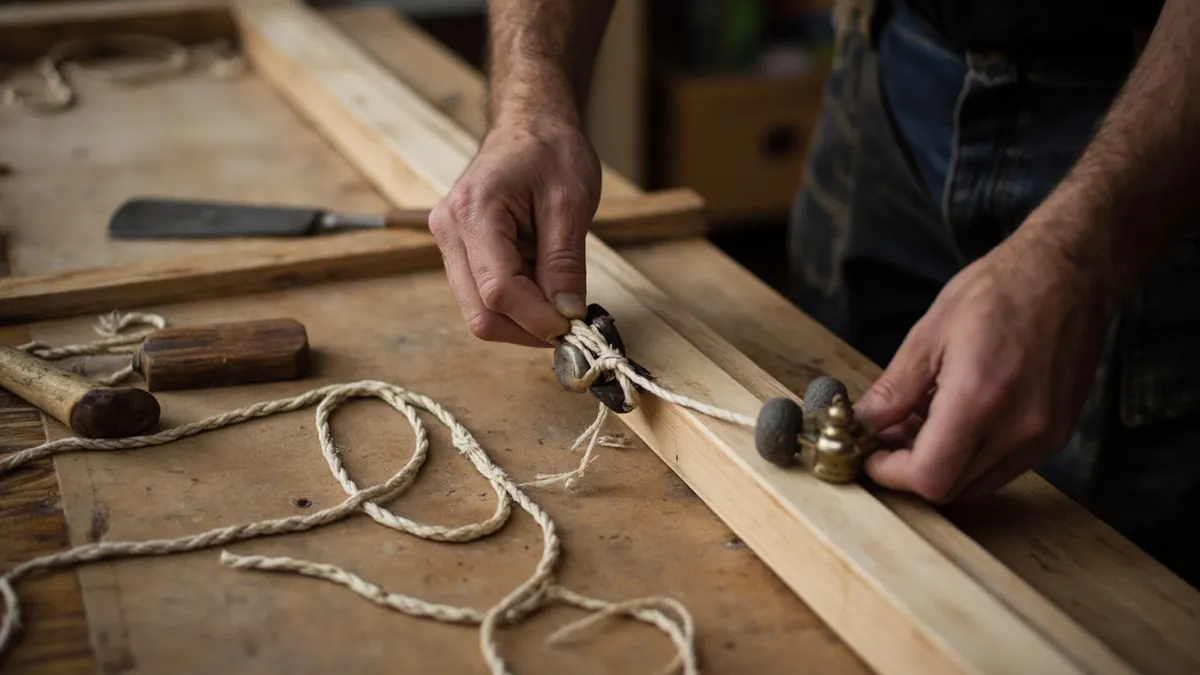
- Ease off the staff beads on the inside of the frame without splitting them.
- Lift out the lower sash, take the cords out of the grooves in its sides and let the weights down gently.
- Remove the parting beads, then lift out the upper sash the same way.
- Open the pocket pieces and take out the weights, labelling each one.
- Clear old cord, nails, debris and paint from the boxes and pulleys.
- Weigh each sash against its weights and add make weights where needed.
- Thread new cord over each pulley, tie it to its weight and set the length so the weight never hits the pulley or the bottom of the box as the sash travels fully up and down.
- Fix the cords into the sash grooves, refit the sashes and beads, and check the sash runs and stays put at every height.
For cord, SPAB recommends durable, low-stretch natural or synthetic yarn sized to suit the weights and pulleys (SPAB). Our guide on how to restore a sash window covers the rest of a full overhaul.
Our rule of thumb: one cord goes, all four get replaced
We recommend replacing every cord on a window when one breaks. The others are usually just as old, and the sashes are already out, so doing them now saves opening the window up again soon. SPAB gives the same advice: if one cord breaks, it is worth replacing all those on a window (SPAB).
If the window rattles or lets in draughts, our sash window draught proofing is best done at the same time, while the beads are off.
Sash windows in Yorkshire homes
Box sash windows are a feature of the stone-built Victorian terraces around Huddersfield and the Holme Valley, and of Georgian and listed buildings in York and Wakefield. The wet, exposed Pennine weather in the Colne and Holme valleys can make sashes swell and bind, which adds strain on tired cords.
Yorkshire even gives its name to a kind of sash that has no weights at all. SPAB describes the "Yorkshire light" as a variation where the sash moves sideways without weights (SPAB). If your horizontal sliding sash sticks, the fix is in the runners and the timber, not in cords and pulleys.
Are window weights worth anything?
Old sash window weights are worth far more in the window than out of it. They may have some value as scrap metal, but once they are gone the window needs replacement weights to work at all. We reuse original weights wherever we can and only add make weights to correct the balance.
SPAB says a sash in poor working order is no reason for replacement, and that overhaul may mean replacing cords, adjusting weights and easing pulleys (SPAB, Timber windows).
On a listed building, check with your local planning authority or conservation officer before changing original parts. Winchester City Council's guidance, for example, says like-for-like repairs to a listed building usually do not need listed building consent, but details may be requested (Winchester City Council, Sash Windows). Our guide to listed building consent for timber repairs explains more.
What are some alternatives to window weights?
There are two main alternatives to the traditional set-up: chain in place of cord, and spring or spiral balances in place of weights.
- Sash chain. Wikipedia notes that a chain can take the place of cord between sash and weight (Wikipedia). It still works with weights, so it changes the cord rather than the counterbalance system.
- Spring or spiral balances. Wikipedia says spring balances are sometimes used instead of weights (Wikipedia). Winchester City Council's guidance says many modern sash windows use spiral balances rather than traditional cords and weights, and that these can be unreliable and difficult to repair (Winchester City Council).
For a traditional box sash, we nearly always recommend staying with cords and weights. The boxes are already there, the parts are easy to repair, and the window keeps its original workings.
Get free advice on sash cords and weights
If a sash has dropped, will not stay open or has seized, we can tell you what it needs. Master craftsman Daniel Fitzpatrick, a member of the Guild of Master Craftsmen with over 30 years' experience, oversees every job himself, and advice is free.
Call 01484 666 333, send photos through our contact page, or read about our sash window restoration service. We work from Crossley Mills in Honley and cover Holmfirth, Huddersfield and other towns across West and North Yorkshire.
Frequently asked questions
How heavy should sash window weights be?
Roughly the same as the sash, with a small difference. SPAB suggests upper sashes should be about 0.5–0.9 kg lighter than their weights, so they close tight at the head, and lower sashes about 0.5–0.9 kg heavier, so they settle on the cill. Weigh the sash and its pair of weights rather than guessing.
Can I replace a sash cord myself?
It can be done, but it means removing beads and both sashes, retrieving the weights and getting the balance right. Beads split easily and glass can crack if a sash is forced. If the window is old or listed, or several cords have gone, our sash window restoration team can re-cord it properly.
Why does my top sash keep sliding down?
Usually a broken or stretched cord, or weights that are too light for the sash. The top sash needs slightly heavier weights so it is pulled up tight against the head. If it has been reglazed or repaired, the extra weight may have tipped the balance, and make weights can put it right.