Victorian Front Door: How to Spot and Restore an Original
By Daniel Fitzpatrick, Master Craftsman · Guild of Master Craftsmen
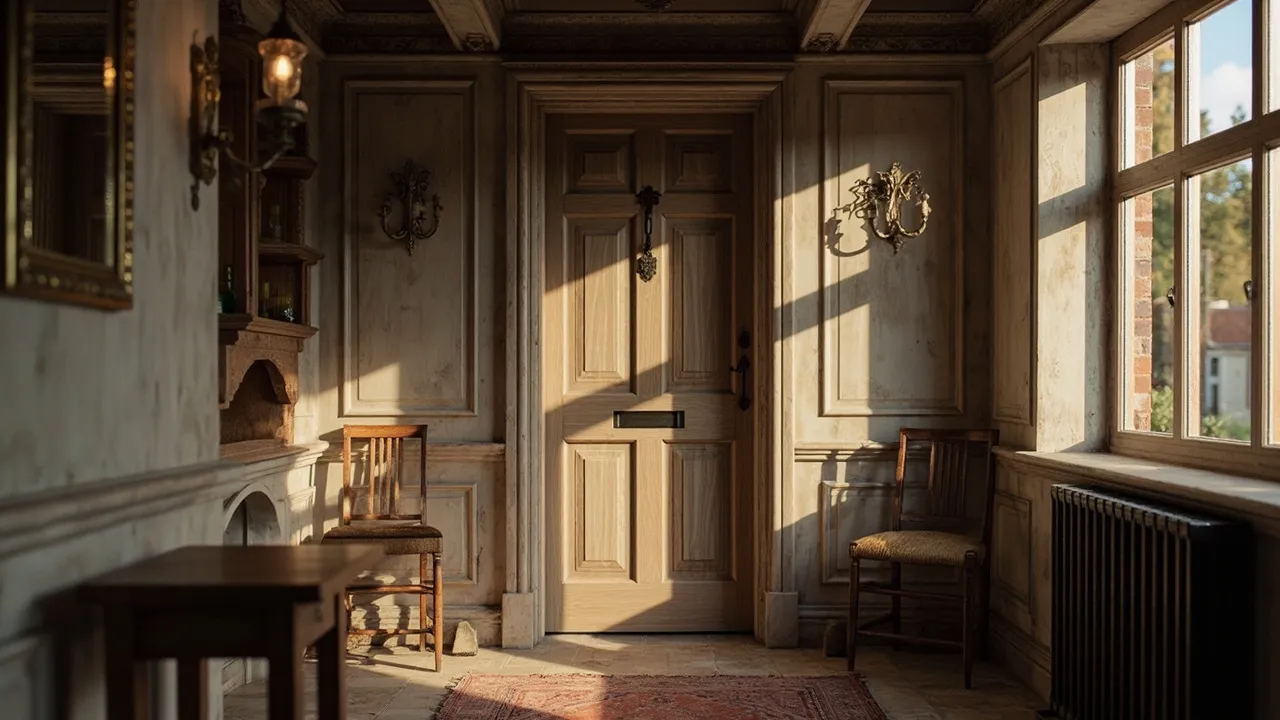
A Victorian front door is usually a painted softwood door with four panels, deep mouldings and often glass in the top two panels, hung below a fanlight with a knob, knocker and letterbox. An original one can nearly always be repaired rather than replaced.
Original doors still survive on many terraces, villas and former mill houses across Yorkshire, often hidden under decades of paint. In our workshop at Crossley Mills in Honley we repair, repaint and rehang period doors for homes and civic buildings. This guide shows you how to tell whether yours is original, what the key features are, and why restoring it is usually the better choice.
Key takeaways
- The classic layout is four panels, two tall above two short, with mouldings around each panel. Many have the top two panels glazed.
- Most old doors were made of softwood and painted. Historic England says the wood used for old doors is usually of much better quality than timber available today.
- Rot is often confined to a small area such as the foot of the door, and in many cases a joiner can splice in matching timber rather than replace the whole door.
- Keep the original knob, knocker and letterbox. If your house is listed or in a conservation area, check before you change the door.
What would a Victorian front door look like?
Most Victorian front doors follow a simple pattern: a frame of upright stiles and horizontal rails, with panels set into it. The most common layout has four panels, two long ones at the top and two shorter ones below, divided by a wide middle rail at about waist height. Grander houses might have a six-panel door.
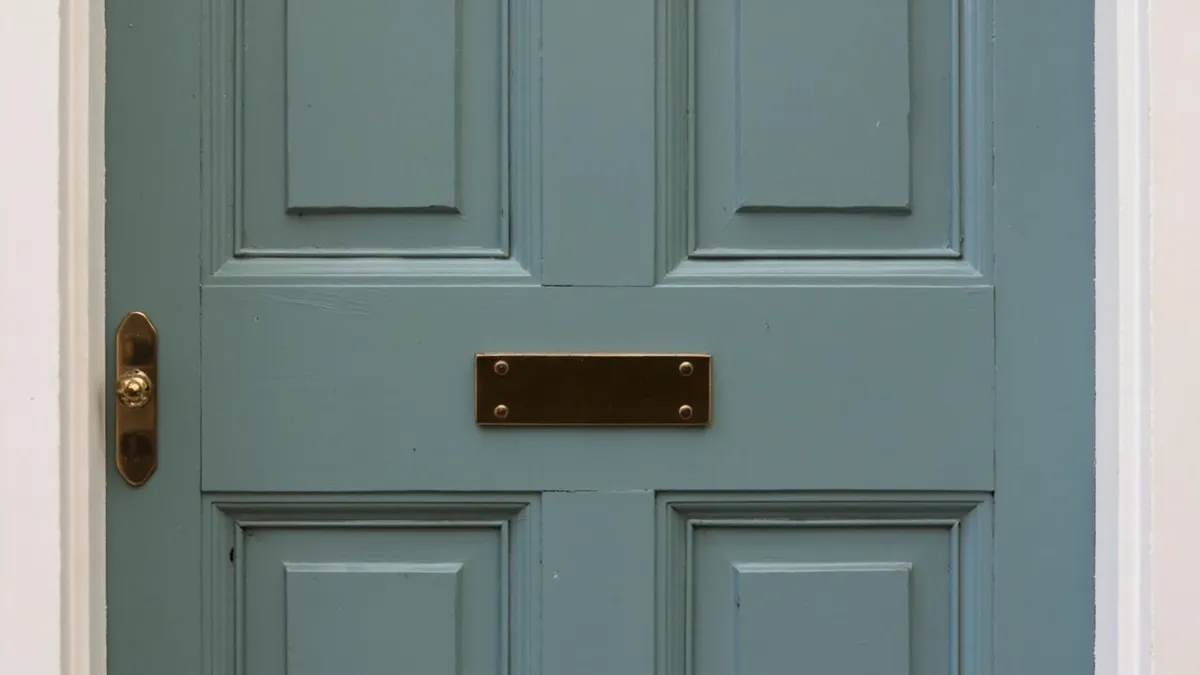
Around the door itself you will usually find:
- A fanlight or overlight. A glazed panel above the door that lets daylight into the hall. On terraces it is often a plain rectangle, sometimes painted or etched with the house number.
- Mouldings. Shaped timber strips around each panel. On front doors these are often bold, raised mouldings that stand proud of the frame and throw a strong shadow.
- Glazed upper panels. Many doors had the top two panels in glass, often coloured, etched or patterned, to light a narrow hall.
- A deep bottom rail. Wider than the others to stiffen the door and take the knocks and splashes at ground level.
- Cast ironmongery. A centre knob, a knocker and a letter plate, usually in cast iron or brass.
Glass mattered a great deal to the look. The tax on glass in Britain was abolished by the Glass Duties Repeal Act 1845, and the Wikipedia entry on stained glass notes that stained glass windows in houses were particularly popular in the Victorian era, with many domestic examples surviving. Coloured or patterned glass in the door and fanlight is one of the clearest marks of the period.
How can you tell if you have an original Victorian front door?
An original door has been in the same opening for well over a century, and it shows. Historic England points out that a front door was specifically made to fit its doorway, which is unlikely to be the same size as standard off-the-peg doors (Historic England, I want to alter a door). A door that fits its opening closely, without packing strips or a trimmed-down bottom rail, is a good first sign.
Checklist: signs your door is original
- The door is heavy and solid, with through mortise and tenon joints. On the edge of the door you can often see the end of the tenon or the wedges that lock it in place.
- The panels sit loose in grooves in the frame so they can move with the seasons. Old panels often have hairline splits along the grain.
- The mouldings are worked by hand or on early machines, with slight variations from one side to the other.
- Many layers of paint show at a chip or on the hinge edge, sometimes with old dark colours or graining underneath.
- Filled or plugged holes where earlier locks, bolts and knockers have been moved.
- The glass is thin and slightly uneven, or coloured, etched or patterned, and held with putty or small beads.
- It matches the doors on neighbouring houses of the same date. To find the original style, Historic England suggests looking at old photographs or original doors on neighbouring houses if they are like yours.
If your door is modern, the same checklist tells you what a replacement should copy. The Society for the Protection of Ancient Buildings (SPAB) warns that a common mistake is fitting mass-produced "period style" doors that are too grand or out of keeping with the property (SPAB, Doors).
What were Victorian front doors made from?
Most were made from softwood and painted. SPAB says most old doors are of softwood that was originally painted, and that the recent fashion for stripping old doors is usually historically inappropriate and can cause damage. Hardwood such as oak was more often kept for grander houses and public buildings.
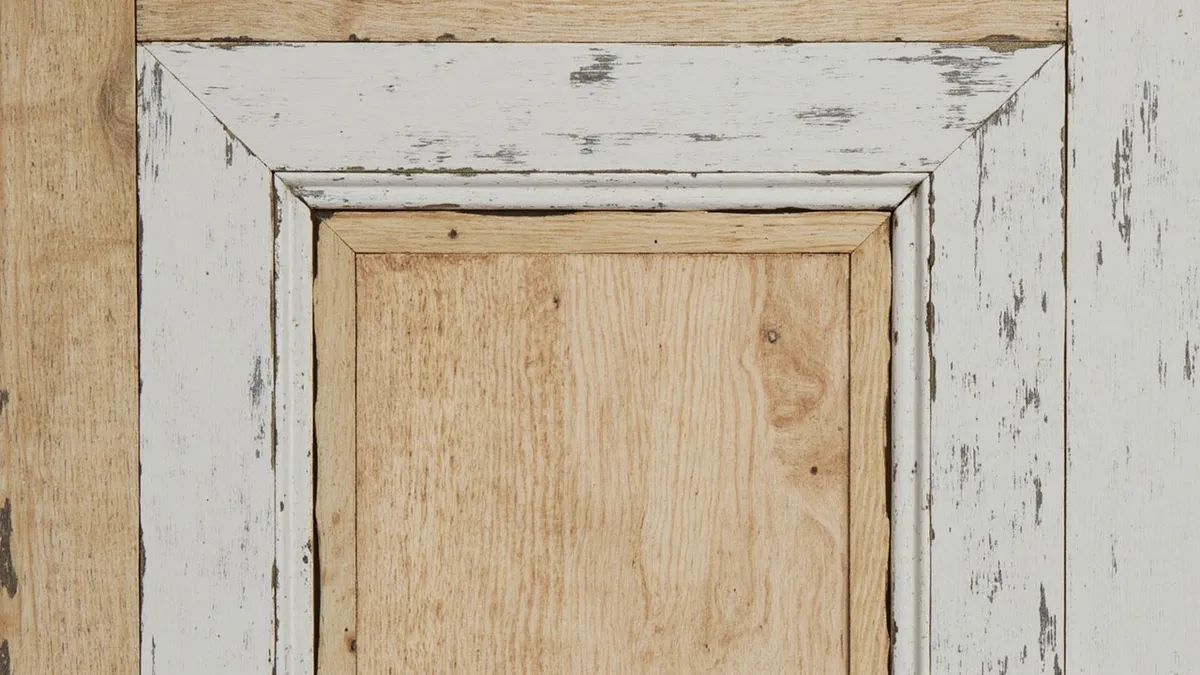
The quality of the timber is the main reason to keep an old door. Historic England notes that the wood used for old doors is usually of much better quality than timber available today, and that even if your door is over 100 years old, it will last many more years if it is well maintained. For repairs we use locally sourced reclaimed timber, and FSC-certified timber where new wood is needed.
Victorian vs Edwardian front doors: what are the key differences?
The two styles overlap, and builders carried on using Victorian patterns well into the 1900s, so date the house as well as the door. As a general guide:
| Feature | Typical Victorian door | Typical Edwardian door |
|---|---|---|
| Panel layout | Four panels, two tall over two short; six panels on larger houses | More varied: glazed upper half over one or more lower panels |
| Glass | Top two panels often glazed, with coloured, etched or patterned glass | More glass overall, often leaded lights with lighter, flowing designs |
| Mouldings | Heavy, raised mouldings with deep shadows | Lighter, flatter mouldings and simpler panels |
| Proportions | Tall and narrow, often under a separate fanlight | Often wider, sometimes with side lights and a porch |
| Colour | Dark colours or wood graining | Lighter colours became more common |
| Ironmongery | Cast iron or brass knob, knocker and letter plate | Similar, often with lighter decorative detail |
Why are original doors in Yorkshire worth restoring?
Here in Yorkshire, the stone-built Victorian terraces and mill buildings around Huddersfield and the Holme Valley, and the Victorian and Edwardian villas of Harrogate, are where we find many original doors. They also face some hard weather. In the Colne and Holme valleys, wet and exposed Pennine conditions keep the foot of a door and its threshold damp for long spells, and failed paint lets that water into the joints. See our page on heritage joinery in Huddersfield for the kind of houses we work on locally.
Restoring is usually the better choice for three reasons Historic England gives: the front door is usually the most important feature on the most visible side of the house, it was made to fit its opening, and it is authentic because it has always been there. The same page says doors are rarely beyond repair, and that it will be cheaper to repair one than to replace it. A new door made to match exactly should be a last resort.
There is a Yorkshire link to the letterbox, too. According to the Wikipedia article on the letter box, the Royal Mail first encouraged people to install letterboxes in 1849, and a wall box for posting mail, originally installed in the wall of the Wakefield Post Office and dated 1809, is believed to be the oldest example in Britain. A letter plate in an original door is part of that story, so keep it.
How do we restore an original door?
Our period door restoration service covers each step, from survey to rehanging.
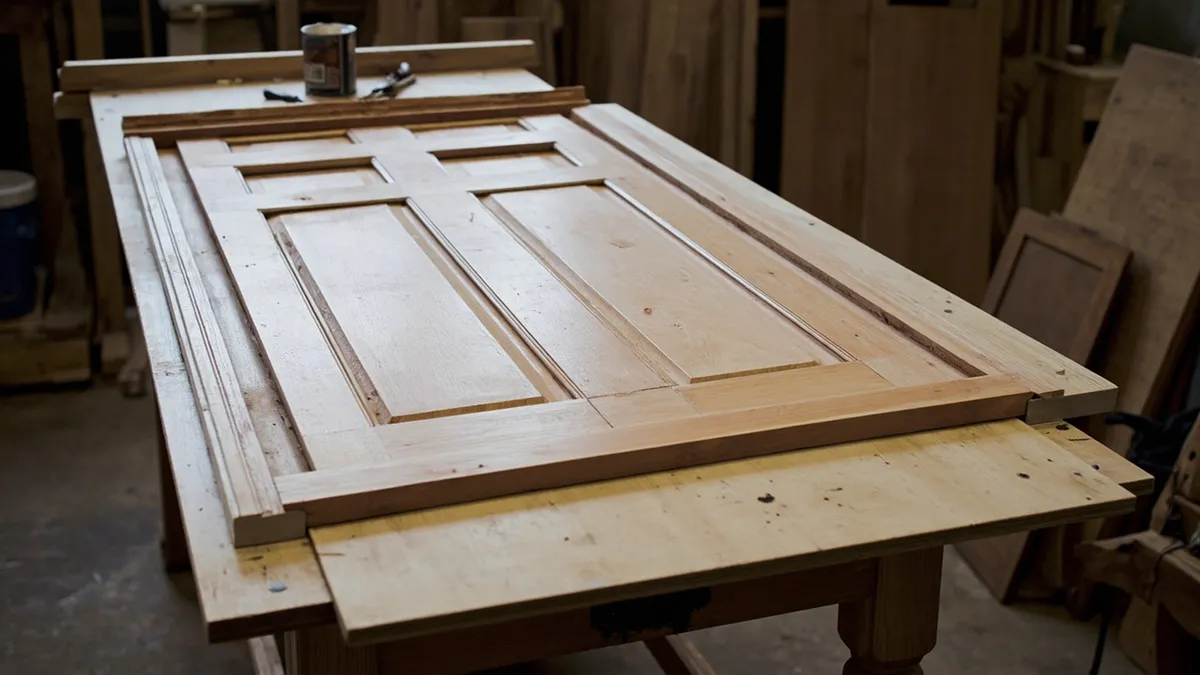
1. Survey and probe
We check the door, frame, cill and threshold, probe for soft timber and look at how the door hangs. SPAB notes that only a small area is commonly affected, such as the door foot where there is wet rot, and that the cause of any active decay, such as a leaking gutter, must be dealt with first.
2. Deal with failed and built-up paint
SPAB notes that panels often split when they shrink but are prevented from moving within their framework, generally due to paint accumulation. We take off loose, failed paint and any build-up that clogs the mouldings or locks the panels, rather than stripping a painted door bare for the look of it: SPAB says stripping old doors is usually historically inappropriate and can cause damage. It also warns that sandblasting will spoil the surface of timber and that dipping in acid baths may raise the grain and weaken joints by softening the glue. Old paint may contain lead, so it needs to be handled with care.
3. Repair the joinery
Rotten sections of the bottom rail or the foot of a stile are cut out and new, well-seasoned timber is spliced in to the same profile. Loose joints are taken apart, cleaned and re-glued and wedged. SPAB describes how split panels can be glued back together, or have timber splines glued into the split and finished flush.
4. Refit the glass and ironmongery
Original glass is kept and re-bedded wherever it survives. Knobs, knockers, hinges and locks are cleaned, oiled and refitted. SPAB says old door furniture should always be kept, and that maintenance involves little more than occasionally oiling locks and hinges.
5. Rehang, draught-proof and finish
The door is rehung so it closes cleanly, draught-proofed and given a new paint finish. Historic England says a good joiner can make repairs and make sure a door fits well and keeps out draughts.
For civic buildings the finish can differ. At Grade I listed Morley Town Hall we restored doors by stripping old paint and stain, applying a dark oak stain and finishing with a sprayed lacquer top coat. You can read more about that job on our council and public sector projects page.
Our rule of thumb: repair or replace?
We recommend one simple decision rule, based on the doors we see at the bench. If the stiles, the middle rail and most of the joints are sound, repair the door, however bad the paint or the bottom rail looks. Only consider a new door when rot has spread through several joints and both stiles, or when the original has already been lost. Even then, we copy the original or its neighbours and reuse the old ironmongery and glass.
If your house is listed or in a conservation area, check first. Historic England advises seeking advice before making changes, and says that if your house is listed you may need listed building consent to take out the old door and replace it. Our guide to listed building consent for timber repairs explains more, but always confirm with your local planning authority or conservation officer.
How much is a Victorian front door?
There is no fixed price, for restoration or for a new door. It depends on how much rot there is, how much failed or built-up paint needs removing, whether the glass needs work, whether the frame and cill need repair, and the finish you want. Restoring the door you have is often the lower-cost option, as Historic England notes, and it keeps the original timber. The best way to get a real figure is to contact us to arrange an inspection, and we will price the specific work your door needs through our door restoration service.
Our guide to caring for heritage timber covers painting, early signs of rot and what to check each year.
Get free advice on your Victorian front door
Whether your door needs a new bottom rail, its failed paint dealt with or just to close properly again, we can tell you what is worth saving. Master craftsman Daniel Fitzpatrick, a member of the Guild of Master Craftsmen with over 30 years' experience, oversees every job from inspection to installation. Advice is free.
Call 01484 666 333, get in touch through our contact page, or read more about our door restoration service. We work from Crossley Mills in Honley, near Holmfirth, and restore period front doors across West and North Yorkshire.
Frequently asked questions
Can an original Victorian front door be repaired?
Almost always. Rot often affects only a small area, such as the bottom rail or the foot of the stiles, and those parts can be cut out and spliced with matching timber. Split panels can be glued, loose joints re-wedged and the door rehung. Historic England says doors are rarely beyond repair and that repair is cheaper than replacement.
Should I strip my Victorian door back to bare wood?
Usually not. SPAB says most old doors are softwood that was originally painted, and that stripping old doors is usually historically inappropriate and can cause damage. Removing loose, failed paint and heavy build-up is a different job. Any bare timber should then be primed and repainted to protect it from the weather.
Are period front doors secure and draught-free?
They can be. SPAB says existing doors can frequently be repaired and upgraded for better security or draught-proofing. A well-fitted door with sound joints, a good lock and draught-proofing around the frame performs well, without losing the original timber, glass or ironmongery that gives the house its character.
Do I need permission to replace a Victorian front door?
It depends on the house. Historic England says that if your house is listed you may need listed building consent to replace the door, and conservation areas may have Article 4 directions that restrict changes. Check with your local planning authority or conservation officer before removing any original door.