Wood Rot Treatment for Windows and Doors: A Guide
By Daniel Fitzpatrick, Master Craftsman · Guild of Master Craftsmen
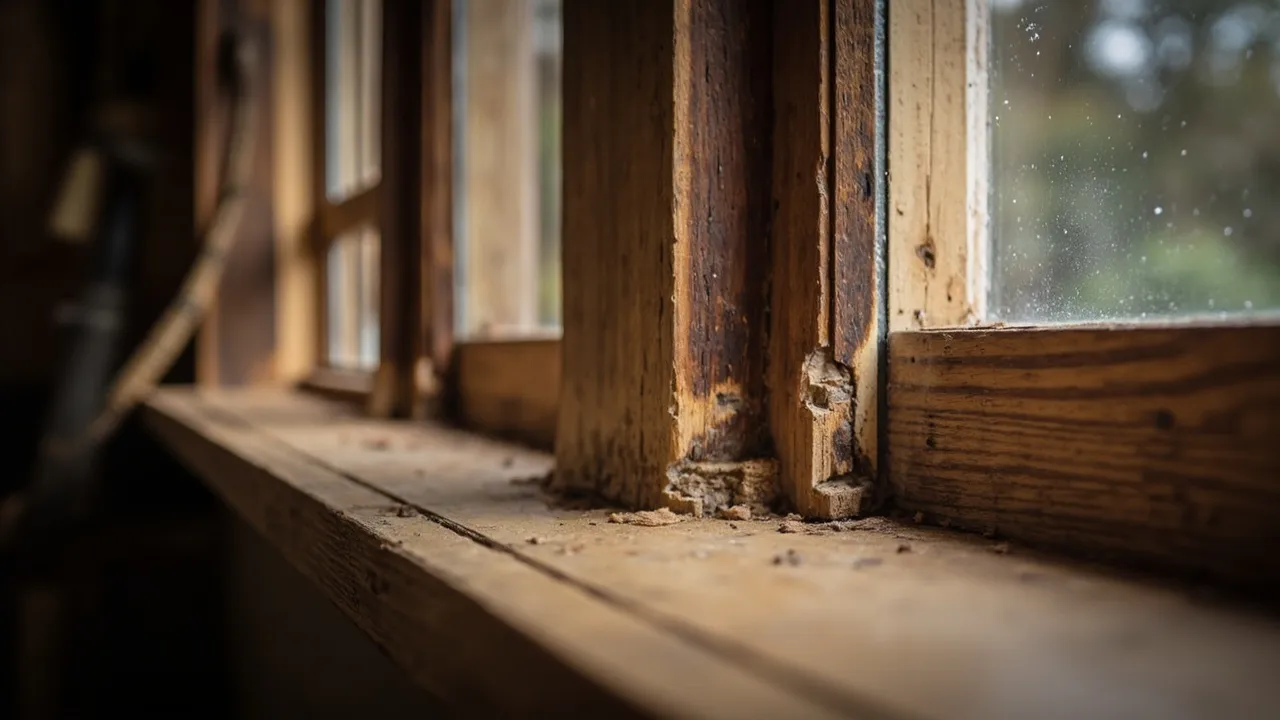
Wood rot treatment starts with the water, not the wood. Rot fungi only grow in timber wetter than about 20% moisture content. Stop the water, let the timber dry, cut out anything soft, then repair it with resin or new timber spliced in.
Most rot in windows and doors is repairable without replacing the whole frame. In our workshop at Crossley Mills in Honley, we repair rotten cills, bottom rails and door stiles on period homes across Yorkshire. This guide explains how to tell whether the timber can be saved, which wood rot treatment suits which kind of damage, and how to stop the rot coming back.
Key takeaways
- Fungal rot needs wet timber: decay starts when wood stays above roughly 20% moisture content, so finding and fixing the source of water always comes first.
- A screwdriver probe tells you most of what you need to know. If the blade sinks in easily or the wood crumbles, that section has to be cut out.
- Wood hardener and filler suit small, shallow patches. Deeper rot in cills, bottom rails and door stiles is usually better cut out and spliced with new timber.
- Replacing a whole window or door is rarely necessary. Repairing only the decayed parts keeps the original timber, profiles and character.
What is wood rot, and why does it start?
Wood rot is decay caused by fungi that feed on the cellulose in timber. The Society for the Protection of Ancient Buildings (SPAB) explains that dry timber is immune to attack. Its first step for stopping decay is to remove the dampness and dry the wood to below 20% moisture content (SPAB, Timber-decaying fungi). The Property Care Association says the same: fungal decay always arises because the wood has become wet, above 20% moisture content (PCA guidance note, Fungal Decay in Buildings).
On windows and doors, the water nearly always comes from the same few places:
- Failed paint and putty. Once the paint cracks, rain soaks into the end grain and stays there.
- Cills and bottom rails. Water sits on flat or worn surfaces and runs into the joints.
- Blocked drips and gutters. Water runs down the face of the frame instead of falling clear.
- Condensation. Water pools on the inside of the glass and soaks into the inner bottom rail.
- Door bottoms and thresholds. Splash-back from paving keeps the lower rail of an external door wet.
SPAB also notes that fast-grown softwoods used since the First World War have low natural resistance to decay (SPAB). This is one reason older sashes made from slow-grown timber can outlast much newer replacements.
Here in Yorkshire, the weather does a lot of the damage. Stone-built terraces and former mill buildings around Huddersfield and the Holme Valley sit in wet, exposed Pennine country, so cills and door bottoms facing the prevailing weather stay damp for long spells. Rot usually shows first on the elevations that take the worst of the weather, so that is where we look first and where our conservation joinery repairs usually start.
How can you tell if wood rot can be repaired?
You can usually tell with a screwdriver or bradawl. In its dry rot guidance, the Property Care Association suggests prodding nearby timbers with a bradawl or screwdriver to find the extent of an outbreak (PCA). The same test works for wet rot in joinery.
The probe test, step by step:
- Start well away from the obvious damage and press the tip of a screwdriver into the timber. Sound wood resists and leaves a small dent.
- Work towards the damage. Note where the tip starts to sink in easily. That line marks the edge of the rot.
- Check the joints, especially where the bottom rail meets the stiles and where the cill meets the frame. Rot often starts inside a joint and spreads unseen.
- Look underneath: the underside of a cill and the bottom edge of a door are often worse than the face.
- Check for crumbling, cracking into small cubes, white strands or a musty smell. These point to more serious decay.
| What you find | What it usually means | Likely repair |
|---|---|---|
| Paint cracked, timber hard underneath | No rot yet, but water is getting in | Prepare, fill and repaint now |
| Small, shallow soft patch | Early surface decay | Cut back, harden and fill |
| Soft area spreading along the rail or into a joint | Established wet rot | Cut out and splice in new timber |
| Whole cill or bottom rail soft end to end | Advanced decay | New cill or new rail made to the original profile |
| Brittle wood cracked into cubes, white or grey strands, fruiting bodies | Possible dry rot, though some wet rots look similar | Stop and get a proper survey before any repair |
Is it wet rot or dry rot?
On windows and doors it is usually wet rot. SPAB describes wet rot as commonly affecting exposed wood such as external joinery, while dry rot is caused by one specific fungus, Serpula lacrymans (SPAB). The PCA calls dry rot the most serious form of fungal decay, and wet rot more frequent but less serious (PCA).
The difference matters because wet rot is usually confined to where the timber is wet. Once the source is fixed and the timber dries, it normally stops spreading. Dry rot can spread through masonry to reach other timber, so a suspected outbreak inside the house, especially near floors, skirting boards or embedded timbers, needs a specialist survey before anyone starts cutting.
How does wood rot treatment work on a window or door?
Wood rot treatment on a window or door follows five steps: stop the water, dry the timber, remove the decay, repair the gap, then protect the finished surface.
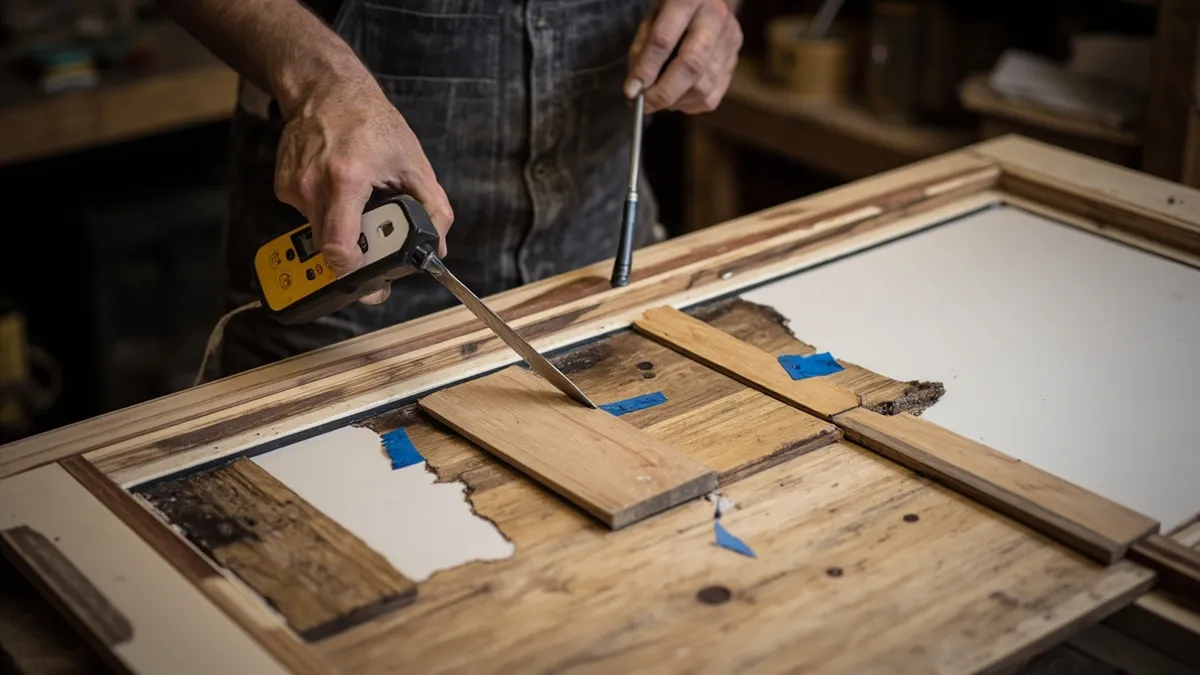
1. Stop the water getting in
Clear gutters and drips, reseal the joint between the frame and the wall, and deal with failed putty. If a door's bottom rail sits in splash-back, look at the threshold and drainage too.
2. Let the timber dry
SPAB's advice is to dry the timber below 20% moisture content (SPAB). In practice that means stripping the failed paint around the damage and giving it time to dry. A moisture meter gives a useful guide, but SPAB warns against relying on surface readings alone. Filling or painting over wet wood seals the water in.
3. Cut back to sound timber
For a timber repair, remove every bit of soft wood, back to timber that resists the probe. For a resin repair, Historic England describes cutting away the worst decay and strengthening the weakened wood around it with a resin consolidant (Historic England). Cut the edges square or at a clean angle so a new piece of timber can be fitted tightly later.
4. Repair the gap
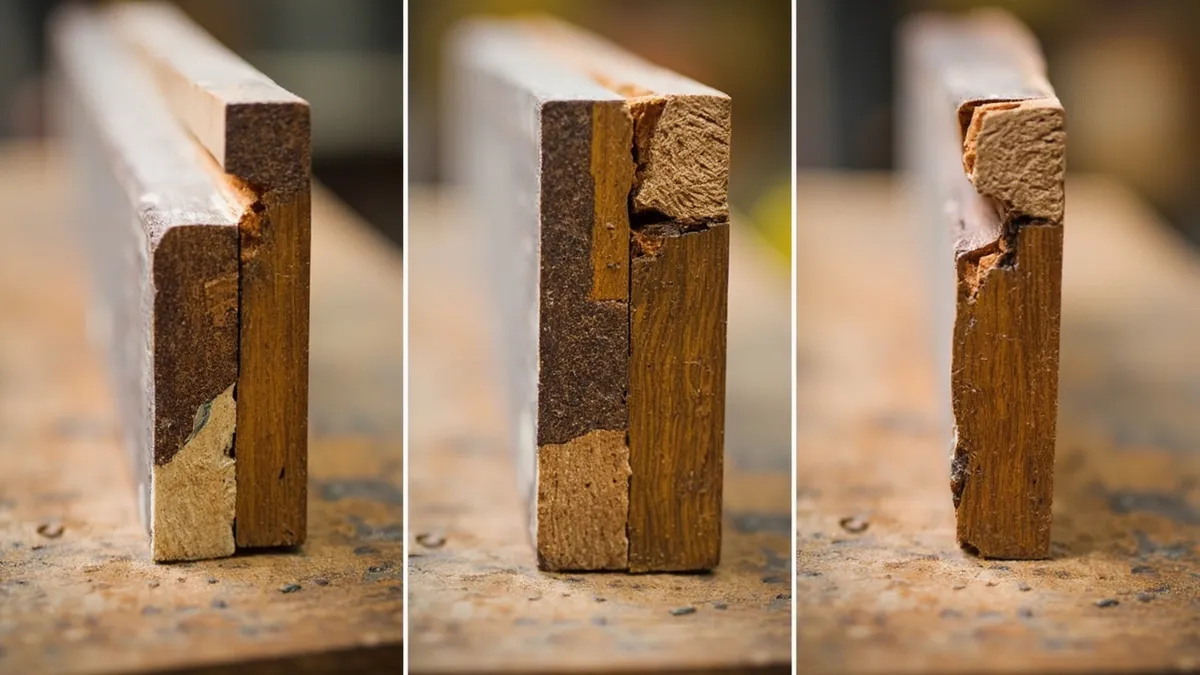
Choose the repair by the size and position of the damage. Our rule of thumb in the workshop is simple: if the soft wood is only on the surface, we harden and fill it; if the rot has reached a joint or runs along a rail, cill or stile, we cut it out and splice in new timber, because filler will not hold there.
| Repair method | Best for | Watch out for |
|---|---|---|
| Wood hardener and filler | Small, shallow patches on faces that don't carry load | Filler moves differently from timber, so it can crack and let water back in |
| Two-part resin repair | Medium patches and awkward mouldings where keeping the original is important | Only as good as the preparation. The timber must be dry, and Historic England notes the timber/filler joint is the most likely place to crack |
| Spliced timber repair | Cills, bottom rails, door stiles and joints with deeper rot | Needs a joiner to match the timber, grain and profile so the joint sheds water |
| New section made to the original profile | A cill, rail or door bottom that is rotten end to end | Should be made in durable or preservative-treated timber and primed on all faces before fitting |
5. Prime, paint and maintain
Prime all bare timber, including the ends and the back of any new section, then paint. Keep the paint film intact: a small crack left unrepaired lets water in, and that is how a lot of rot starts.
Does wood hardener fix rotten wood?
Wood hardener is a partial wood rot treatment, not a cure on its own. It soaks into slightly soft fibres and binds them, which gives filler something firm to grip. It works well on small, shallow patches once the timber is dry, but it cannot restore strength to a cill or a joint that has rotted through. Used over wet or badly decayed wood, it only hides the problem.
How do you fix rotting wood without replacing it?
The traditional wood rot treatment for joinery is a spliced repair. Historic England's guidance on traditional windows describes cutting out rotten wood and splicing in timber inserts shaped to match the existing profiles. The new wood should be similar in species and moisture content to the original, with the grain running the same way (Historic England, Traditional Windows: their care, repair and upgrading).
A good splice is angled so water runs off the outer face instead of into the joint. Only the decayed part is replaced. This is the core of our conservation joinery and timber repair work: keep as much original timber as possible and replace only what has failed.
The same approach applies to doors. A rotten bottom rail or the foot of a stile can be cut out and spliced, and the door rehung so it closes cleanly. If you have a period front door with a soft bottom rail, our door restoration service covers exactly this.
When does rotten timber need replacing?
Replace a part, not the whole window or door, when the rot runs the full length of a component or has destroyed the joints that hold it together. Common examples:
- A cill rotten from end to end. Historic England notes that timber cills are particularly susceptible to decay and that new cills should be made of durable hardwood such as English oak (Historic England). Our guide to sash window sill replacement on listed buildings covers this in detail.
- A sash with both bottom corners and the meeting rail decayed. A new sash made to the original profile can go back into the existing box frame.
- A door with rot through several joints. New rails or stiles can be made at the bench and the original panels reused.
For listed buildings, like-for-like repair is usually expected, and some work may need listed building consent. Check with your local planning authority or conservation officer before work starts. Our guide to listed building consent for timber repairs explains when that applies.
How do you stop wood rot coming back?
Keep the timber dry and the paint intact. A short check twice a year, in spring and autumn, catches problems while they are still cheap to fix:
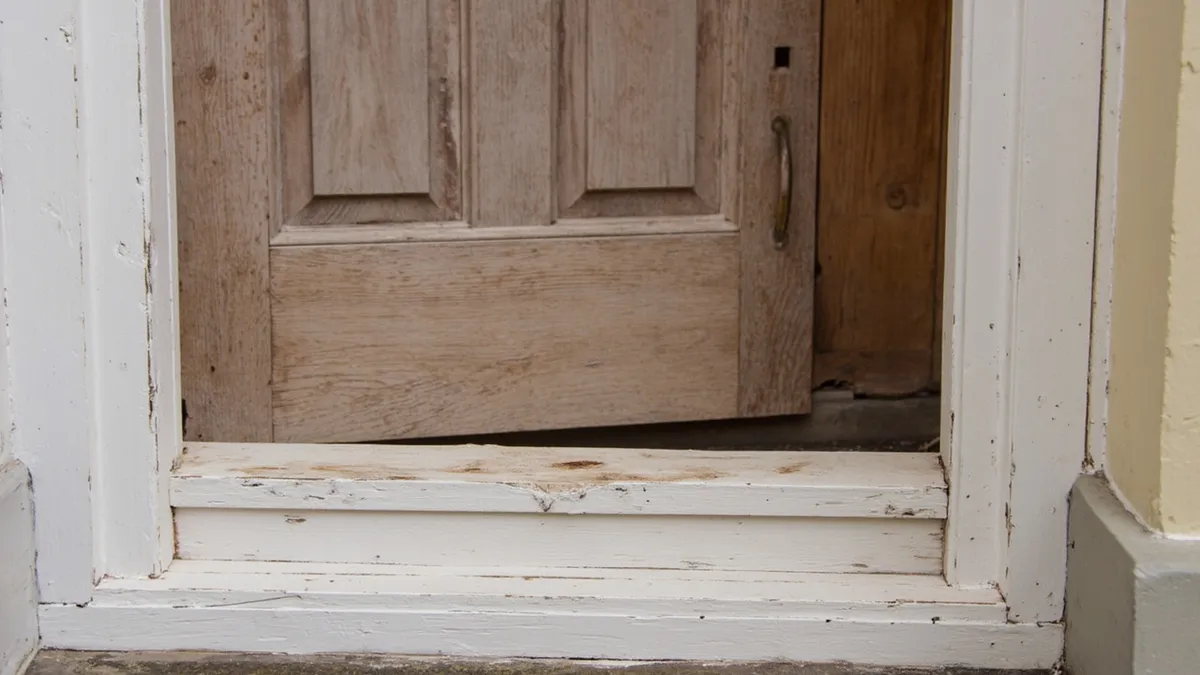
- Look for cracked or flaking paint on cills, bottom rails and door bottoms.
- Check the putty for gaps and loose pieces.
- Clear gutters, downpipes and the drips under cills.
- Wipe condensation off the inside of windows in winter.
- Probe any spot that looks dark or stays damp after rain.
Our guide to caring for heritage timber covers finishes and early warning signs in more depth. If you are weighing up repair against replacement for a whole set of windows, see what affects the cost of sash window restoration.
Get free advice on rotten windows and doors
If you have a soft cill, a rotten bottom rail or a door that has started to decay, we can tell you what can be saved. Master craftsman Daniel Fitzpatrick, a Guild of Master Craftsmen member with over 30 years at the bench, oversees every job from inspection to installation, and there is no charge for advice.
Call 01484 666 333, send us photos through our contact page, or see our conservation joinery and sash window restoration services. We work from Crossley Mills in Honley and cover Holmfirth, Huddersfield and towns across West and North Yorkshire.
Frequently asked questions
What is the best wood rot treatment?
The best wood rot treatment starts by fixing the source of water. Let the timber dry below about 20% moisture content, then cut out all soft wood. Small shallow patches can be hardened and filled. Deeper rot in cills, rails and door stiles is best cut out and spliced with new timber matched to the original.
Can rotten wood be saved?
Often, yes. Rot is usually confined to one part of a window or door, such as the cill, bottom rail or foot of a stile. That part can be cut out and replaced while the rest of the original timber stays. Only timber that has lost its strength through a whole component or its joints needs replacing.
How can I identify wood rot?
Press a screwdriver into the timber. Sound wood resists; rotten wood lets the blade sink in easily or crumbles. Other signs are cracked or bubbling paint, dark staining that stays damp, a musty smell, and wood that breaks into small cubes or shows white strands.
Is wood rot on a window frame serious?
It gets serious if it is left. Wet rot on a window is usually local, but it spreads along rails and into joints each winter, and a small repair becomes a new cill or a new sash. Caught early, it is usually a small repair.