Crown Glass: Keeping Historic Glass in Sash Windows
By Daniel Fitzpatrick, Master Craftsman · Guild of Master Craftsmen
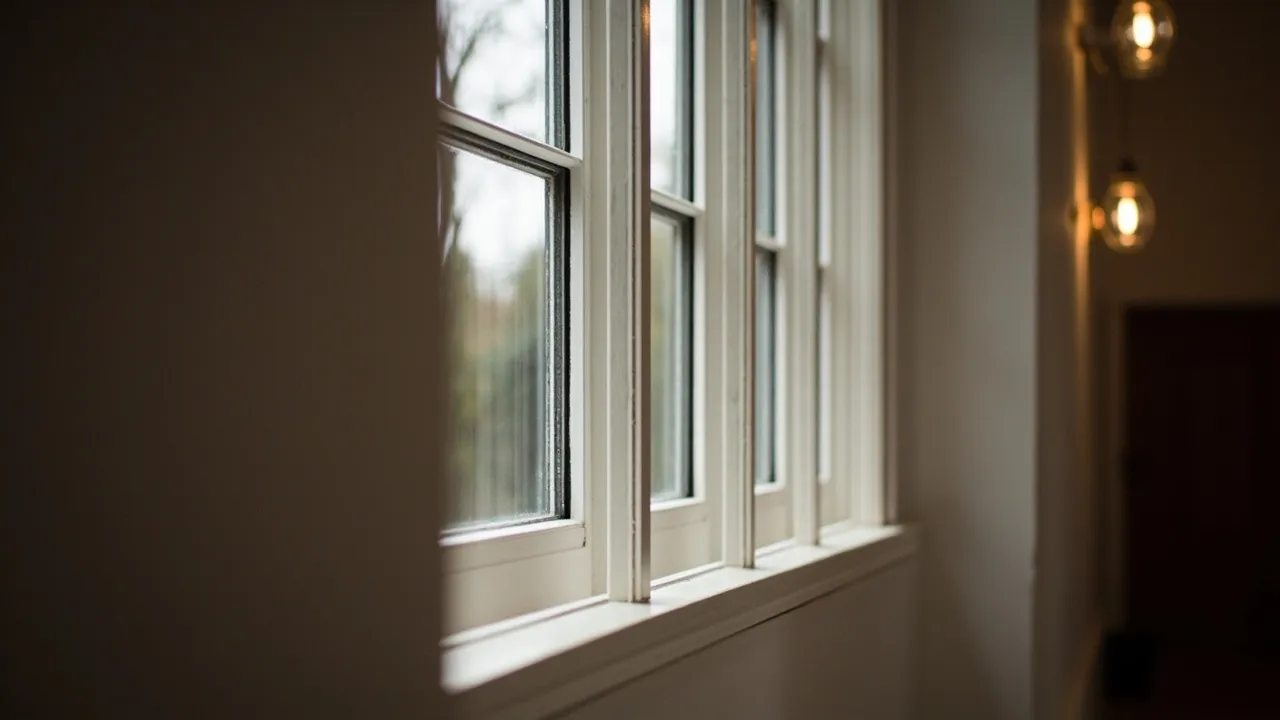
Crown glass is hand-blown window glass that was spun into a large disc and cut into small panes. It was widely used until the mid-19th century. Old panes show ripples, bubbles and a lively reflection. They can't be replaced like for like, so keep them when sashes are repaired.
In our workshop at Crossley Mills in Honley, we take out, store and refit historic panes as a normal part of sash window work on houses across Yorkshire. This guide explains how to tell old glass from modern glass, why it is worth keeping, and how we remove and reuse it during a restoration.
Key takeaways
- Hand-made crown and cylinder glass survive in many period windows. Their small irregularities give old windows much of their character.
- The Society for the Protection of Ancient Buildings (SPAB) describes crown glass as irreplaceable, and thin and easily broken, so it needs care during any building work.
- Old panes can usually be taken out and put back. Number them first, soften the putty patiently and reglaze in linseed oil putty.
- If a sash is beyond repair, keep its glass for reuse elsewhere in the same building.
What is crown glass?
It is one of the old hand-blown methods of making window glass, used before sheet window glass production was developed. Wikipedia's article describes the process: glass was blown into a hollow globe, moved from the blowpipe to a metal rod called a punty, then reheated and spun until it opened out into a flat disc. The disc was then cut into panes for glazing (Wikipedia, Crown glass (window)).
The disc was not even. The same article explains that the thinnest glass was in a band at the edge, and the glass became thicker and less clear towards the centre. That thick centre, around the mark left by the punty, is the "bullseye". It was used for cheaper windows, while the better glass from the edge was cut into small rectangles.
Conservation guidance from Babergh and Mid Suffolk councils says the earliest known examples in England date from the 1440s, and that it was widely used for windows until the mid-19th century. At that point taxation by weight ended and cylinder glass became cheaper (Babergh and Mid Suffolk, Windows in historic and listed buildings).
What is the difference between glass and crown glass?
The difference is how the glass was made, and you can see it. Modern window glass is float glass. The same council guidance says float glass was invented in the late 1950s by flowing molten glass over a bath of molten tin. It is completely flat, so it lacks the varied surface of earlier glass.
Hand-made glass is never perfectly flat. SPAB's technical advice note on wood windows says the irregularities in handmade crown and cylinder glass, found in windows dating from the mid-19th century and earlier, add much to the liveliness and character of historic buildings. It adds that with drawn sheet and later float glass, glazing became much more uniform and dull in appearance (SPAB, Repair of Wood Windows).
Cylinder glass is the other hand-made type you will meet in old sashes. It was blown into a long cylinder, the ends were cut off, and the cylinder was split down one side and flattened out in an oven (Wikipedia, Cylinder blown sheet). It became cheaper than crown in the mid-19th century, so later sashes are more likely to hold cylinder glass than crown.
| Type of glass | How it was made | What you might notice |
|---|---|---|
| Crown glass | Blown and spun into a large disc, then cut into small panes | Small panes, a slightly uneven surface and a lively, rippled reflection |
| Cylinder glass | Blown into a cylinder, split and flattened in an oven | Gentle waves and distortion, often in larger panes than crown |
| Drawn sheet glass | Drawn from molten glass into a continuous flat sheet, from the early 20th century | Flatter and more even than hand-made glass |
| Float glass | Molten glass flowed over molten tin, from the late 1950s | Completely flat, with a mirror-like reflection |
How can you spot old glass in your sash windows?
Stand outside on a bright day and look at the windows at an angle. Old glass gives itself away in the reflection:
- Watch a straight line in the reflection. A gutter, a roof edge or a lamp post will look wavy or broken in hand-made glass as you walk past. In float glass it stays straight.
- Look for seeds. Small bubbles trapped in the glass, often stretched into short streaks, are a common sign of hand-made glass.
- Compare neighbouring panes. Old panes often differ slightly from one another in tint and ripple. A single flat, bright pane among them is usually a later replacement.
- Check the putty. Fresh putty, beading or a rubber seal points to a later reglaze.
- Look at the pane sizes. Many small panes separated by thin glazing bars suggest an older window. SPAB notes that the number of panes per window fell from twelve or sixteen in the 18th century to four or two towards the end of the 19th century, as larger and cheaper panes became available.
Telling crown from cylinder glass by eye is harder, but for a repair either kind deserves the same care.
Why is old glass worth keeping?
Because once it is broken or thrown away, it is gone. SPAB states that crown glass is irreplaceable, since it is no longer made in large sheets in this country, and that it is thin and easily broken (SPAB). The Babergh and Mid Suffolk guidance says it is important to save any old glass for re-use during window repairs, because it has irreplaceable qualities of unevenness that come from how it was made.
There is also the look of the whole building. Swap a few old panes for float glass and the change is obvious from across the road. That is why we treat old glass as part of the window.
What are the disadvantages of crown glass?
It has real drawbacks:
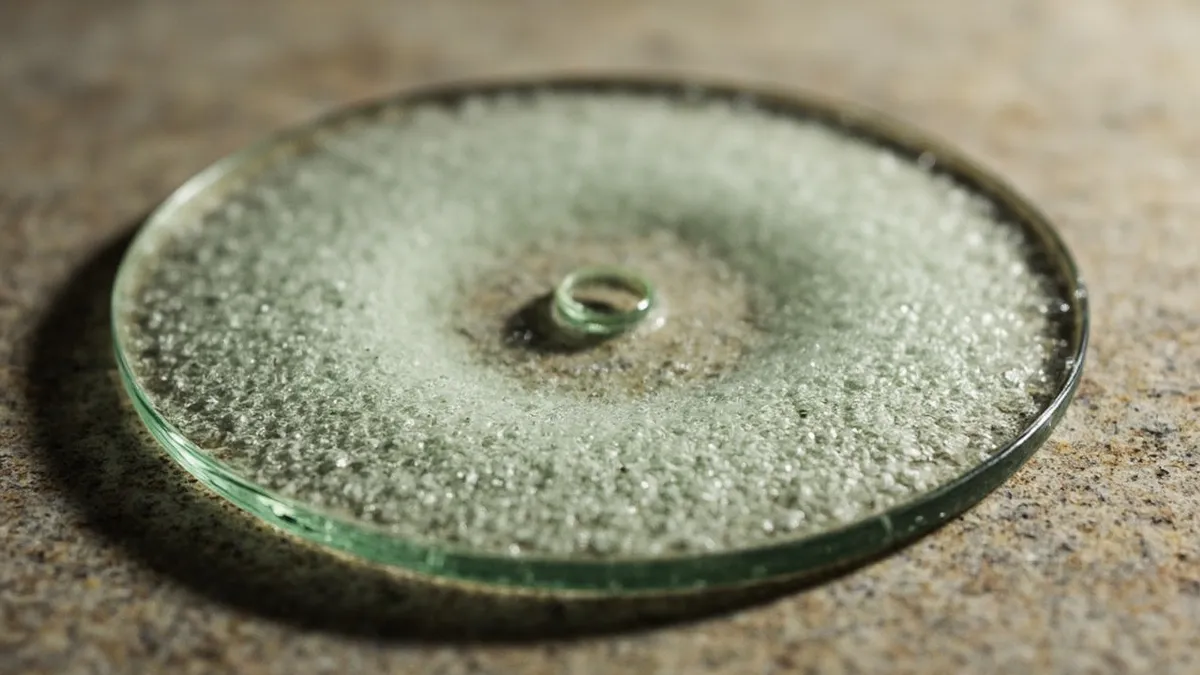
- It is fragile. SPAB warns that extreme care is needed during general building work, especially when scaffolding goes up, and during the repair of individual windows.
- It is uneven. The disc was thin at the edge and thicker towards the middle, so panes vary in thickness and clarity.
- Panes are small. The best glass came from the thin edge of each disc, so it was cut into small rectangles.
- It can't simply be reordered. A broken pane has to be replaced with a different glass or a salvaged old pane, so every loss is permanent.
- It does little for heat loss. Like any single pane, it lets heat through.
None of these is a reason to remove it. Fragility is managed by careful handling. Draughts are often a large part of the heat loss, and our sash window draught proofing tackles them while the old glass stays in place. Where more insulation is wanted, secondary glazing can be added on the inside; our guide to secondary glazing in listed buildings explains what is usually allowed.
How are old panes removed and reused during sash restoration?
SPAB's advice is to assess the glass before choosing a repair method: its quality, whether it can be removed easily, and whether the repair can be done with the glass left in place. Some repairs, such as renewing the decayed outer tongue of a glazing bar, can be done without taking the glass out at all, if care is taken.
When a pane does have to come out, this is the order we follow on our sash window restoration jobs:
- Record and number. SPAB advises marking every part before a window is dismantled, and always numbering the panes before removal, so each one goes back into its own opening.
- Soften the putty. Loose, perished putty can come away by hand. Otherwise SPAB lists a solvent paint stripper, a soldering iron or an infrared lamp to soften it, and warns that extreme care and patience are needed, as several applications may be required.
- Lift the pane out. Once the putty and sprigs are free, the pane is eased out and stored upright and padded.
- Repair the sash. Rotten rails, loose joints and worn glazing bars are repaired while the glass is safely out of the way.
- Reglaze in linseed putty. SPAB says reglazing in timber sashes should use linseed oil putty, with the rebates primed first. Any sprigs should be fixed with a small gap between sprig and glass, to avoid cracking the thin glass.
- Paint to seal. SPAB advises painting the putty within a day or two, taking the paint about 1 mm onto the glass to seal out moisture.
- Rebalance the sash. The Babergh and Mid Suffolk guidance says sash weights should be adjusted when a different thickness of glass changes the balance.
Our step-by-step guide on how to restore a sash window shows where reglazing fits into the wider job.
What about replacing glass in a sash window?
When replacing glass in a sash window that still has old panes, the aim is a close match, even when the exact glass can't be had. SPAB advises that replacement glass should be chosen to be compatible with the original, avoiding glass that is too reamy (full of obvious streaks and inclusions) or over-distorted. It also says the new pane should be of a thickness and weight that keeps the sash correctly counterbalanced by its weights.
SPAB notes that few sources of new glass are satisfactory for historic windows, but that handmade glass is available from specialist suppliers. The Babergh and Mid Suffolk guidance adds that horticultural glass shows similar defects to some degree and can be used in repairs. The same guidance says glazing should use traditional putty rather than modern compounds, and that timber beading is particularly unwelcome.
Our workshop rule of thumb
We never throw away a sound old pane. If a sash is too far gone to save, the glass is cleaned, labelled and kept to repair other windows in the same house. This matches SPAB's advice that original glass from a window decayed beyond repair should always be kept for reuse elsewhere in the same building. A gap in the front elevation can often be filled with a spare old pane from a less visible window, with new glass going where it is least noticed.
For a listed building, check with your local planning authority or conservation officer before changing glass. The Babergh and Mid Suffolk guidance notes that consent may be needed if repairs involve losing substantial amounts of old material. Our guide to sash window restoration on a Grade II listed building covers the consent side.
Where is old glass found in Yorkshire?
Across Yorkshire, old glass survives wherever original sashes have been looked after. The Georgian and listed buildings of York and Wakefield are the kind of houses where early hand-made glass may still be in place. The Victorian and Edwardian villas of Harrogate, and the stone-built terraces around Huddersfield and the Holme Valley, are more likely to have later glass, such as cylinder glass or, in Edwardian houses, drawn sheet. If it is original, it is still worth keeping.
The weather here makes the putty work harder. In the wet, exposed Pennine valleys of the Colne and Holme, cracked putty lets rain run behind the glass and into the bottom rail.
Get free advice on keeping your old window glass
If your sashes still have old glass and need repair, we can tell you what can be saved and how the panes will be protected. Master craftsman Daniel Fitzpatrick, a member of the Guild of Master Craftsmen with over 30 years' experience, oversees every job from inspection to installation, and advice is free.
Call 01484 666 333, get in touch through our contact page, or read more about our sash window restoration service. We work from Crossley Mills in Honley, near Holmfirth, and cover homes across West and North Yorkshire.
Frequently asked questions
What is crown glass used for?
Historically it was used to glaze windows, especially small-paned sashes and leaded lights, until the mid-19th century. The same name is also used for a type of optical glass, which is a different material. In period homes, the important job is keeping the old window panes that survive.
Is crown glass still used today?
Not in the way it once was. SPAB notes it is no longer made in large sheets in this country, which is why surviving panes are treated as irreplaceable. When a pane breaks, conservation practice is to use a compatible hand-made or suitably imperfect glass, or a spare old pane from the same building.
Can old glass be taken out without breaking it?
Usually, with patience. Council conservation guidance says old glass can be carefully removed from old frames by a skilled joiner. The panes are numbered, the putty is softened by hand, with heat or with a stripper, and each pane is eased out once it is free. Forcing hard putty risks cracking the glass.
Is cylinder glass worth keeping too?
For a house, yes. Both are hand-made, both have the uneven surface that modern float glass lacks, and neither can be replaced exactly. SPAB groups them together as the glass that gives historic windows their character. We give any old pane the same care, whichever way it was made.