Heritage Crafts: Keeping Traditional Woodwork Alive
By Daniel Fitzpatrick, Master Craftsman · Guild of Master Craftsmen
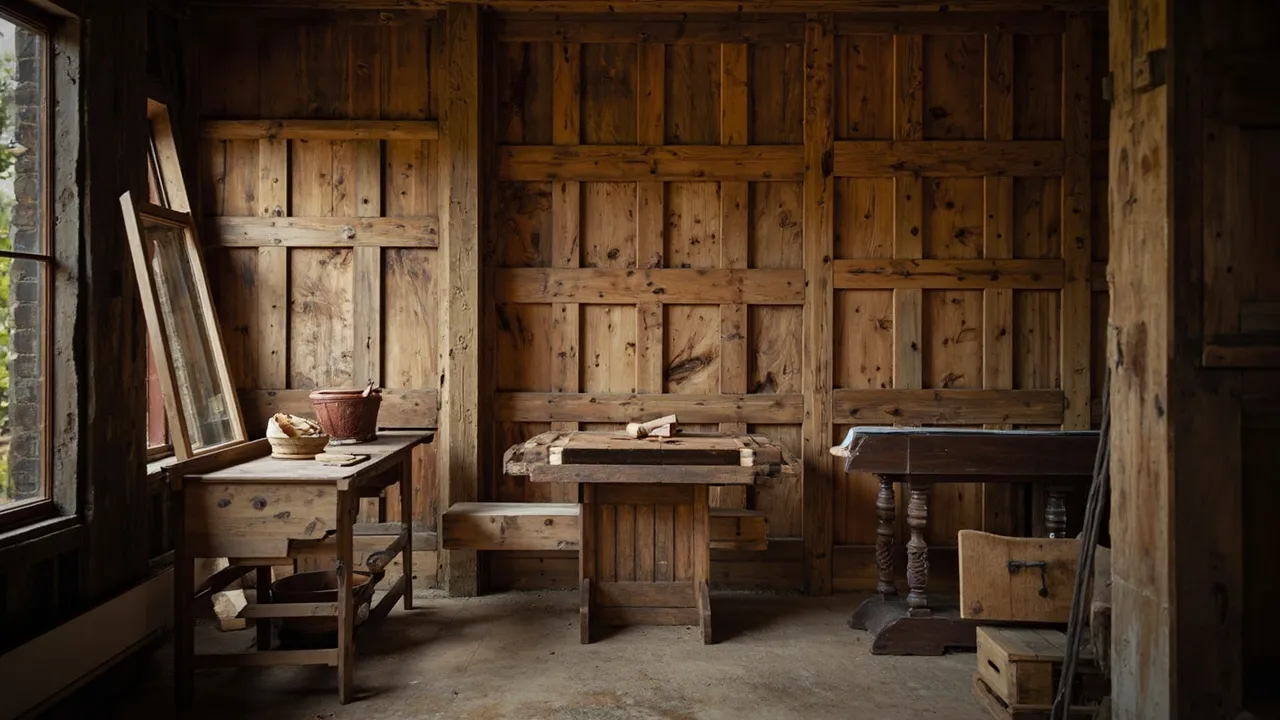
Heritage crafts are hand skills that use traditional materials, design and techniques and have been passed down through at least two generations. Woodturning and bench joinery are two of them, and like every craft they only survive if skilled makers pass them on.
We run a small heritage joinery workshop at Crossley Mills in Honley, near Holmfirth in West Yorkshire. Our master craftsman, Daniel Fitzpatrick, has worked as a wood turner and bench joiner for over 30 years. This article explains what counts as a heritage craft, what the national Red List actually says about woodwork, and why we think the skills at our bench are worth keeping alive.
Key takeaways
- A heritage craft is a hand skill based on traditional materials, design and techniques that has been practised for two or more successive generations.
- The charity Heritage Crafts publishes the Red List of Endangered Crafts. Its craft pages list wood turning and joinery as "currently viable". Wheelwrighting is marked "Endangered", and clog making and rake making are marked "Critical" (critically endangered).
- "Currently viable" does not mean safe. The wood turning page records that most skilled commercial hand turners are in their 60s or older.
- Asking for repair, and for hand-made copies of original parts, is one of the simplest ways homeowners keep these skills in work.
What is considered a heritage craft?
The clearest definition comes from the charity that tracks them, which defines a heritage craft as "a practice which employs manual dexterity and skill and an understanding of traditional materials, design and techniques, and which has been practised for two or more successive generations" (The Red List). Its research focuses on crafts practised in the UK today, and on the parts of each craft that rely heavily on hand work and high levels of hand skill.
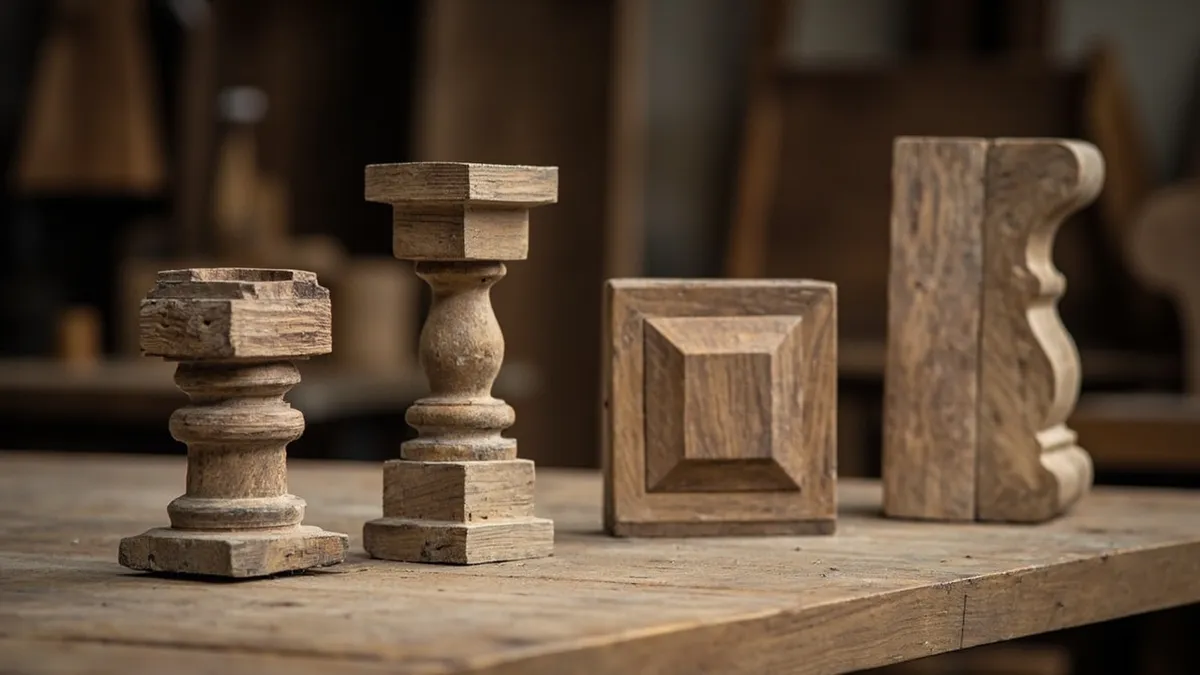
That definition fits our trade closely. Turning a baluster on a lathe, or cutting a mortise and tenon for a new sash or door by hand, uses traditional materials and methods of the kind joiners and turners used when our local terraces and mills were built. The tools have improved, but the work still depends on skill in the hands.
The charity puts it simply: "From blacksmithing to basketry, from weaving to woodturning, we have an incredible range of heritage craft skills in the UK". It adds that many of these skills are in the hands of individuals who have been unable to make provision to pass them on (The Red List).
Are woodturning and joinery endangered crafts?
Not according to the Red List, and we want to be accurate about that. The Red List of Endangered Crafts, first published in 2017, ranks traditional crafts by how likely they are to survive to the next generation. On the charity's own craft pages, both wood turning and joinery carry the status "Currently viable".
The charity is careful to add that a classification of "currently viable" does not mean the craft is risk-free or free of issues affecting its future (Categories of risk). The wood turning page shows why. Among the issues it lists for commercial hand turning:
- The market is shrinking, and many companies have closed over the past 20 to 30 years.
- There is very little money in commercial hand turning, so very few people want to go into it.
- Hand turning is a very difficult trade to learn, and the page states there is no one learning the trade commercially today.
- Most of the skilled commercial hand turners are in their 60s or older.
- Automation has taken over much of the trade, though hand turning is still required for one-offs, prototypes, very small batches, large components and patterns.
So the craft as a whole is not on the endangered list. The commercial side, where turners earn a living from hand turning, is where the page records the pressure (Wood turning craft page).
Why do we call woodturning and cabinetmaking dying trades?
It is our view as a workshop. As our About page on Daniel Fitzpatrick and the workshop says, traditional techniques like woodturning and cabinetmaking are dying trades, and the workshop exists to keep that knowledge alive and pass it on.
The difference is between doing a craft and making a living from it. Plenty of people enjoy turning a bowl at the weekend. Far fewer can match a broken Victorian baluster by eye, turn a run of them to the same profile, then cut the joints that fix them into an old handrail. The same goes for bench joinery: making a new sash, a door rail or a moulded section by hand to fit an old frame that is no longer square.
Daniel works as both, and he oversees every job from the first inspection to installation. Our woodturning service covers turned balusters, spindles and newel posts, and our bench joinery covers doors, window frames and mouldings made by hand to match a project. Both depend on skills that take years to learn and cannot be picked up from a manual.
What are some examples of heritage crafts in wood?
The Red List sorts crafts into categories of risk, from extinct through critically endangered and endangered to currently viable. Here is how some woodworking crafts are classed on the charity's craft pages, with the charity's own definition of each category.
| Craft | Status on its craft page | What the category means |
|---|---|---|
| Rake making | Critical (critically endangered) | At serious risk of no longer being practised in the UK |
| Clog making | Critical (critically endangered) | At serious risk of no longer being practised in the UK |
| Wheelwrighting | Endangered | Enough makers to pass the skills on for now, but serious concerns about ongoing viability |
| Wood turning | Currently viable | Enough makers to pass the skills on, though not risk-free |
| Joinery | Currently viable | Enough makers to pass the skills on, though not risk-free |
| Pole lathe turning | Currently viable (also classed as resurgent) | Enough makers to pass the skills on, though not risk-free |
Clog making has a northern link: its page notes that at its height it was mainly an urban craft, especially in the industrial centres of the north of England. The 2025 update of the Red List identified 20 more crafts at risk, and the charity says the new additions join a list of 165 at-risk crafts now listed in the report (Red List 2025 launch). Statuses change between editions, so check the charity's craft pages for the current position before quoting one.
What is the hottest craft right now for adults?
We can't name a single "hottest" craft, and we have not found a reliable source that ranks them. What we can point to is woodturning. The charity's wood turning page notes considerable interest among hobby turners, and says woodturning is widely practised as a highly skilled leisure activity, with high demand for bookings from this group cited by professional makers who offer tuition (Wood turning craft page).
The same charity's 2025 update also introduced a "resurgent" status for crafts that are faring better, such as hazel basket making, reverse glass sign painting and side saddle making. It links part of that to a new-found appreciation of the handmade (Red List 2025 launch). Hobby interest is good news. It keeps people close to the material and can lead to a career at the bench.
Has Heritage Crafts ceased trading?
Not according to the public record when we checked. The charity behind the Red List is registered as The Heritage Crafts Association. Its entry on the Charity Commission register lists charity number 1159208 and states that its charity reporting is up to date (Charity Commission register). It published a new edition of the Red List in 2025. If you need the current position, the register is the place to check.
Heritage crafts in Yorkshire's old buildings
Yorkshire has a long history of turned wood. The charity's page on pole lathe turning notes that excavations at York found overwhelming evidence that woodturning played a significant role in daily life during the Viking period (Pole lathe turning craft page).
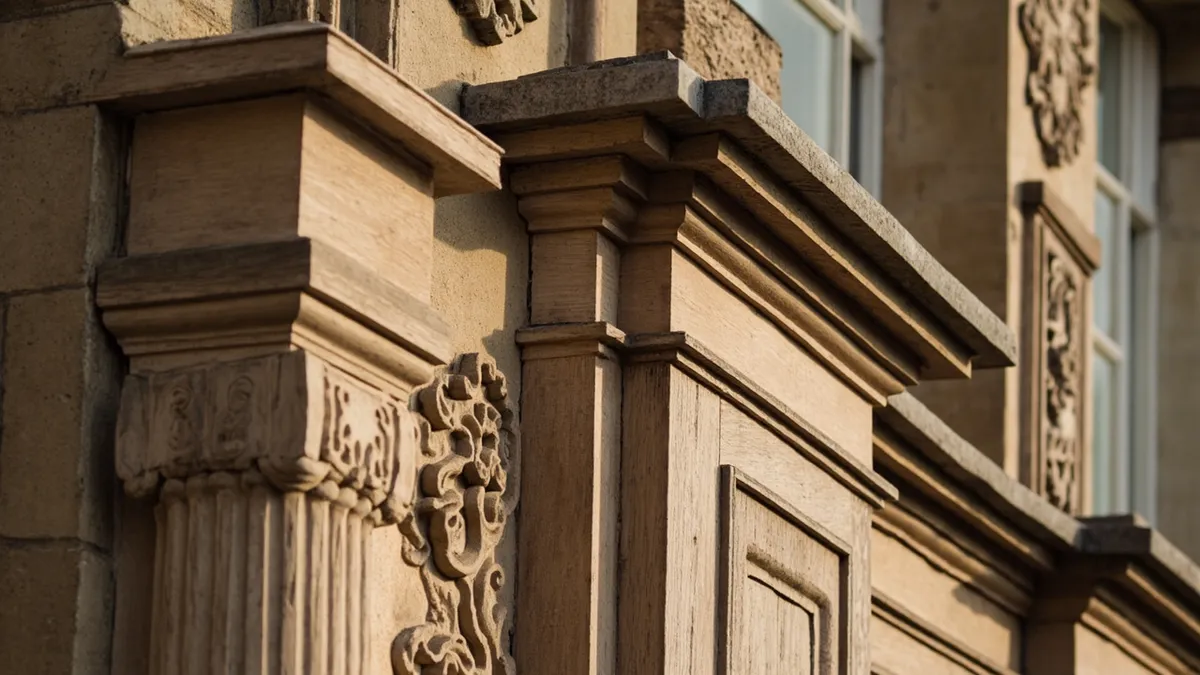
Closer to our workshop, these skills are built into the houses around us. Weavers' cottages around Holmfirth, Honley and Marsden have long rows of mullioned windows. Stone-built Victorian terraces and mill buildings around Huddersfield and the Holme Valley often still have original sashes, panelled doors and turned staircase parts. Wet, exposed Pennine weather in the Colne and Holme valleys means much of that timber needs repair at some point.
When a turned part or a section of joinery fails, the choice is to repair or copy it by hand, or to put in something that only looks similar. Choosing a hand-made copy keeps a turner or joiner in work and puts the skill to use again. Our guide to hand-turned balusters for Victorian staircases shows what that looks like in practice.
How do we keep heritage crafts alive? Our rule of thumb
Our rule of thumb at the bench is simple: repair first; if a part is beyond repair, copy it by hand from the original, never from the nearest stock pattern. As our About page puts it, most timber in old buildings can be saved. We restore woodwork so it blends in with the original features, or make replacements by hand on the original profile when a part is beyond repair.
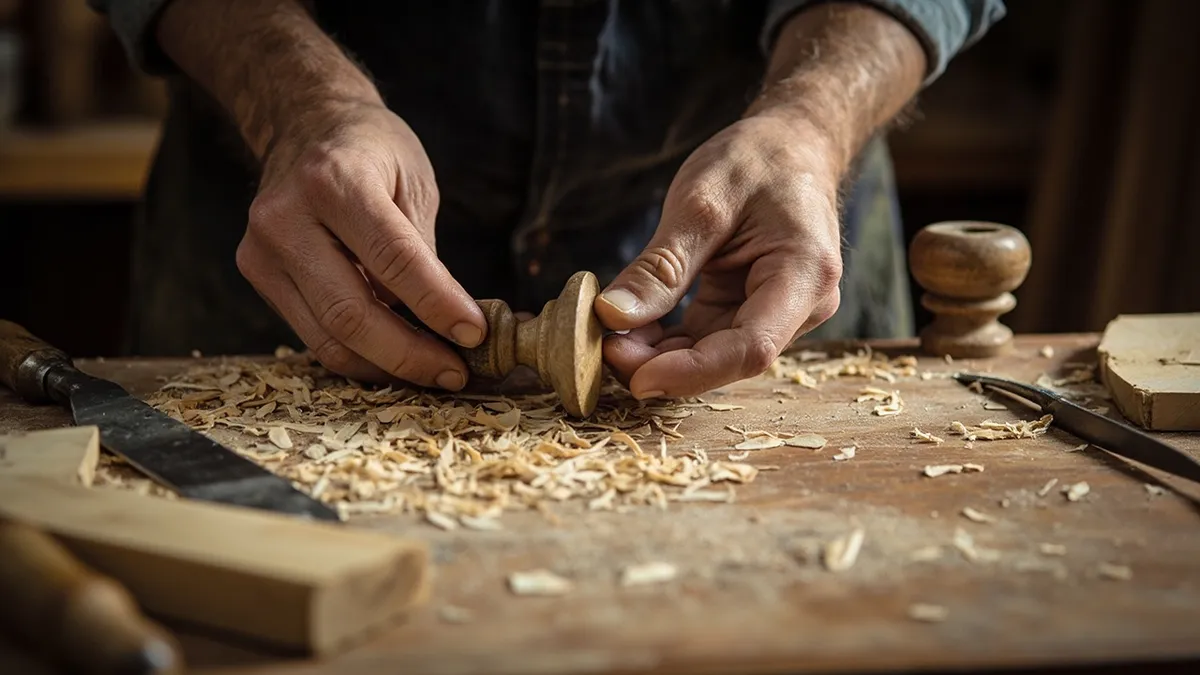
That rule does two jobs. It keeps as much original fabric in the building as possible, and it keeps the hand skills in regular use. Every new profile we copy by hand is practice that no training course can fully replace.
We also work with locally sourced reclaimed timber where we can, and FSC-certified timber when new wood is needed, and our workshop waste is recycled. What we make should last a lifetime or more if it is cared for, and it can be repaired again when needed.
How can you help keep traditional crafts in the UK alive?
You don't need to take up turning yourself. Homeowners, landlords and councils all shape which skills stay in work. A short checklist:
- Ask for repair before replacement. A good joiner will tell you honestly whether a window, door or staircase can be saved.
- Keep the original parts. A broken baluster, a length of moulding or an old sash is the pattern for a hand-made copy. Don't throw it away.
- Ask how the replacement will be made. "Copied by hand from the original" and "nearest match from a range" are very different answers.
- Allow time. Hand work takes longer than ordering off the shelf.
- Look after what you have. Paint, putty and regular checks keep period woodwork sound for longer and save the skilled work for when it is really needed.
- Support the wider effort. The Red List pages are free to read and a good way to learn which skills are under pressure.
Talk to a Yorkshire wood turner and bench joiner
If you have a turned staircase part, a sash or a door that needs repairing or copying by hand, we are happy to look at it. Daniel Fitzpatrick, a member of the Guild of Master Craftsmen with over 30 years at the lathe and the bench, oversees every job himself, and advice is free.
Call 01484 666 333, send photos through our contact page, or read more about Daniel and our heritage joinery workshop. We work from Unit 3, Crossley Mills in Honley, cover towns across West and North Yorkshire, and welcome workshop visits by appointment.
Frequently asked questions
What are heritage crafts?
They are hand skills that use traditional materials, design and techniques and have been practised for at least two successive generations. Examples range from blacksmithing and basketry to weaving and woodturning. A national charity records them in the UK and publishes the Red List, which ranks how likely each craft is to survive.
Is woodturning on the Red List of endangered crafts?
Wood turning is listed as "currently viable" on its Red List craft page, not endangered. The same page flags real pressures on commercial hand turning: a shrinking market, no one learning the trade commercially and an ageing workforce, with most skilled commercial hand turners in their 60s or older. Viable does not mean risk-free.
What is the difference between a wood turner and a bench joiner?
A wood turner shapes timber as it spins on a lathe, making round parts such as balusters, spindles and newel posts. A bench joiner cuts and joins timber at the workbench to make windows, doors, mouldings and panelling. Daniel works as both, which lets us make and fit complete staircase and joinery repairs.
Can you copy an old turned baluster by hand?
Yes. We copy turned parts by hand from the original, on the original profile, so the new piece sits alongside the old ones. Bring or send us the original, even if it is broken, and we can tell you whether it can be repaired or needs copying.
Sources
- The Red List of Endangered Crafts
- Red List: Categories of risk
- Red List craft page: Wood turning
- Red List craft page: Joinery
- Red List craft page: Rake making
- Red List craft page: Clog making
- Red List craft page: Wheelwrighting
- Red List craft page: Pole lathe turning
- Red List 2025 launch announcement
- Charity Commission: The Heritage Crafts Association