Restoring Antique Furniture: DIY or Call a Restorer?
By Daniel Fitzpatrick, Master Craftsman · Guild of Master Craftsmen
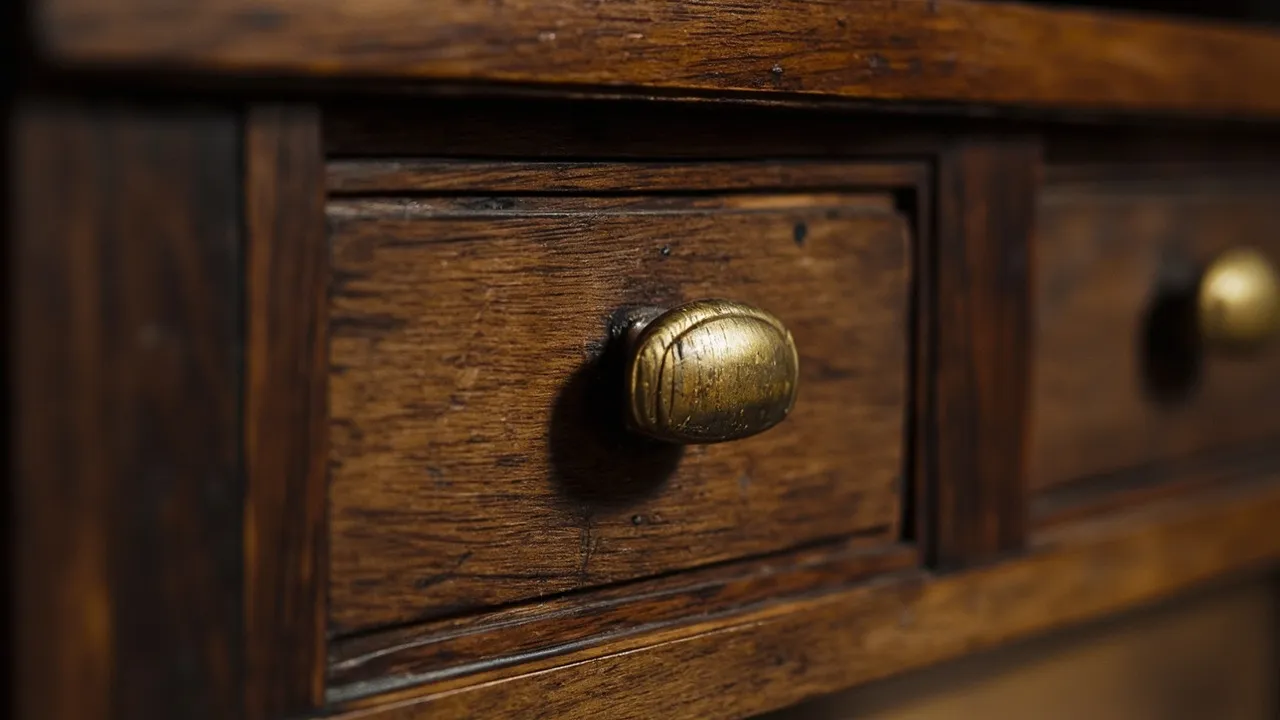
Restoring antique furniture yourself should stop at gentle cleaning, dusting and a thin coat of soft wax once a year. Stripping and sanding remove the original finish and patina, which can carry much of the value. Loose joints, lifting veneer and missing parts need a restorer.
Most old pieces need far less doing to them than people expect. In our workshop at Crossley Mills in Honley, we see furniture from homes across Yorkshire, and well-meant DIY can do more harm to a piece than age. This guide explains what is safe to do yourself, what destroys value, and when it makes sense to hand a piece to a restorer.
Key takeaways
- The original finish is part of the piece. Conservators treat stripping and refinishing as a last resort, because once a finish is removed it cannot be recovered.
- Safe DIY care is simple: dust with a soft dry cloth, keep water and heat off the surface, and apply a soft paste wax about once a year.
- Avoid oils, silicone polishes and aerosol polishes on old finishes. They build up, attract dirt or can dissolve the finish underneath.
- Structural problems, lifting veneer, missing turned parts and damaged French polish are restorer's work, because a bad first repair is hard to undo.
Is it worth it to restore antique furniture?
Usually, yes, if "restore" means repairing what has failed and leaving the rest alone. Traditionally made pieces can often be taken apart and repaired. A loose joint, a split top or a missing turned foot can usually be put right.
What is not worth it is making an old piece look new. Wikipedia's article on the conservation of wooden furniture sets out the conservator's view clearly: an early finish is as important to historic furniture as any other original element, and once it is removed it cannot be recovered. The same article, citing the American Institute for Conservation, notes that stripping and refinishing is no longer standard practice and is treated as a last-ditch effort after other methods have failed.
The real question is how little can be done to make it sound again. That is the approach we take on every piece that comes through our antique furniture restoration service.
What is safe to do yourself?
Quite a lot of routine care is safe at home, as long as it does not change the surface. The National Trust's conservation advice for furniture is short and practical: flat surfaces in good condition need only light dusting with a clean, dry, soft cotton cloth, and surfaces with carving need a natural bristle brush, with the falling dust caught by a vacuum cleaner (National Trust, How to care for your precious objects).
Safe DIY checklist:
- Dust with a soft, dry, lint-free cotton cloth. Skip the damp cloth on polished surfaces.
- Use a soft natural bristle brush on carving and mouldings.
- Put mats under plants, vases and drinks. The National Trust warns that even a few drops of spilt liquid will leave light or dark stains on wood.
- Apply a soft paste wax about once a year, not every week.
- Keep pieces away from radiators, heat vents and strong sunlight.
- Lift furniture by the lowest solid part of the frame, never by the top or the arms, and take out drawers and loose parts first.
- Check pieces regularly for loose joints, lifting veneer or woodworm holes, and deal with problems early.
How to clean antique furniture without damaging it
If you are wondering how to clean antique furniture that looks grimy, start with the gentlest method and stop as soon as it works. Dry dusting and buffing with a clean soft cloth are often enough.
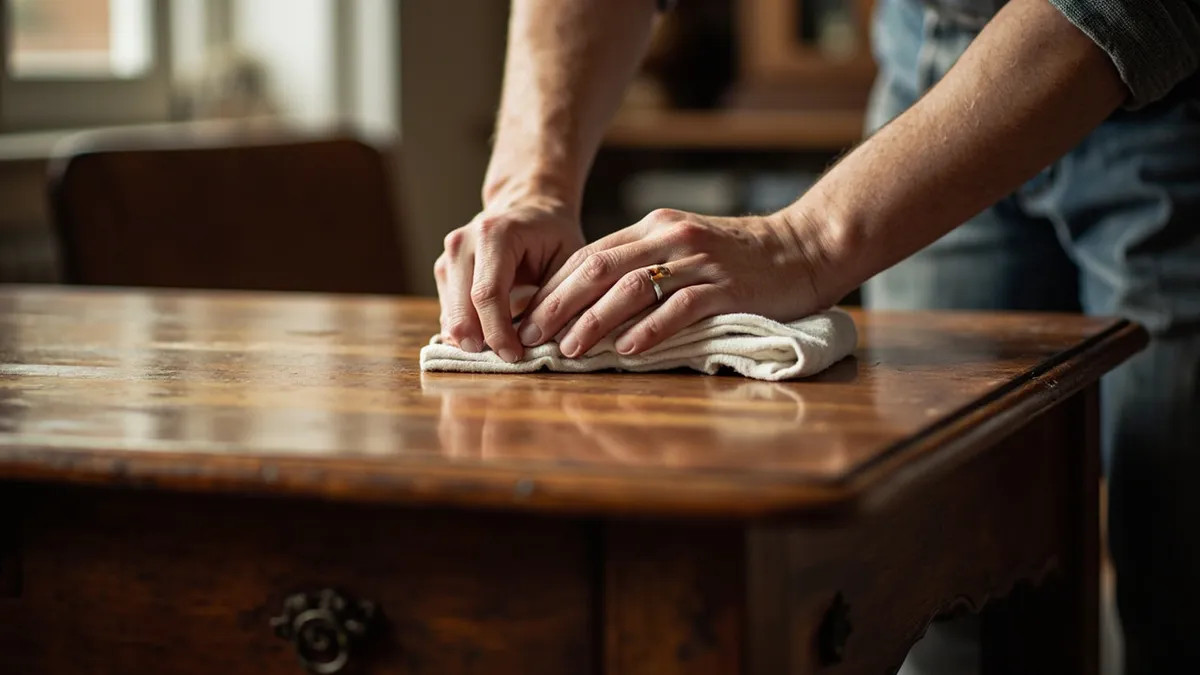
Be careful with water and household cleaners. Wikipedia's conservation article notes that water spilt on furniture most commonly leaves white marks, cups and glasses leave rings, and alcohol spilt will remove a polished surface almost instantly.
Avoid aerosol polishes too. The National Trust advises against them except on modern synthetic finishes, because the solvent can dissolve other finishes and cause a surface "bloom" (National Trust).
Restoring antique furniture: why do stripping and sanding destroy value?
Because they remove the parts of the piece you cannot get back. Stripping takes off the original finish, and sanding goes further by cutting away the surface of the timber itself, with its colour, wear and patina.
Wikipedia describes patina on wooden furniture as the sheen produced by age, wear and polishing. For antiques in general, the same article notes that preserving a piece's look and character matters, and that removal or reduction of patina may dramatically reduce its value.
Sanding does extra damage on antique furniture for practical reasons:
- Veneers are thin. Abrasive paper can quickly cut through a veneer to the carcase wood underneath.
- Mouldings lose their edges. Crisp profiles round over.
- Colour is only skin deep. Sand away the aged surface and the wood underneath looks raw and new.
- Evidence disappears. Tool marks and old repairs can help date a piece.
The exception is a later coat of paint or varnish over the original, where removing it is part of putting the piece right. That is a judgement call for the bench, one small area at a time.
What oil brings wood back to life?
On antique furniture with an original finish, usually none. Oil is the answer most people expect, but it tends to cause problems on old surfaces. Wikipedia's conservation article says furniture oils are not recommended for maintenance, because many contain linseed or other drying oils which, used repeatedly, create a gummy, insoluble surface coating that darkens and obscures the grain. Non-drying oils such as lemon oil trap dirt, and silicone polishes leave a film that is hard to remove.
What does bring a tired surface back is cleaning off grime and then applying a thin coat of wax. A traditional beeswax furniture polish is the usual choice. Wikipedia notes that furniture polish can use beeswax as a component, dissolved in turpentine or sometimes blended with linseed or tung oil. For antiques, we recommend a simple paste wax without added oils or silicone.
| Product | On antique finishes | Why |
|---|---|---|
| Soft paste wax, including beeswax furniture polish | Yes, sparingly | Adds a thin layer that can be buffed and later removed. The National Trust suggests waxing once a year |
| Drying oils such as linseed | No | Build up into a gummy, dark coating over time |
| Lemon oil and similar non-drying oils | No | Attract and trap dirt and grime |
| Silicone polishes | No | Leave a film that is difficult to remove and can upset later finishing |
| Aerosol polishes | Only on modern synthetic finishes | The solvent can dissolve older finishes and cause bloom |
Oil has its place on bare, oil-finished timber, but not on waxed, shellac or varnished antiques. For more on finishes and early warning signs on older timber, see our guide to caring for heritage timber.
What is the best way to restore antique wood furniture?
The best approach to restoring antique furniture is to do the least that makes the piece sound, and to use methods that can be undone. Conservators work the same way, putting preservation first, then stabilisation, then repair.
In practice, restoring antique furniture in our workshop usually follows this order:
- Look before touching. We examine the piece, find what has actually failed and agree the scope with you before any work starts.
- Clean, not strip. We remove dirt and old polish build-up so we can see the real condition of the finish.
- Fix the structure. Loose joints are taken apart, cleaned and reglued. Splits are closed and broken sections are spliced with matching timber.
- Replace only what is missing. Lost feet, finials and spindles are turned by hand on the lathe to match the surviving originals.
- Blend the finish. New wood is coloured and polished so the repair sits quietly within the old surface, then the whole piece is waxed.
Replacement turned parts are where our woodturning comes in, and new rails, mouldings or drawer parts are made at the bench as part of our bench joinery work.
How to bring old furniture back to life: DIY or restorer?
It depends on whether the problem is on the surface or in the structure. Surface care is mostly safe. Anything that involves glue, cutting, or removing a finish is where DIY attempts at restoring antique furniture tend to go wrong, and a poor first repair can be harder to undo than the original fault.
| Problem | DIY or restorer? | Why |
|---|---|---|
| Dust and light grime | DIY | Dry dusting and buffing are low risk |
| Dull surface on a sound waxed finish | DIY | A thin coat of paste wax, buffed well |
| White water rings or heat marks | Restorer if on French polish | Shellac finishes are sensitive to water, alcohol and heat, and home remedies can make marks worse |
| Wobbly chair or loose joints | Restorer | Old joints need taking apart and cleaning; modern glue or screws make later repair harder |
| Lifting or missing veneer | Restorer | Needs the right glue, pressure and matching veneer |
| Missing foot, finial or spindle | Restorer | Needs turning or carving to match the original profile |
| Flaking, crazed or badly worn finish | Restorer | Deciding whether to consolidate or refinish needs experience |
French polish deserves a special mention. It is a shellac finish built up in many thin layers, and the Heritage Crafts Association describes how each new coat dissolves the one underneath and forces the polish into the grain. Wikipedia notes that French polish is particularly sensitive to spills of water or alcohol, which may produce white cloudy marks, as does heat, but that it is simpler to repair than other finishes. That is why damaged French polish can often be repaired locally, without stripping the whole surface.
When should you call a restorer? Our rule of thumb
We recommend a simple test. If the job only touches the surface and can be undone, such as dusting, buffing or waxing, do it yourself. If it involves glue, cutting, heat, chemicals or abrasives, stop and ask first, because those are the steps that cannot be reversed.
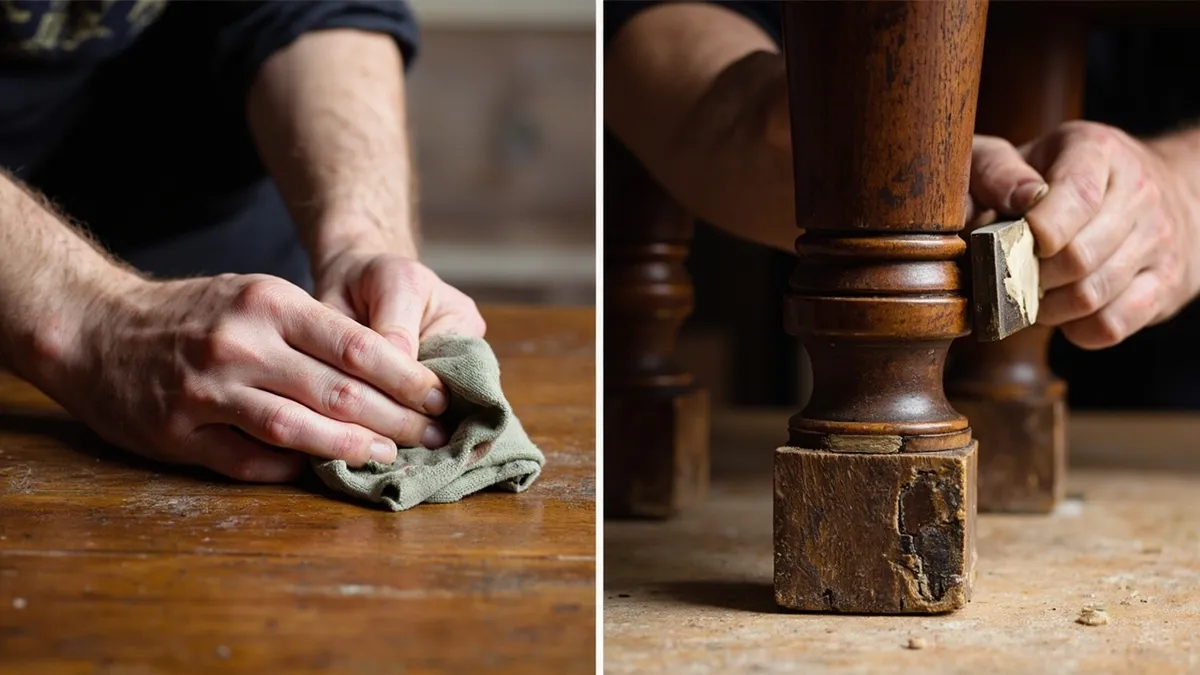
A few other signs mean a piece should come to the workshop rather than the kitchen table:
- The piece has family, historic or financial value you would not want to lose.
- Old repairs use screws, nails or brackets to hold joints.
- There are fresh woodworm holes or fine dust underneath.
- The finish is flaking or crazed across large areas.
Photos are often enough for a first view of whether a piece needs a restorer at all.
Antique furniture in Yorkshire homes
Where a piece lives matters as much as how it is cleaned. In Yorkshire, antique furniture often lives in stone-built Victorian terraces and former mill buildings around Huddersfield and the Holme Valley, or in weavers' cottages around Holmfirth, Honley and Marsden. Wet Pennine weather and central heating mean the air inside can swing between damp and dry.
That swing is hard on furniture. Wikipedia's article on furniture preservation explains that wood swells when the air is humid and shrinks when it is drier, which can split boards that are held in place and cannot move freely. It adds that direct sunlight can fade wood and upholstery over time.
Simple steps help: keep good pieces off outside walls that stay damp, away from radiators, and out of strong sun from south-facing windows. If you are in the Holme Valley, our page on joinery and restoration in Honley shows what we do locally, and we also advise customers across Harrogate, with its Victorian and Edwardian spa-town villas.
Get free advice on antique furniture restoration
If you have a loose chair, a split table top, lifting veneer or a piece you are not sure how to clean, send us a few photos first. Master craftsman Daniel Fitzpatrick, a Guild of Master Craftsmen member with over 30 years at the bench, oversees every job himself, and advice is free.
Call 01484 666 333, get in touch through our contact page, or read more about our furniture restoration service. We work from Crossley Mills in Honley, with workshop visits by appointment, and cover Holmfirth, Huddersfield and towns across West and North Yorkshire.
Frequently asked questions
Is it worth restoring antique furniture?
Usually, if restoring antique furniture means repairing what has failed and keeping the original finish. Loose joints, splits and missing parts can usually be fixed. Making an old piece look new by stripping and sanding is rarely worth it, because it removes patina and original finish that cannot be put back.
Is beeswax furniture polish good for antiques?
Yes, used sparingly. A thin coat of soft paste wax, such as a beeswax furniture polish, buffed well, protects the finish and can be removed later. The National Trust suggests waxing wood about once a year. There is no need to wax every week; dusting is enough in between.
Can I sand antique furniture?
We advise against it. Sanding removes the aged surface, colour and patina, and on veneered pieces it can cut straight through the thin veneer. It also rounds over mouldings. If a finish has failed, a restorer can often clean, consolidate or locally repair it instead of taking it back to bare wood.
How do you clean antique furniture safely?
Dust with a soft, dry cotton cloth, and use a soft bristle brush on carving. Avoid water, household sprays and aerosol polishes, which can mark or dissolve old finishes. If grime will not come off with dry buffing, ask a restorer before trying solvents on anything valuable.