What Is French Polishing? A Restorer's Guide
By Daniel Fitzpatrick, Master Craftsman · Guild of Master Craftsmen
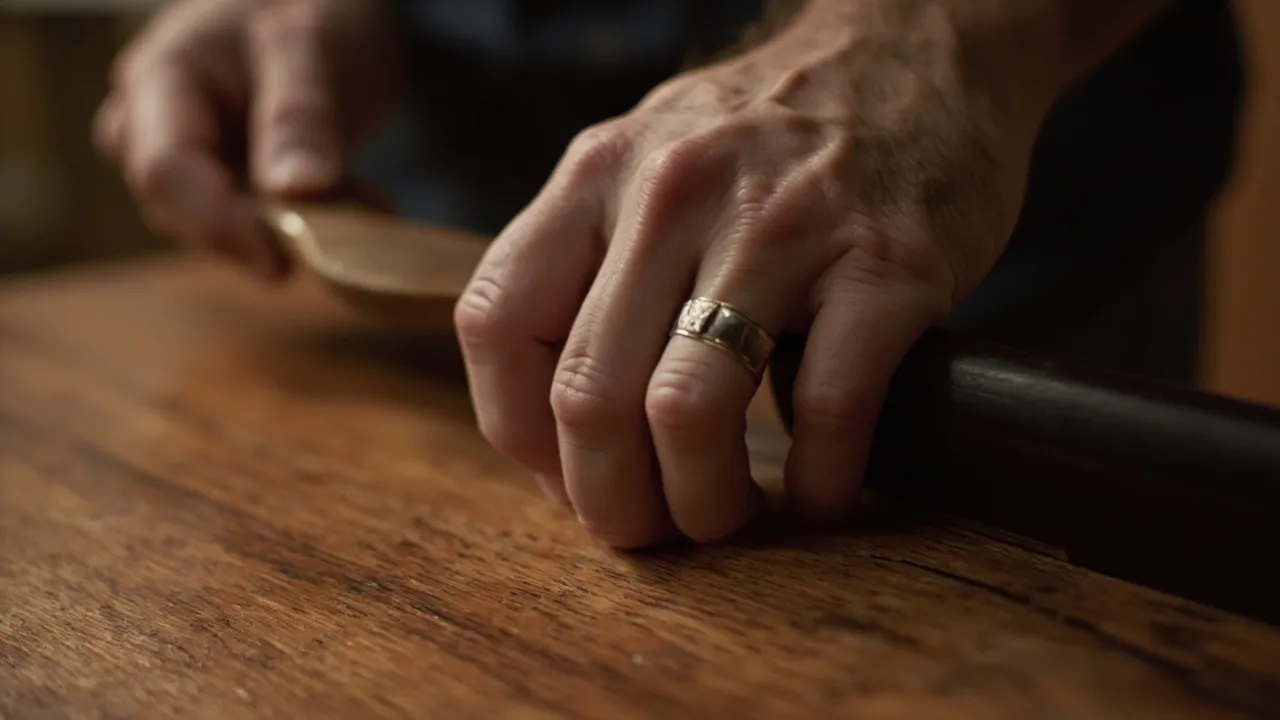
French polishing is a traditional wood finish. Many thin coats of shellac, dissolved in alcohol, are rubbed into the timber with a cloth pad called a rubber. It gives fine wood a deep, glassy shine without a thick film, and it can be repaired.
If you own a mahogany dining table, a Victorian piano or a panelled door with a deep, warm gloss, there is a good chance it was French polished. Pieces like these are found in period homes across Yorkshire, and our workshop at Crossley Mills in Honley restores furniture of this kind. This guide explains what French polish is, how the shellac and the rubber work, when a piece should be polished rather than waxed, and roughly how long the job takes.
Key takeaways
- French polish is a process, not a product. The material is shellac, a natural resin dissolved in alcohol and built up in very thin layers.
- The shine comes from the rubber: a pad of cotton wadding wrapped in fine cotton cloth, worked over the surface again and again.
- Close-grained fine timbers such as mahogany suit French polish. Early oak and country furniture were traditionally waxed, and usually still should be.
- The finish is slow to apply and sensitive to heat, water and alcohol, but it is easier to repair than most modern lacquers.
What is French polishing?
It is a way of applying shellac, not a single product. Wikipedia sums it up plainly: French polish is a process, not a material, and the main material is shellac (Wikipedia, French polish). Heritage Crafts describes the craft as the application of layers of shellac and oils to give a high gloss finish to wood (Heritage Crafts, French polishing).
The name is a little misleading. Heritage Crafts explains that the technique was brought over from France, where fine timbers were also arriving from overseas, and adds that the name is not used in France at all. Before those imported timbers, it says, British furniture was usually made of oak, elm and chestnut, which were open grained and sealed with beeswax. Wax did little to bring out the beauty of the new close-grained woods, and shellac did.
By the Victorian era the finish was commonly used on mahogany and other expensive timbers and was considered the best finish for fine furniture, pianos and guitars (Wikipedia). Wikipedia notes that, because the process was so labour-intensive, many manufacturers dropped it around 1930 in favour of quicker sprayed lacquers.
What is shellac, and why does it make such a good finish?
Shellac is a natural resin secreted by the female lac bug on trees in the forests of India and Thailand. It is processed and sold as dry flakes, then dissolved in alcohol to make liquid shellac (Wikipedia, Shellac). When the alcohol evaporates it leaves a protective film behind, so a shellac finish is what's called an evaporative finish.
That matters for two reasons. First, the alcohol in each new coat softens the coat below, so the layers melt into one another instead of sitting on top like separate skins. Heritage Crafts describes the new coat dissolving the one underneath and forcing the polish into the grain, giving a glass-like finish without the thick build you get from varnish. Second, because old shellac can be softened again with alcohol, a damaged area can be blended back in rather than stripped off entirely.
Shellac also comes in colours from a very light blonde to a very dark brown called garnet (Wikipedia). Heritage Crafts lists traditional button, garnet, white and transparent polishes, each a different colour. Choosing the right one is a large part of matching a repair to an old surface.
The weaknesses are just as real. Wikipedia notes that French polish is softer than modern varnishes and lacquers and is particularly sensitive to spills of water or alcohol, which can leave white cloudy marks, and to heat. It also notes that it is simpler to repair than other traditional and modern finishes.
What is the French polishing technique?
The technique is slow, repetitive and depends on feel. Wikipedia describes the process as lengthy and very repetitive, with many variations in schedule, built up through rubbing motions (generally circles and figure-of-eights), long waits and repeated layers. The traditional method Heritage Crafts describes goes in stages.
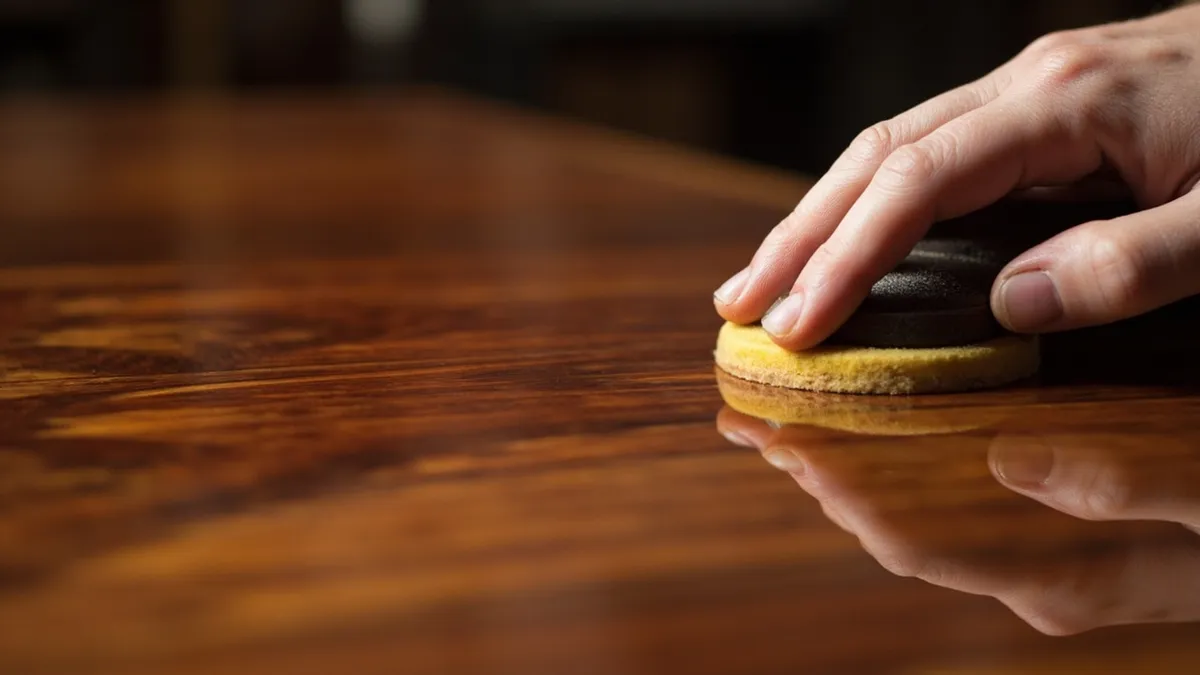
The mop and the first coats
The first one or two coats are brushed on with a polisher's mop, a soft brush that holds the thin polish instead of letting it drip out. This gets some body of shellac onto the wood quickly. Once dry, the surface is cut back with very fine abrasive paper.
The rubber
The rubber is the heart of the job. Heritage Crafts describes it as cotton wadding surrounded by a piece of fine cotton. The wadding is charged with polish, wrapped in the cloth, and wiped over the surface so that shellac feeds out evenly through the fabric. A little oil on the rubber helps stop it lifting the layers already applied (Wikipedia). After many passes, the grain is filled and the surface starts to shine.
Filling the grain and spiriting off
On more open timbers, fine pumice powder can be worked in with the shellac to fill the pores. Heritage Crafts calls this "choking" the grain. The oil used to lubricate the rubber has to be removed at the end, a step called spiriting off, which leaves a clean, streak-free gloss.
| Stage | What happens | Why it matters |
|---|---|---|
| Preparation | Old finish cleaned or removed, repairs made, surface smoothed | Any flaw left now is magnified by the gloss later |
| Mop coats | One or two coats of shellac brushed on, then cut back | Gives a base to build on quickly |
| Bodying up | Many thin layers applied with the rubber, often with a trace of oil | Fills the grain and builds depth without a thick film |
| Grain filling | Pumice worked in on open-grained timber | Gives a flat, mirror-like surface |
| Spiriting off | Oil and streaks removed with a nearly dry rubber | Leaves the final clear gloss |
French polish or wax: which does your furniture need?
Choose the finish the piece was made with. This is the decision rule we recommend in our workshop, and it comes from real practice: if a table, chest or door was originally waxed, we keep it waxed; if it was French polished, we repair or renew the polish; we do not put a high gloss onto a piece that was never meant to have one. A French polished finish on an old oak coffer looks wrong, and wax on a Regency mahogany table hides the figure the maker chose that timber for.
| French polish (shellac) | Wax | |
|---|---|---|
| Look | Deep, clear gloss that shows the figure of the grain | Soft, low sheen that builds with age and handling |
| Traditionally used on | Mahogany, walnut, rosewood, veneered and fine furniture, pianos | Oak, elm, chestnut, country and early furniture |
| Heat and water | Marked by hot dishes, water and alcohol spills | Can also mark; light marks can often be buffed out and re-waxed |
| Upkeep | Dust and occasionally revive; avoid heavy polish build-up | Re-wax lightly from time to time |
| Repair | Damaged areas can be blended in with fresh shellac | Easy to top up; heavy dirt build-up needs cleaning off |
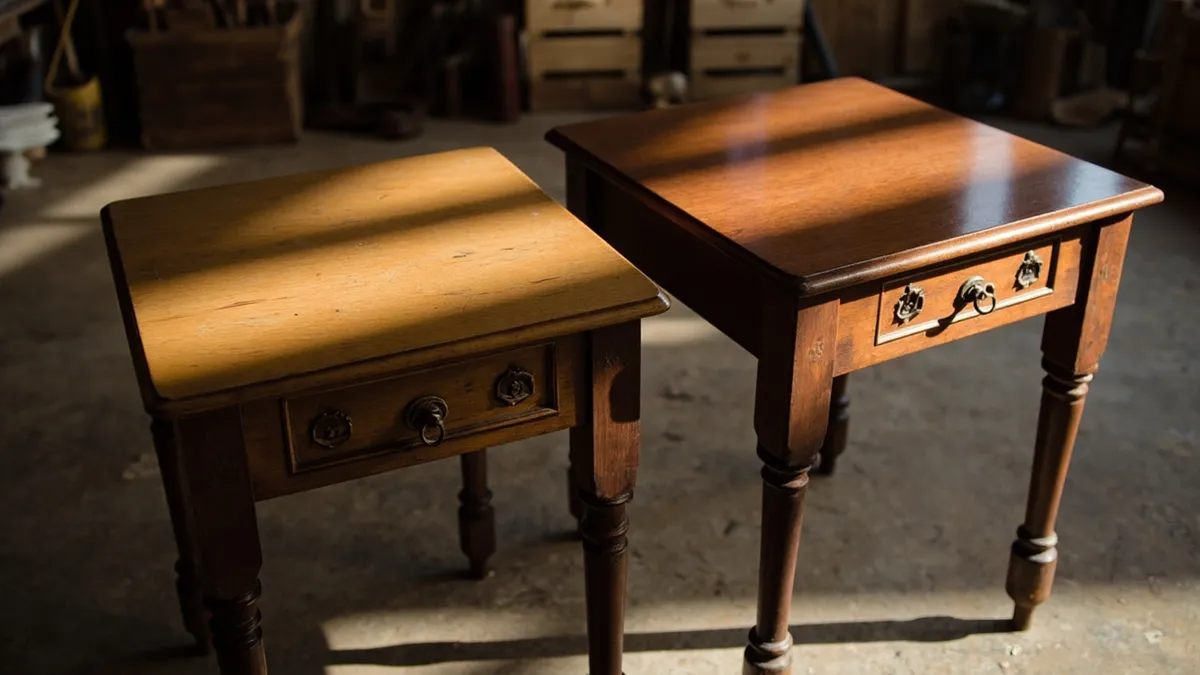
A French polished piece usually has a thin, even, glass-like gloss that follows the grain. A waxed piece has a softer sheen and often a darker build-up in corners and carving. If you can't tell, send us a photo.
How long does French polishing take?
Longer than most people expect. There is no fixed answer: the time depends on the size of the piece, the timber, and how much of the old finish can be kept. What does not change is that the process is lengthy and involves waiting for considerable time between layers (Wikipedia).
What decides the time:
- Revive or re-polish. Cleaning and reviving a sound old finish is far quicker than stripping and polishing from bare wood.
- Stripping. Heritage Crafts notes that one strong chemical paint stripper has been banned, so removing old finishes now takes longer and costs more.
- Repairs first. Loose joints, lifting veneer and missing mouldings must be fixed before any polish goes on.
- The grain. Open-grained timber needs more work to fill before it will take a mirror finish.
- Drying time. Shellac has to harden between sessions, so a full French polish is built up over several visits to the bench, not done in one sitting.
How much does French polishing cost in the UK?
It depends on the piece, so any honest answer starts with a look at it. A side table that only needs reviving and a dining table that must be stripped and polished from scratch are very different jobs.
Cost follows the same factors as time: size, carving and turned details, how much damage there is, and whether the old finish has to come off. Where a turned part is broken or missing, our woodturning service can make a matching replacement before the piece is polished.
For a first view of what the piece needs, send photos. Our furniture restoration service covers the repairs and the finishing together, so you get one assessment for the whole job.
Can you do French polishing at home?
Yes, on the right piece, and with patience. Learning how to French polish on a small, low-value item is a good way to start. We would not practise on a valuable antique, because a stripped or badly patched original finish cannot be put back.
If you want to try it, this checklist covers the basics:
- Work out what finish is on the piece now. Shellac softens when you dab a little methylated spirit on a hidden spot; most modern lacquers do not.
- Clean first. Many dull surfaces only need dirt and old wax removing, not re-polishing.
- Make any repairs before you polish: glue loose joints and lay lifting veneer.
- Practise on scrap timber until you can keep the rubber moving without it sticking.
- Use several thin coats rather than a few thick ones. Wikipedia notes that thick layers of shellac adhere poorly and can peel.
- Work in a warm, dry, dust-free room with good ventilation, and keep alcohol well away from flames.
For a valuable piece, get advice first. Our guide to caring for heritage timber covers finishes and early warning signs.
Caring for French polished furniture in a Yorkshire home
French polished furniture suits the kind of houses Yorkshire is known for: Georgian and listed buildings in York and Wakefield, and Victorian and Edwardian villas in spa towns such as Harrogate. French polish was the fashionable finish when many of those houses were furnished, so original polished tables, cabinets and panelled doors still turn up.
The same rules keep the finish looking right in any old house:
- Use mats and coasters. Heat, water and alcohol are what mark a shellac surface.
- Keep pieces away from radiators and direct sunlight, which dry and fade timber.
- Dust with a soft, dry cloth. Avoid spray polishes and silicone products, which build up and make later repairs harder.
- Deal with white marks and scratches early, before they are wiped over and spread.
The finish was also used on joinery, not just furniture. Heritage Crafts notes that buyers of furniture, doors and panelling could choose it. If a polished internal door needs attention, see our door restoration page, and for a worn handrail or newel post, our staircase restoration service.
Get free advice on French polished furniture
If you have a table with white rings, a cabinet with a worn and patchy polish, or a piece you are not sure how to clean, we can tell you what it needs before any work starts. Master craftsman Daniel Fitzpatrick, a Guild of Master Craftsmen member with over 30 years at the bench, oversees every job himself, and advice is free.
Call 01484 666 333, send us photos through our contact page, or read more about our antique furniture restoration and repair. We work from Crossley Mills in Honley, with workshop visits by appointment, and cover Holmfirth, Huddersfield, Leeds, Harrogate, York and other towns across Yorkshire.
Frequently asked questions
What does "French polishing" mean in slang?
The phrase has an informal slang meaning that has nothing to do with woodwork. In furniture and joinery it only ever means the traditional wood finish: thin coats of shellac rubbed into timber with a cloth pad to give a deep, clear shine. That is the only meaning this guide covers.
Is French polish waterproof?
No. French polish is particularly sensitive to spills of water and alcohol, which can leave white cloudy marks, and to heat from hot cups and dishes. Wipe spills up quickly and use mats. The good news is that marks in the finish can usually be repaired.
Can French polish be repaired without stripping?
Often, yes. Because fresh shellac softens and bonds with the old layers, worn or marked areas can usually be cleaned, filled and blended in rather than stripped back to bare wood. Stripping is usually only needed when the old finish has failed across most of the surface or has been covered with an incompatible product.
Is a shellac finish the same as French polish?
Not quite. French polish is based on shellac, but not every shellac finish is a French polish. Shellac can be brushed or wiped on as a simple sealer or varnish. True French polish is the specific rubber technique that builds many very thin layers into a deep, clear gloss.