Draught Proofing Doors: A Period Front Door Guide
By Daniel Fitzpatrick, Master Craftsman · Guild of Master Craftsmen
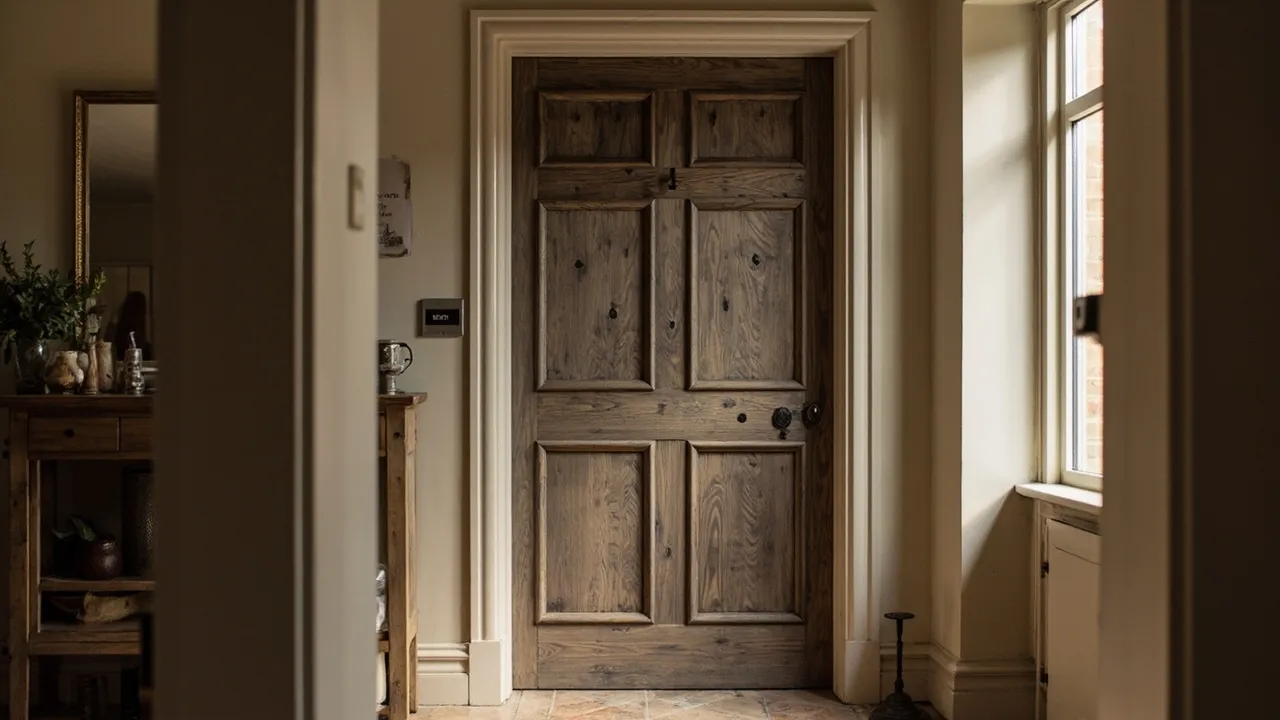
Draught proofing doors on a period house starts with finding where the air gets in: the meeting edges, the threshold, the letter plate or a door that has shrunk or warped. Repair the door and frame first, then fit discreet seals that suit the old timber.
Old front doors are some of the coldest spots in a house in winter, and we see a lot of them across Yorkshire. In our workshop at Crossley Mills in Honley, we repair and refit original timber doors on Victorian terraces, weavers' cottages and listed buildings. This guide explains how to stop draughts from doors without spoiling the character of the door you already have.
Key takeaways
- Find the draught before you fix it. Most cold air comes through a handful of places: the gap at the hinge and lock edges, the head of the frame, the threshold, the letter plate and the keyhole.
- A door that has dropped, warped or shrunk needs joinery first. Seals cannot close a gap that changes width along the edge.
- Discreet seals routed into the frame rebate, a hardwood threshold with a weather bar, and a brush or flap behind the letter plate deal with most draughts on a period door.
- If the house is listed, check with your conservation officer before changing the door or frame.
Why is my old front door draughty?
An old timber door moves. It swells in wet weather and shrinks back when the heating goes on. Over a century or more, that movement, plus heavy use and layers of paint, opens up gaps that let the wind straight through. The usual causes we find are:
- A dropped door. Worn hinges, loose screws or tired joints let the door sag. It catches at the bottom on the lock side and leaves a wedge-shaped gap at the top.
- Shrinkage. Timber that has dried out over the years leaves a gap at the meeting edges, and panels can shrink away from their mouldings.
- A warped or twisted door. The door meets the stop at the top and bottom but stands off it in the middle, or the other way round.
- A worn threshold. Decades of feet wear the sill down, so daylight shows under the door.
- Openings in the door itself. Letter plates, keyholes and loose glazing beads in glazed panels all let air in.
- Gaps around the frame. Air can also come in between the frame and the stonework if the pointing or seal has failed.
Split panels are common too. The Society for the Protection of Ancient Buildings (SPAB) notes that panels often split when they shrink but are held from moving in their framework, generally because of paint build-up (SPAB, Doors). A split panel is a draught path of its own.
How to stop draughts from doors: where do you start?
Start by finding exactly where the air comes in. On a cold, windy day, close the door and work round it slowly with the back of your hand. A candle or incense stick held near the edges shows moving air well, but keep it away from curtains and never leave it unattended. At night, with a light on outside, you can often see gaps from the hall.
Use this checklist as you go:
- Check the hinge edge from top to bottom. Is the gap even?
- Check the lock edge. Does the door rub at the bottom and stand off at the top?
- Look along the head of the frame for light.
- Look under the door. Is the threshold worn, rotten or loose?
- Feel round the letter plate and the keyhole.
- Check glazed panels for loose beads or cracked putty.
- Press on the closed door. If it moves in and out against the stops, the latch is not holding it tight.
- Check where the frame meets the wall, inside and out.
Once you know where the draught is, you can decide whether it needs a seal, an adjustment or a proper repair.
Can you draught proof an old wooden door?
Yes. Draught proofing doors that are a hundred years old or more is normal work for us, and it rarely means replacing the door. SPAB says existing doors can frequently be repaired and, if necessary, upgraded for better security or draught-proofing, and that replacement is a last resort (SPAB, Doors). We agree. An original door is often made from slow-grown timber that is hard to match today, and its panels, mouldings and ironmongery are part of the house.
The order matters, though. Seals work by closing a small, even gap. If the door has dropped, twisted or rotted at the foot, a seal will either be crushed in one place or miss altogether in another. So the door and frame come first.
Repairs we often make before any draught-proofing
- Re-hanging the door: tightening or replacing hinges, packing or re-setting them so the door hangs square.
- Re-gluing and re-wedging loose joints so the door stops sagging.
- Splicing new timber into a rotten bottom rail or stile. SPAB notes that often only a small area such as the door foot is affected, and that a skilled carpenter can in many cases splice in well-seasoned, matching new timber (SPAB, Doors).
- Planing or adding timber to edges so the gap is even all round.
- Repairing split panels, and re-fixing loose glazing beads.
- Repairing or replacing a worn threshold.
If the door also has rot, our guide on treating wood rot in windows and doors covers that in detail.
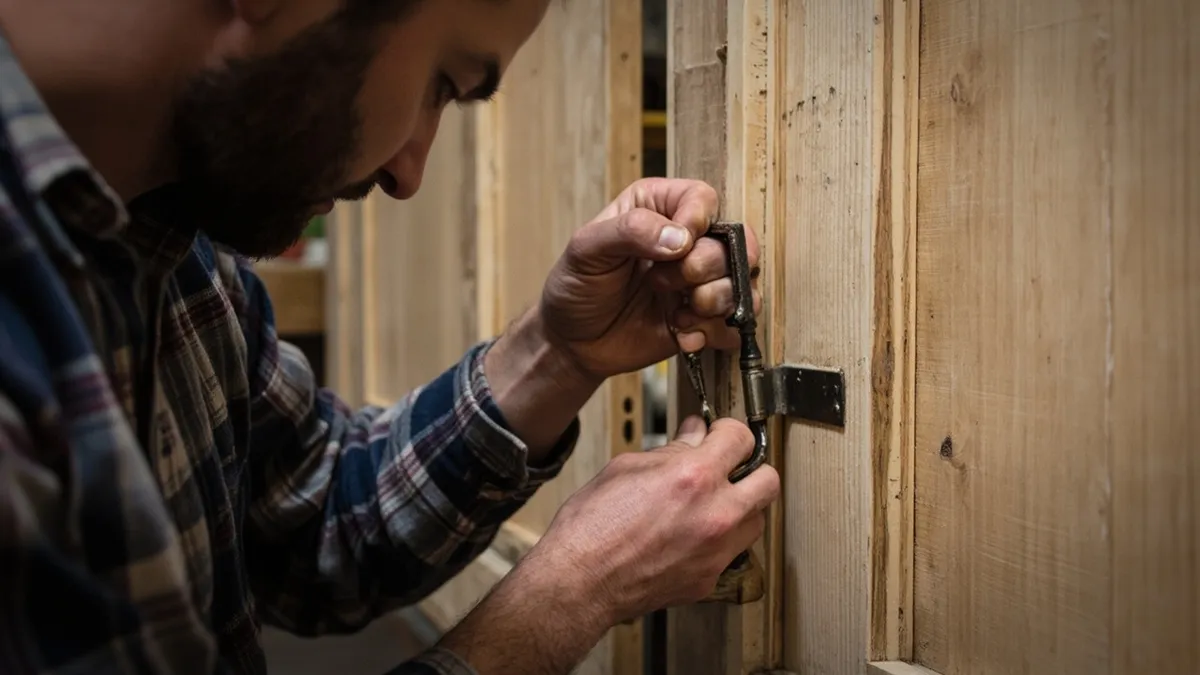
Which draught-proofing suits a period front door?
The aim is to seal the gaps without changing how the door looks from the street. Here is how we match the method to the problem.
| Where the draught is | Discreet fix that suits a period door | What to avoid |
|---|---|---|
| Hinge and lock edges, head of frame | A slim seal set into a groove routed in the frame rebate, so it is hidden when the door is shut | Thick stick-on foam that flattens quickly and stops the door closing |
| Bottom of the door | A hardwood weather bar on the outside face, a timber threshold with a seal, or a concealed drop-down seal | Plastic sweeps that drag on the floor and look out of place |
| Letter plate | A brush or flap fitted behind the plate on the inside face | Swapping the original plate for a modern one |
| Keyhole | A simple pivoting cover plate inside | Filling an original lock you still use |
| Glazed panels | Re-bedding the glass and re-fixing beads | Mastic smeared over the joints |
| Frame to wall | Repointing or an appropriate flexible seal, chosen to suit the wall | Expanding foam packed into the joint |
Routed-in seals
For most front doors, the most effective edge seal is one set into a slot cut into the frame rebate. When the door closes, it presses against the seal. You see very little of it, and because it sits in a groove it does not peel off. It only works if the gap is fairly even, which is why we put the door right first.
Thresholds and weather bars
The gap under a front door is often the biggest single draught. A hardwood weather bar, shaped to throw water off the outside of the door, keeps out wind-driven rain as well as cold air. Where the old threshold is worn hollow, we either repair it or make a new one in matching timber.
What to put on the bottom of a door to keep cold air out?
On a period external door, we usually recommend one of three things, depending on the floor and the door:
- A timber weather bar fixed across the bottom rail outside. It sheds rain and closes most of the gap. It suits panelled doors well because it looks like part of the joinery.
- A threshold seal let into a new or repaired hardwood threshold, which the door closes against.
- A concealed drop-down seal fitted into the bottom of the door. It lowers as the door closes and lifts as it opens, so it does not drag on rugs or tiles. It needs enough solid timber in the bottom rail to take it.
Inside, a heavy door curtain on a rail does a lot in winter and changes nothing about the door itself. Fabric draught excluders laid on the floor also help as a short-term fix.
How do Yorkshire weather and buildings affect a front door?
Many of the doors we work on are in stone-built Victorian terraces around Huddersfield and in weavers' cottages around Holmfirth, Honley and Marsden. In the Colne and Holme valleys the weather is wet and exposed, and wind-driven rain hits doors that face up the valley hard. Doors swell in a wet autumn, then shrink when the heating comes on, so a door that fitted in October can be draughty by January.
That movement is why, when draught proofing doors here, we prefer seals that cope with some change in the gap, and why we check the paint. Bare or cracked paint lets water into the timber, which makes it swell and move more. Our guide to linseed oil paint for windows and doors explains one traditional finish that suits old joinery. If you live in the Huddersfield area, our page on heritage joinery in Huddersfield shows the kind of work we do locally.
Our rule of thumb for draughty period doors
We recommend a simple decision rule that comes from years of fitting old doors:
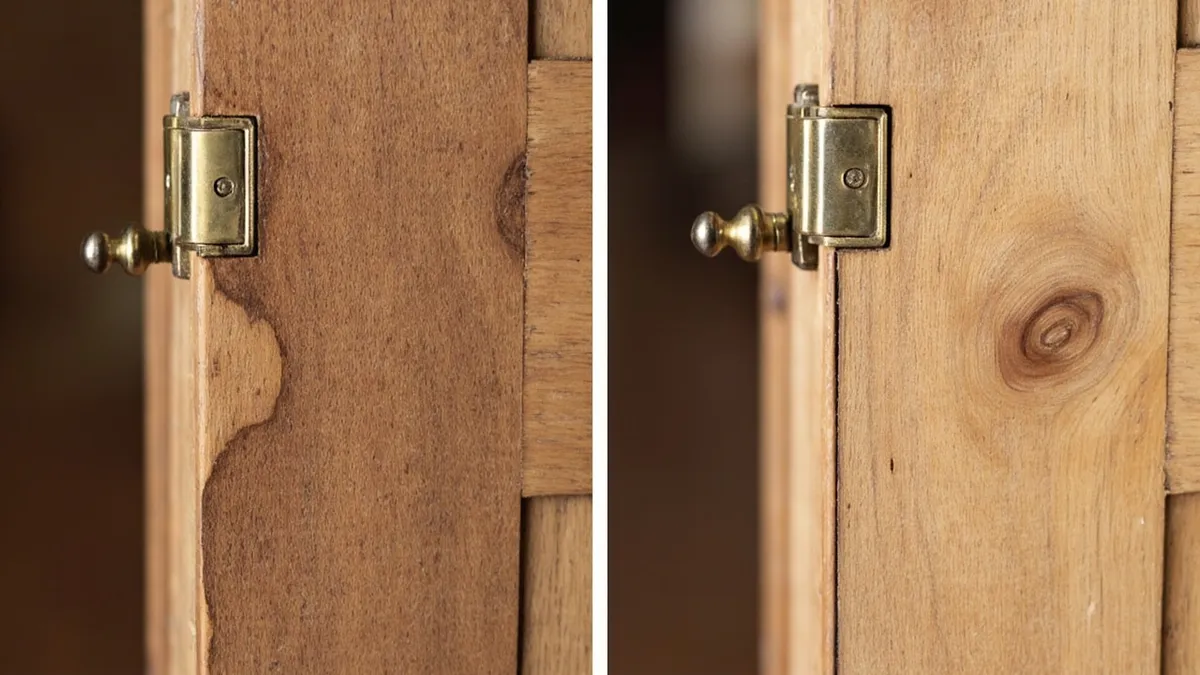
- If the gap is even and the door closes cleanly, go straight to draught proofing doors with routed-in seals, a threshold seal and a letter plate brush.
- If the gap is uneven, the door rubs, or it has to be slammed to latch, re-hang and repair it first. Sealing a badly hung door just moves the draught somewhere else and strains the hinges.
- If the bottom rail or stile is soft when you probe it, repair the timber before anything else. A seal fixed to rotten wood will not last.
- If the house is listed, speak to the conservation officer before you change the door, frame or threshold.
Done in that order, draught proofing doors is usually a modest job that keeps the original door working for many more years. Our door restoration service covers all of these steps under one roof.
Do you need permission for draught proofing doors on a listed building?
The Planning Portal says planning permission is not needed for repairs, maintenance and minor improvements, or for new doors of similar appearance to those used in the construction of the house. It also says that if you live in a listed building, you will need listed building consent for any significant works, internal or external, and that an Article 4 Direction or a designated area can mean extra restrictions (Planning Portal, Doors and windows). Listed building consent is covered on its own page too (Planning Portal, Listed building consent).
Discreet draught-proofing may be treated as minor work, but what counts as significant depends on the building and the work. Cutting into an original frame, changing the threshold or replacing the door may need consent. Always check with your local planning authority or conservation officer before you start. Our guide to listed building consent for timber repairs explains the process.
What about sash windows and the rest of the house?
A front door is only one source of draughts. In most period homes the sash windows let in as much cold air, if not more. We have written separately about draught-proofing sash windows in a listed building, so we will not repeat it here. The same principle applies: repair first, then seal discreetly.
Get free advice on a draughty period door
If your front door rattles, drags or lets the wind through, send us a photo or call us for free advice. Daniel Fitzpatrick, our master craftsman and a member of the Guild of Master Craftsmen with over 30 years' experience, oversees every job from the first inspection to the final fitting.
Call 01484 666 333, use our contact page, or read more about our period door repair and restoration work. Our workshop is at Crossley Mills, Honley, and we work on period homes across Yorkshire.
Frequently asked questions
Will draught-proofing stop my door closing properly?
It can if the seal is too thick or the door is badly hung. A good seal is chosen to suit the gap, so the door closes with gentle pressure and latches without a slam. If you have to push hard after fitting seals, the seal is wrong or the door needs adjusting.
Is stick-on foam strip good enough for a front door?
It is a cheap stopgap and can help for a winter. On an external door it tends to flatten, peel off and collect dirt, and it shows when the door is open. A seal routed into the frame lasts much longer and is far less visible on a period door.
Should I replace a draughty old door with a new one?
Usually not. SPAB says existing doors can frequently be repaired and draught-proofed, and treats replacement as a last resort. A new door also changes the look of the house, and on a listed building replacing it may need consent.
When is the best time to draught proof a door?
Ideally in late summer or early autumn, when the timber is neither swollen nor very dry, so the seals are set to a typical gap. If it is already winter, it is still worth doing; we simply allow for the door being swollen when we fit it.